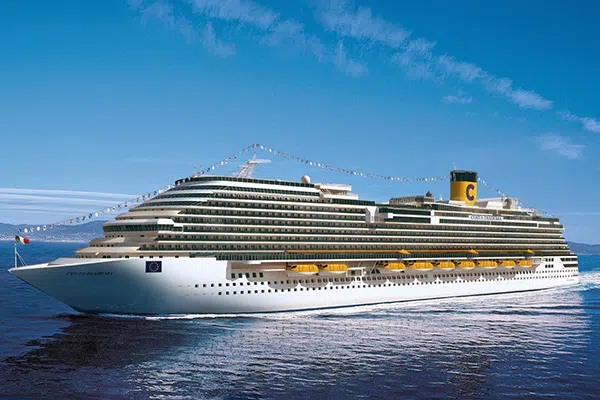
Costa Cruises Northern Europe: 7 nights from Copenaghen with Costa Diadema
May 15, 2027
Denmark, Poland, Sweden, Germany


Cruise itinerary
Departure Port: Copenaghen ➞
Landing: Copenaghen
-
 Saturday, May 15, 2027 - 6:00 PMCopenaghen
-
 Sunday, May 16, 2027Navigation
 -
Monday, May 17, 2027 8:00 AM - 5:00 PMGdynia
-
Tuesday, May 18, 2027 8:00 AM - 5:00 PMVisby
-
Wednesday, May 19, 2027 10:00 AM - 6:00 PMStockholm
-
Thursday, May 20, 2027Navigation
-
Friday, May 21, 2027 8:00 AM - 7:30 PMKiel
-
Saturday, May 22, 2027 10:00 AMCopenaghen

Copenaghen
Copenhagen, literally "port of the merchants", is the capital of Denmark and one of the country's most densely populated cities. Originally a city mainly inhabited by fishermen, it became a fundamentally important port for trade.
Copenhagen is a year-round tourist destination and in summer the flow of tourists increases considerably thanks to Northern Europe cruises.
It is very common to add a stay in the city before a cruise, to take in its distinguishing relaxing atmosphere and see what it has to offer. Among its famous attractions you cannot miss the statue of the Mermaid which is located right at the entrance to the port and the Tivoli Gardens, one of the world's largest amusement parks, opened in 1843 and loved by everyone.
Copenhagen (København in Danish and 'Copenaga' in Italian [no source]) is the capital and the most populous city of Denmark with 518,574 inhabitants in the municipality (1,167,569 in the urban area). The city stretches across the islands of Sjælland and Amager and is separated from the city of Malmö in Sweden by the strait of Øresund.
Gdynia
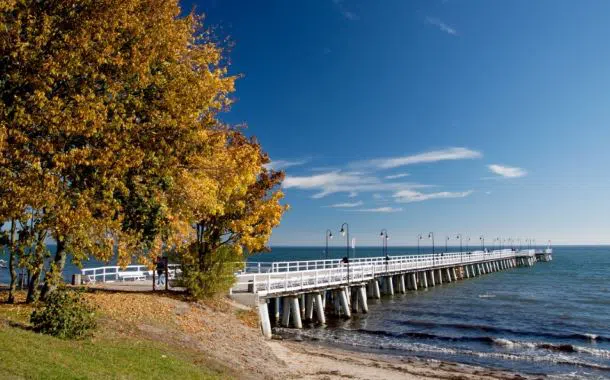
Gdynia is a town located in the north of Poland, in the Gulf of Gdansk and Warsaw, the capital, is about 380 km away. Part of a combination of three cities, (Gdynia, Gdansk and Sopot) represent the "lithe" a population of over a million inhabitants. Once known as a small fishing village, the city has developed considerably, especially after the end of the Second World War, becoming the largest Polish port. Its unique and modern environment delights tourists both for its maritime infrastructure and for its cultural life. The territory welcomes various cultural events such as the Polish Film Festival, nicknamed the "Polish Cannes." The outdoor music festival, which brings together various international artists, is proposed every year near the local beach. The city is particularly populated in summer: tourists are attracted thanks to its proximity to the sea and its large sandy beaches. Throughout the year, it plays the role of one of the main seaports in Poland and the site of an important shipyard. Near the port, you will find museums of various ships that can be visited. The country is relatively modern, however, vacationers who come to stay in this territory are often looking for its past and its historical buildings, such as the popular and ancient church of San Michele Arcangelo or the neo-Gothic house of the XVII century. The hills and coasts also intrigue nature lovers. The walk, with a length of 1.5 km, is very popular. In short, this place will be a perfect destination for those seeking rest but without giving up the pleasures of life, offering you a wide range of activities, including markets, clubs and excellent restaurants.
Visby
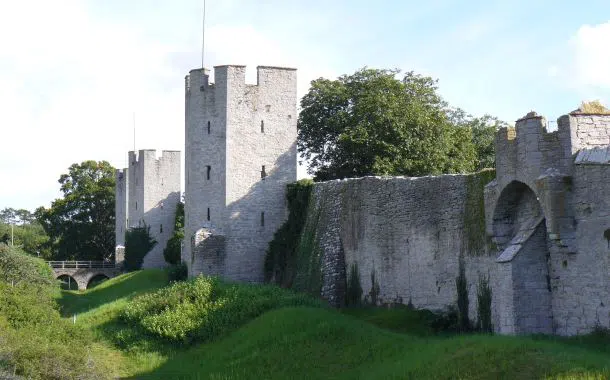
Visby is the capital of Gotland, the largest island in the Baltic Sea, located halfway between Sweden and Latvia, one of the preeminent medieval cities of Scandinavia and included in the UNESCO World Heritage List.
Visby is a popular vacation destination for Scandinavians during the summer and receives thousands of tourists every year. And 'by far the most populous location outside the Swedish mainland.
Every August, it hosts its medieval week, with authentic dress, parties and jousting. But there is no need to visit Visby in August to get a sense of its medieval history. Just follow the streets that wind throughout the city, take a tour of its historic center and visit the 13th century church.
The Fornsal Museum highlights 8,000 years of local history. The collection includes: stones painted with a date prior to the Vikings, old tombstones, silver treasures and medieval sculptures.
In the city of Gotland has an extraordinary collection of medieval churches, 93 of which are still in use today. Some still have medieval glass paintings and the majority of them contain medieval frescoes.
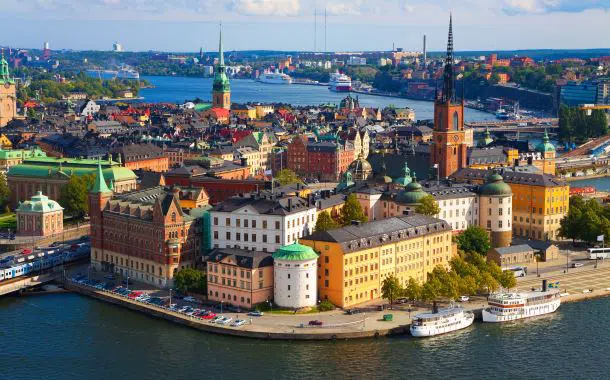
Stockholm
The capital of Sweden is considered one of the most beautiful cities in the world, a mirage of buildings in saffron colors and iridescent terracottas between the blue of the water and the even bluer skies of the Swedish summer, or candid, covered with snow and dotted with winter lights. It is also a lively, modern city, famous for the production of elegant design, cutting-edge fashion and world-class nightclubs.
The old town, Gamla Stan, is a compact little labyrinth seemingly built for small, thin people. The red, orange, and vanilla stucco walls of the buildings that seem to curve in towards each other house countless souvenir shops and ice cream parlors.
Just south of Gamla Stan is another island-neighborhood, Södermalm, where hills high waterfront are embellished by beautiful residences and the main avenues are lined with bohemian shops, art galleries, and Clubs. On the other side of Gamla Stan is the main city center, a bustling metropolis where boutiques and restaurants enliven the cool Swedish evenings.
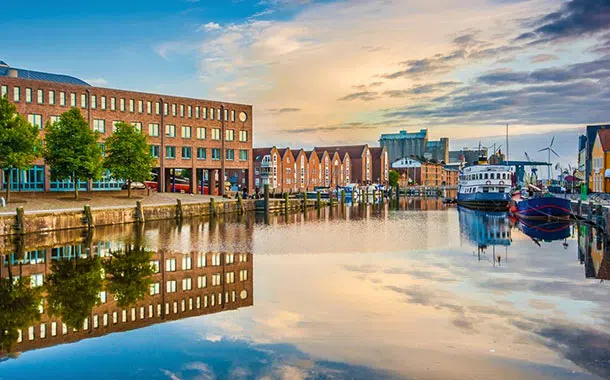
Kiel
Kiel is a city in Eder River and it is near the Baltic Sea. Hamburg and Lübeck are the nearest cities and are about 90 kilometres far from Kiel.
The origins of Kiel are dated back to XII Century. The city was established by Schauenburg Family and it was the farthest north city of the Holy Roman Empire. Among the noteworthy structures, the University is one of the most ancient and was founded in 1665.
During the years, Kiel was subjected to the influence of the neighbouring countries and has been property of Denmark and Sweden. Germany took it back in 1815. At the end of XIX Century, Kiel Canal was opened. It is about 100 kilometres long, and it links the Baltic Sea with the North Sea and it’s been so far one of the most congested canals in the world. Kiel is an important port for the cruises to Northern Europe and has all summer long many departures for the Baltic Capitals and the Norwegian Fjords.
Kiel is an important port of the cruise market: many of the cruises to Northern Europe depart from Kiel. It is no coincidence that it is the most important port in Germany.
Copenaghen
Copenhagen, literally "port of the merchants", is the capital of Denmark and one of the country's most densely populated cities. Originally a city mainly inhabited by fishermen, it became a fundamentally important port for trade.
Copenhagen is a year-round tourist destination and in summer the flow of tourists increases considerably thanks to Northern Europe cruises.
It is very common to add a stay in the city before a cruise, to take in its distinguishing relaxing atmosphere and see what it has to offer. Among its famous attractions you cannot miss the statue of the Mermaid which is located right at the entrance to the port and the Tivoli Gardens, one of the world's largest amusement parks, opened in 1843 and loved by everyone.
Copenhagen (København in Danish and 'Copenaga' in Italian [no source]) is the capital and the most populous city of Denmark with 518,574 inhabitants in the municipality (1,167,569 in the urban area). The city stretches across the islands of Sjælland and Amager and is separated from the city of Malmö in Sweden by the strait of Øresund.
Info on the ship Costa Diadema