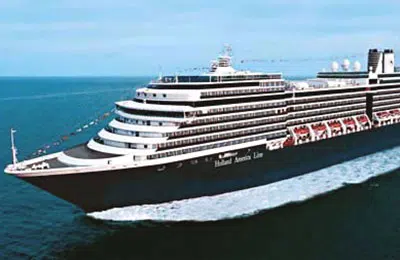
Holland America Line Mediterranean: 7 nights from Trieste with Rotterdam
Nov 18, 2028
Italy, Croatia, Montenegro, Greece


Cruise itinerary
Departure Port: Trieste ➞
Landing: Athens
-
 Saturday, November 18, 2028 - not foundTrieste
-
Sunday, November 19, 2028 not found - 9:00 PMTrieste
-
 Monday, November 20, 2028Navigation
 -
Tuesday, November 21, 2028 8:00 AM - 11:00 PMDubrovnik
-
Wednesday, November 22, 2028 8:00 AM - 5:00 PMKotor
-
Thursday, November 23, 2028 8:00 AM - 5:00 PMKorfu
-
Friday, November 24, 2028Navigation
-
Saturday, November 25, 2028 7:00 AMAthens
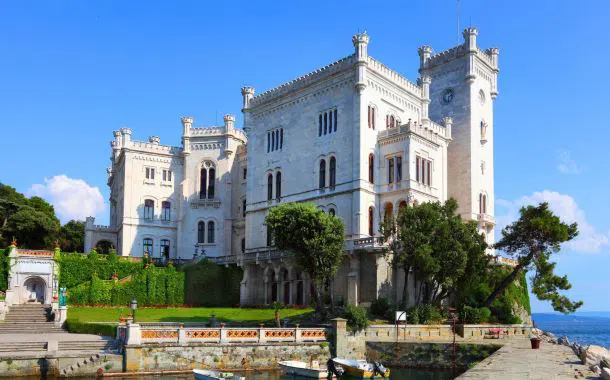
Trieste
Trieste overlooks the Adriatic Sea and it is the starting point of serveral cruise ships. Set sail from Trieste and discover the pearls of the Adriatic, Dubrovink e Kotor, up to reach the enchanting Greek Islands for a unique cruise!
Trieste is a city located in the far end of the Adriatic Sea, in Friuli Venezia Giulia, Trieste is developed on several levels. One of its peculiarities are its wide streets, squares where there are majestic buildings of various architectural styles, they are typical of the Austrian domination era. One feature of the city that is known worldwide is its tourist and commercial port.
The port of Trieste has always been an important commercial centre, for example during the Habsburg Empire it was the main sea outlet for commercial activities.
We suggest you to visit the majestic Piazza dell'Unità d'Italia, that directly overlooks the sea and offers a very suggestive sight. Trieste is a city where the influence of the East is evident both in its traditions and in the local cuisine that has united flavours and various ingredients for unique recipts. The main dishes consist of soups and stews, but also gnocchi and stuffed pasta. If, on the other hand, you want to try a meat dish, don't miss the tasty cevapcici, very spicy meatballs of Balkan origin. While to finish, enjoy a presnitz, a pastry made of puff pastry and dried fruit of Hungarian origin.
If your ship sets sail from Trieste, do not miss the opportunity to visit this city and its most important monuments such as the Molo Audace. From here you can admire the sea before heading towards the Church of Santa Maria Maggiore, built in Baroque style. Not to be missed is the San Giusto Hill and the famous Roman Theatre, which will leave all archaeology lovers speechless.
Trieste: Adriatic Elegance for Your CruiseSet sail from Trieste, Italy, a captivating port city on the Adriatic, known for its unique blend of Italian, Austrian, and Slovenian influences. With its grand Habsburg architecture, bustling Piazza Unità d'Italia overlooking the sea, and a rich literary history, Trieste offers an elegant and culturally rich departure point for your cruise. Before stepping aboard, explore its charming cafes, historical landmarks, and enjoy the city's distinct cosmopolitan atmosphere. Trieste promises a sophisticated and memorable beginning to your Adriatic and Mediterranean adventure.
Discover the Adriatic and Beyond from TriesteCruises departing from Trieste open up a world of possibilities across the sparkling blue waters of the Adriatic and Mediterranean seas. Whether you dream of discovering the picturesque coasts of Croatia, the historical richness of Montenegro, the ancient allure of Greece, or the charming ports of Italy, Trieste serves as an ideal launchpad. Enjoy the seamless transition from the refined elegance of Trieste to the luxurious comfort of your cruise ship, ready for days filled with relaxation, exploration, and unforgettable moments. Each voyage from Trieste promises breathtaking scenery and cultural immersion, leaving you with cherished memories.
Trieste
Trieste overlooks the Adriatic Sea and it is the starting point of serveral cruise ships. Set sail from Trieste and discover the pearls of the Adriatic, Dubrovink e Kotor, up to reach the enchanting Greek Islands for a unique cruise!
Trieste is a city located in the far end of the Adriatic Sea, in Friuli Venezia Giulia, Trieste is developed on several levels. One of its peculiarities are its wide streets, squares where there are majestic buildings of various architectural styles, they are typical of the Austrian domination era. One feature of the city that is known worldwide is its tourist and commercial port.
The port of Trieste has always been an important commercial centre, for example during the Habsburg Empire it was the main sea outlet for commercial activities.
We suggest you to visit the majestic Piazza dell'Unità d'Italia, that directly overlooks the sea and offers a very suggestive sight. Trieste is a city where the influence of the East is evident both in its traditions and in the local cuisine that has united flavours and various ingredients for unique recipts. The main dishes consist of soups and stews, but also gnocchi and stuffed pasta. If, on the other hand, you want to try a meat dish, don't miss the tasty cevapcici, very spicy meatballs of Balkan origin. While to finish, enjoy a presnitz, a pastry made of puff pastry and dried fruit of Hungarian origin.
If your ship sets sail from Trieste, do not miss the opportunity to visit this city and its most important monuments such as the Molo Audace. From here you can admire the sea before heading towards the Church of Santa Maria Maggiore, built in Baroque style. Not to be missed is the San Giusto Hill and the famous Roman Theatre, which will leave all archaeology lovers speechless.
Trieste: Adriatic Elegance for Your CruiseSet sail from Trieste, Italy, a captivating port city on the Adriatic, known for its unique blend of Italian, Austrian, and Slovenian influences. With its grand Habsburg architecture, bustling Piazza Unità d'Italia overlooking the sea, and a rich literary history, Trieste offers an elegant and culturally rich departure point for your cruise. Before stepping aboard, explore its charming cafes, historical landmarks, and enjoy the city's distinct cosmopolitan atmosphere. Trieste promises a sophisticated and memorable beginning to your Adriatic and Mediterranean adventure.
Discover the Adriatic and Beyond from TriesteCruises departing from Trieste open up a world of possibilities across the sparkling blue waters of the Adriatic and Mediterranean seas. Whether you dream of discovering the picturesque coasts of Croatia, the historical richness of Montenegro, the ancient allure of Greece, or the charming ports of Italy, Trieste serves as an ideal launchpad. Enjoy the seamless transition from the refined elegance of Trieste to the luxurious comfort of your cruise ship, ready for days filled with relaxation, exploration, and unforgettable moments. Each voyage from Trieste promises breathtaking scenery and cultural immersion, leaving you with cherished memories.
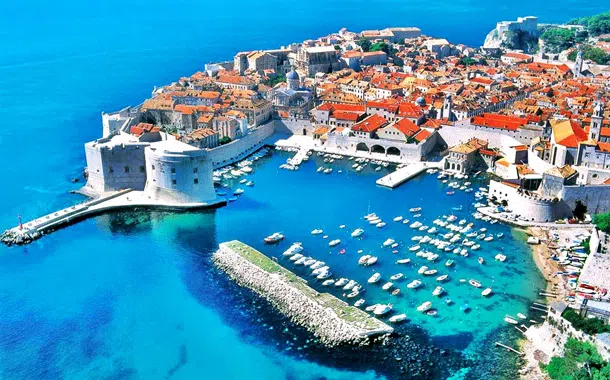
Dubrovnik
Dubrovnik is definitely special. A magnificent curtain wall surrounds marble streets and Baroque buildings exude a pearly light in the Adriatic sun.
Picturesque and artistic, Dubrovnik is a tourist hotspot and port in southern Dalmatia, at the foot of the Srđ mountain. From a historical and cultural point of view, it has been included in the list of UNESCO World Heritage Sites.
Thanks to its beauty and everything it has on offer for tourists, Dubrovnik is one of the most attractive destinations in the Mediterranean, so much so that the city can be visited all year round. In addition to its world-famous architectural heritage, this place has beautiful rocky beaches, pebble beaches and sandy beaches, enjoys a Mediterranean climate and also has lush vegetation. The main pedestrian street, Placa, is a melange of cafes and shops with monuments at each end.
Churches, monasteries and museums adorned with finely carved stone, recall an eventful history and a rich artistic tradition. Beyond the city there is a paradise of beaches, wooded peninsulas and a crystal-clear sea dotted with lush islands.
The city is also known for its delicious cuisine and its infrastructure of hotels for tourists. The city offers a wide selection of first-class restaurants, numerous sport and leisure activities, as well as cultural and entertainment events
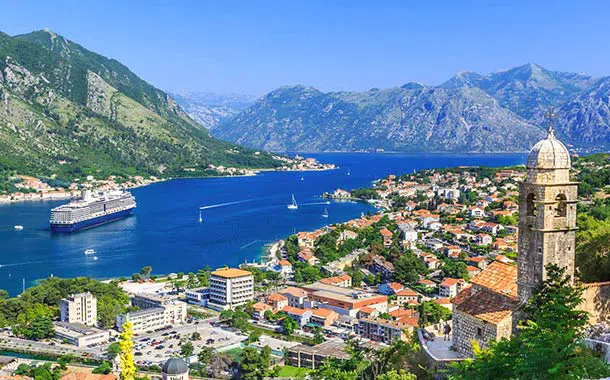
Kotor
The Adriatic Sea penetrates the jagged coast of Montenegro and winds between high mountains until it meets the exquisite and walled medieval city of Kotor.
Along the Adriatic coast of the former Yugoslavia, we find one of the most unique and fascinating European coastal areas, the city hidden in Montenegro, Kotor.
Located at the bottom of a bay, the beautiful medieval city of Kotor is considered a Mediterranean location surrounded by cliffs and an interesting historic wall. The tourist attractions of Kotor are easily reached with a pleasant walk. This small walled city, declared a UNESCO World Heritage Site, has compact dimensions that make it comfortable and easy to visit.
The central part of Kotor was built between the XII and XIV centuries. A historic center surrounded by a rather thick wall, four and a half kilometers long and fifteen meters high. This immense fortified wall reaches the bastion of Sveti Ivan (San Giovanni).
Inside the walls, it preserves an urban network cut into the stone. Its most emblematic work is the Cathedral of San Trifone, built in the 12th century. Inside the church it contains objects and frescoes sculpted during the 14th century. Furthermore, The Orthodox Church of San Nicolas, built between 1902 and 1909 in neo-Byzantine style and that of San Luca (13th century) built in Romanesque and Byzantine style.
Together with the churches, the city includes many palaces that tell its history: the Maritime Museum, located in the Grgurina Palace, a splendid baroque building located in the historic center of the country. The Drago house, with its beautiful Gothic windows, the Prima building, where Renaissance and Baroque lines are combined, the Ducal Palace and the Bizanti, both from the 17th century and the Napoleonic theater in the 19th century.
In Kotor, it is very common to see locals located along the rocky coast in the lower part of the city. In the old part of the area you will find many shops and restaurants that will delight your eyes. This location is the classic ideal city to spend quiet days or for a romantic getaway.
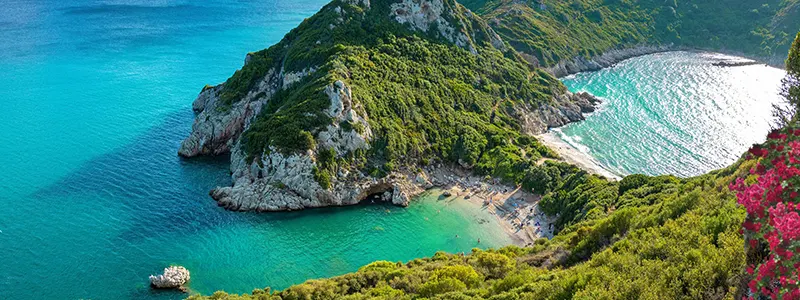
Korfu
Corfù is a Greek island in the Ionian Sea, located off the northwestern coast of Greece and south of Albania. The Greek island is a natural paradise. It is the second largest island of Greece, with 220 km of coastline. Its geography is dominated by mountain ranges and reaching 1000 meters above sea level, you will find Mont Pantokrator.
This mountain divides the island into three different areas. The northern area, abundant in olive groves, features green valleys and coastlines that form both small and large bays. The central part, the most populous and important, is covered by dense vegetation and lush hills.
The southern area consists of a large plain with less vegetation than the other regions but is decidedly more fertile. The most lively part of the city is found at Liston, similar to Paris’ Rue de Rivoli- a grand avenue lined with beautiful cafes and excellent restaurants. On the other hand, the island also has beautiful beaches washed by the Ionian Sea.
One of the most beautiful walks in the capital is along the harbor promenade, next to the city walls, where you can contemplate the view of the city. Corfù was the first Greek Island to open its doors to tourism, becoming an important international tourist centre that attracts many visitors every year. Even if tourism is evident in the coastal areas, the island has managed to preserve its authenticity.
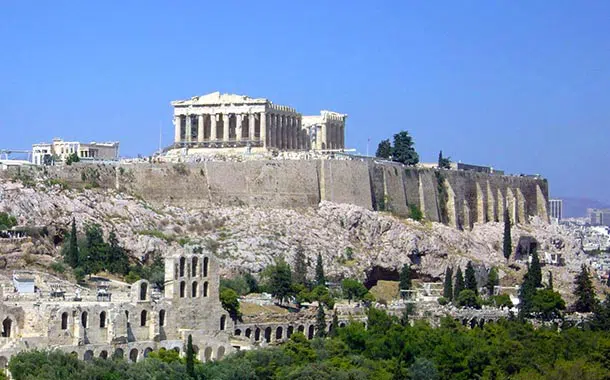
Athens
For many, Athens is a city lived two thousand five hundred years ago. Symbol is the mighty Acropolis which dominates almost every view and itinerary of every visitor, crowned by the iconic Parthenon, stands above the city, watching the sprawling modern metropolis in evolution.
Athens, the capital of Greece, is a city where antiquity and modernity, history and contemporary culture blend in a unique way. Everyone knows that the name of the city derives from the ancient Greek goddess of wisdom and justice. However, few people actually know the legend behind this event. According to myth, Athena and Poseidon, the God of the seas, vied for the right to name the city. Poseidon, to impress the inhabitants, gave them water, while Athena gave them an olive branch.
At first the choice fell on Poseidon, since the citizens considered water the most precious gift. When, once they tasted the water, they discovered that it was salty and not drinkable, they changed their minds and recognized Athena as their patron. One of the most famous historical sites in the city is the Acropolis, a majestic hill topped by ancient Doric temples, including the Parthenon, built in 477 BC. and the Erechtheion, built between 421 and 406 BC. Climbing the Acropolis, tourists can enjoy a breathtaking view of the city and the Aegean Sea. However, Athens is not only history, but also a lively cultural capital. In the Plaka district, located at the foot of the Acropolis, it is possible to stroll through the welcoming streets, visit the traditional Greek taverns and enjoy the authentic atmosphere.
Then there are the numerous cultural activities offered by the numerous museums, galleries and theaters present in the city. Athens is an important port for cruise ships that offer trips to the Mediterranean and beyond. Cruises from Athens allow guests to explore the rich cultural heritage of Greece, including the islands of Crete, Santorini and Mykonos, where you can admire the crystal clear waters of the Aegean Sea and a coast of white houses.
In addition to the Greek islands, cruises from Athens also offer the opportunity to visit other exciting Mediterranean destinations, including historic cities in Italy, Croatia and Turkey. Athens is therefore not only the historical and cultural center of Greece, but also an important starting point for cruises in the Mediterranean, which offers guests the opportunity to immerse themselves in the great history and splendid landscapes of this unique region.
Many still think of Athens as an ancient city that thrived two and a half thousand years ago. Its symbol is the mighty Acropolis, which dominates almost every view and the itinerary of every visitor, and it is crowned by the iconic Parthenon, which rises above the city, overlooking the sprawling and evolving modern metropolis.
Perhaps the most significant change is in the historical centre, which is almost unrecognisable since cars have been banned. This has liberated the area with the most significant archaeological sites, creating the longest, and undoubtedly one of the most splendid, pedestrianised zones in Europe. This huge archaeological park has brought past and present together, returning the cultural and social life of the city to the area around the ancient monuments and surrounding neighbourhoods.
Athens remains a city of contradictions; it is both frustrating and seductive. It is the oldest city in Europe, yet still in a state of transition. It is one of the safest and most vibrant European cities - an intoxicating mix of grunge and grace with an undeniably urban soul.
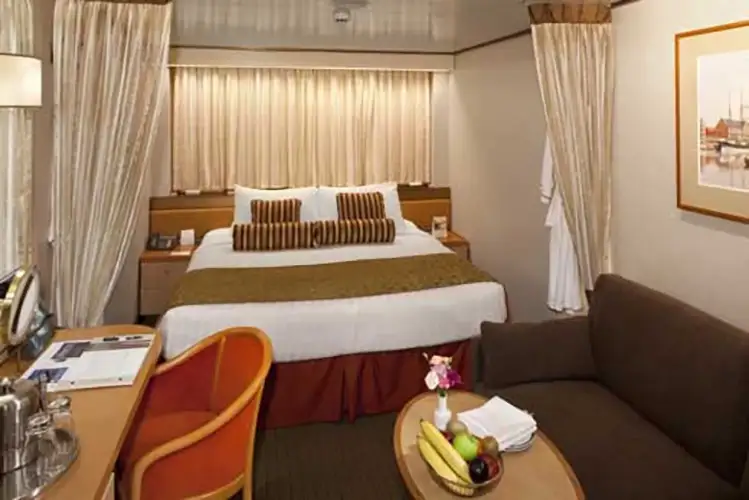
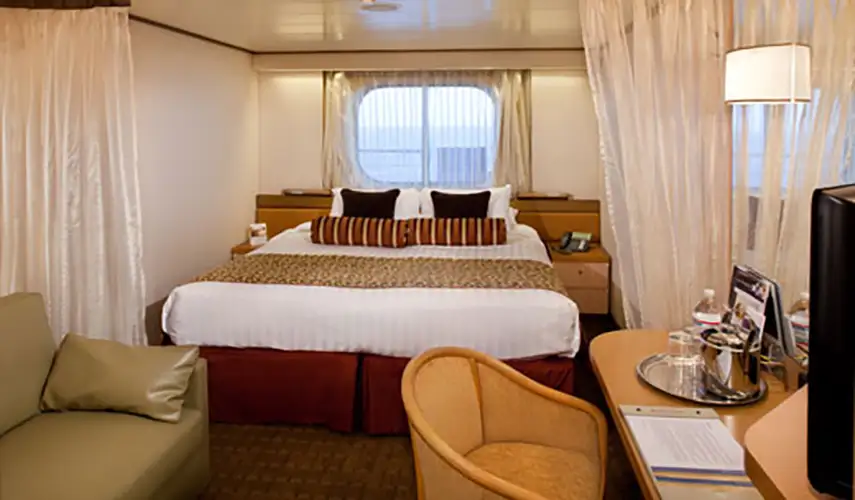
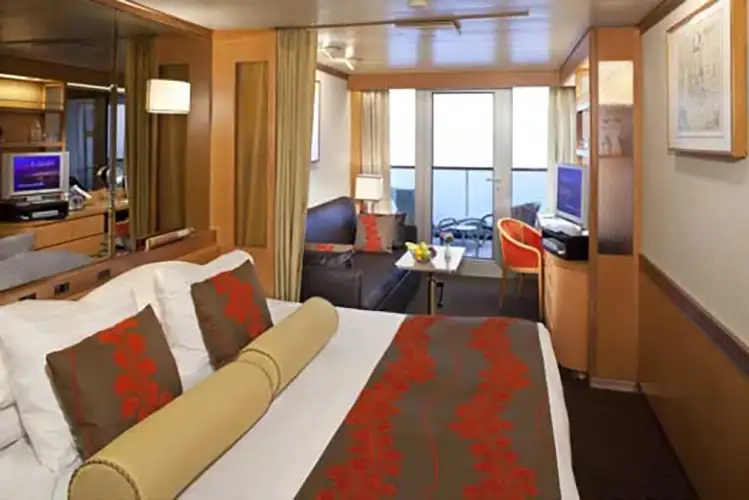
Info on the ship Rotterdam