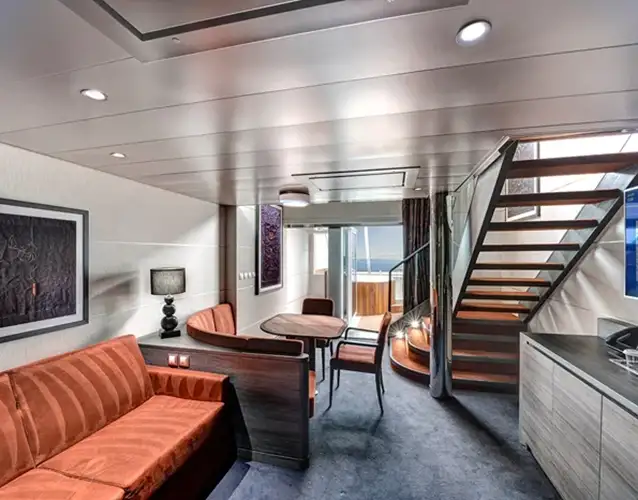
MSC Cruises Baltic Capitals: 6 nights from Copenaghen with MSC Euribia
Oct 24, 2027
Denmark, Sweden, Finland, Estonia, Germany


Cruise itinerary
Departure Port: Copenaghen ➞
Landing: Kiel
-
 Sunday, October 24, 2027 - 5:00 PMCopenaghen
-
 Monday, October 25, 2027Navigation
 -
Tuesday, October 26, 2027 8:00 AM - 4:00 PMVisby
-
Wednesday, October 27, 2027 9:00 AM - 7:00 PMHelsinki
-
Thursday, October 28, 2027 7:00 AM - 7:00 PMTallinn
-
Friday, October 29, 2027Navigation
-
Saturday, October 30, 2027 7:00 AMKiel
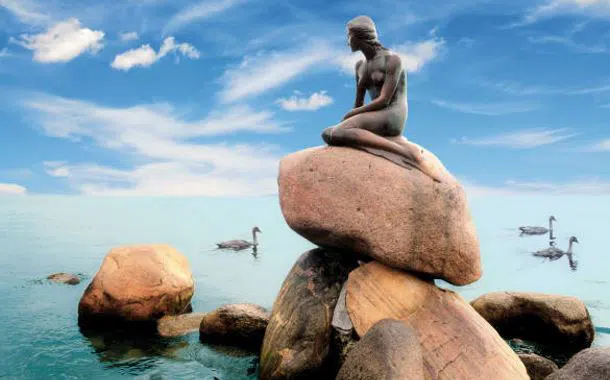
Copenaghen
Copenhagen, literally "port of the merchants", is the capital of Denmark and one of the country's most densely populated cities. Originally a city mainly inhabited by fishermen, it became a fundamentally important port for trade.
Copenhagen is a year-round tourist destination and in summer the flow of tourists increases considerably thanks to Northern Europe cruises.
It is very common to add a stay in the city before a cruise, to take in its distinguishing relaxing atmosphere and see what it has to offer. Among its famous attractions you cannot miss the statue of the Mermaid which is located right at the entrance to the port and the Tivoli Gardens, one of the world's largest amusement parks, opened in 1843 and loved by everyone.
Copenhagen (København in Danish and 'Copenaga' in Italian [no source]) is the capital and the most populous city of Denmark with 518,574 inhabitants in the municipality (1,167,569 in the urban area). The city stretches across the islands of Sjælland and Amager and is separated from the city of Malmö in Sweden by the strait of Øresund.
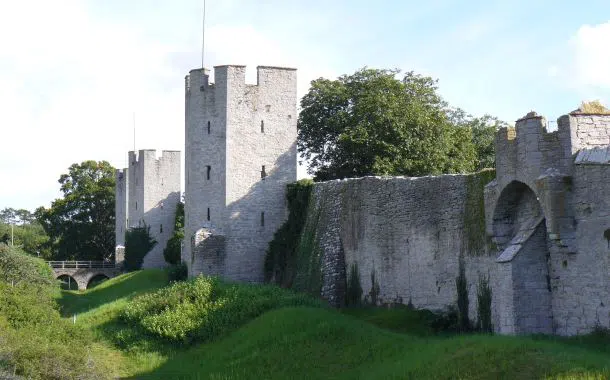
Visby
Visby is the capital of Gotland, the largest island in the Baltic Sea, located halfway between Sweden and Latvia, one of the preeminent medieval cities of Scandinavia and included in the UNESCO World Heritage List.
Visby is a popular vacation destination for Scandinavians during the summer and receives thousands of tourists every year. And 'by far the most populous location outside the Swedish mainland.
Every August, it hosts its medieval week, with authentic dress, parties and jousting. But there is no need to visit Visby in August to get a sense of its medieval history. Just follow the streets that wind throughout the city, take a tour of its historic center and visit the 13th century church.
The Fornsal Museum highlights 8,000 years of local history. The collection includes: stones painted with a date prior to the Vikings, old tombstones, silver treasures and medieval sculptures.
In the city of Gotland has an extraordinary collection of medieval churches, 93 of which are still in use today. Some still have medieval glass paintings and the majority of them contain medieval frescoes.
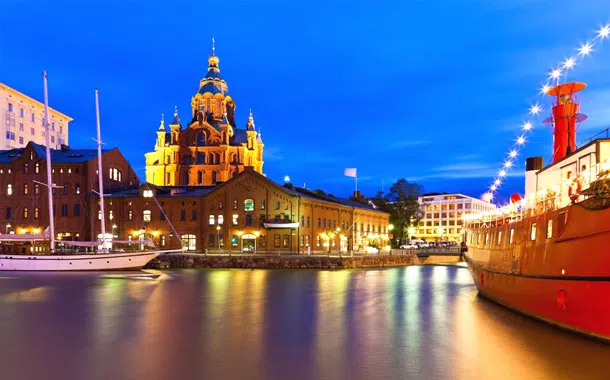
Helsinki
Helsinki, the capital of Finland, is a lively port city surrounded by beautiful small islands and beautiful green spaces. The atmosphere here is both relaxing and stimulating thanks to the city's large number of top quality restaurants, bars and discotheques.
Winter temperatures are relatively high due to the latitude, averaging around -5°C in January and February. The average temperature from June to August varies from 19 °C and 21°C.
The Finns have long been admired for their graceful design and typically immaginative architecture. Lots of past and present styles are represented in this metropolis, ranging from the medieval and the neoclassical ones to the beautiful ultra-modern creations. The beauty of the surrounding nature harmoniously blends with the high-tech and the contemorary ways of the city. In this lively city you will find kind people, a welcoming and relaxed lifestyle and beautiful gardens and parks.
Tourism in Helsinki is largely dominated by culture. The city has lots of museums including the National museum (Kansallis Museum), the Museum of Contemporary Art (Kiasma), the Museum of Classic Art
(Ateneum) and the Natural History Museum. Suomenlina is a beautiful island off the coast of Helsinki, its special feature being the presence of ancient fortifications. The landscape is beautiful, the island is quiet and it is perfect for walking (it takes only 2 hours to walk around the island).
Finally, try the Esplanade Park, which has been open since 1812 and has numerous statues honouring poets and writers. The walk is very pleasant and numerous concerts are organised during the summer.
Winter temperatures are relatively high given the latitude, with an average of around -5°C in January and February. The average maximum from June to August, in turn, fluctuates between 19 and 21°C.
The Finns have long been admired for their graceful design and typically imaginative architecture. Many past and present styles are represented in this metropolis, from medieval to neoclassical, to superb ultra-modern creations. The beauty of the surrounding nature blends harmoniously with high-tech and the contemporary modes of the city.
In this sparkling city you will find friendly people, the welcoming and relaxing lifestyle, embellished by beautiful gardens and parks.
Tourism in Helsinki is largely dominated by culture. The city has many museums, including the National Museum (Kansallis museum), the Museum of Contemporary Art (Kiasma), the museum of classical art (Ateneum) or the Museum of Natural History.
Suomenlina is a beautiful island off the coast of Helsinki, its particularity is the presence of ancient fortifications. The landscape is beautiful, the island is quiet and it's perfect for walking (it only takes 2 hours to go around the island).
Finally, try the Esplanade Park open since 1812, there are numerous statues in honor of poets and writers. The walk is very pleasant and during the summer many concerts are organized.
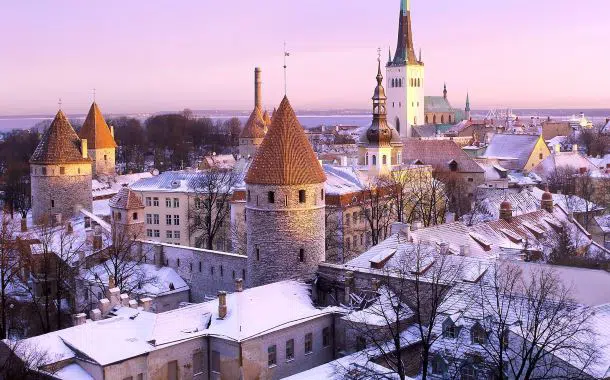
Tallinn
Tallinn is the capital of Estonia as well as its main port, it is located on the northern coast of the country, overlooking the Baltic Sea, 80 kilometers south of Helsinki and is also the most populous city and major economic and commercial center of the country.
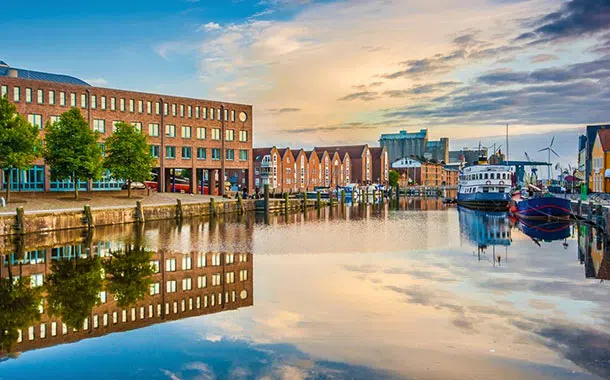
Kiel
Kiel is a city in Eder River and it is near the Baltic Sea. Hamburg and Lübeck are the nearest cities and are about 90 kilometres far from Kiel.
The origins of Kiel are dated back to XII Century. The city was established by Schauenburg Family and it was the farthest north city of the Holy Roman Empire. Among the noteworthy structures, the University is one of the most ancient and was founded in 1665.
During the years, Kiel was subjected to the influence of the neighbouring countries and has been property of Denmark and Sweden. Germany took it back in 1815. At the end of XIX Century, Kiel Canal was opened. It is about 100 kilometres long, and it links the Baltic Sea with the North Sea and it’s been so far one of the most congested canals in the world. Kiel is an important port for the cruises to Northern Europe and has all summer long many departures for the Baltic Capitals and the Norwegian Fjords.
Kiel is an important port of the cruise market: many of the cruises to Northern Europe depart from Kiel. It is no coincidence that it is the most important port in Germany.
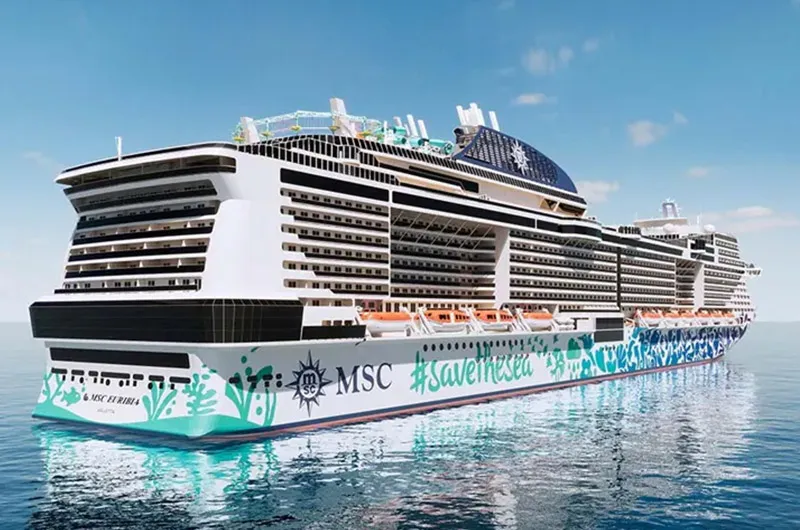
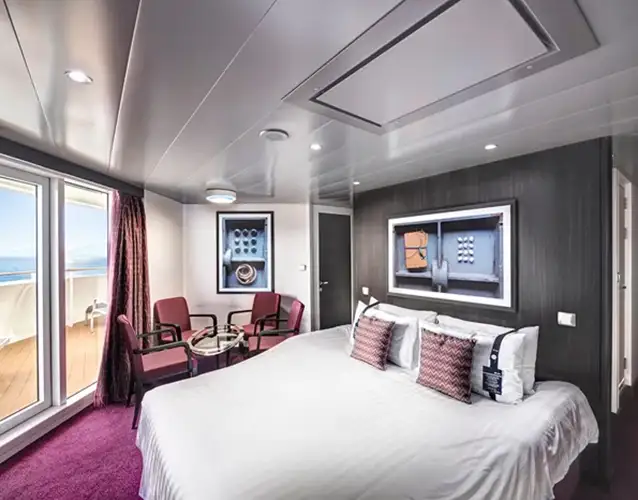
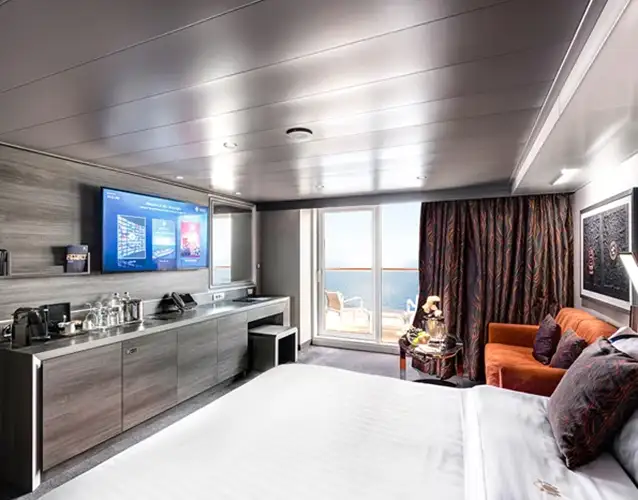
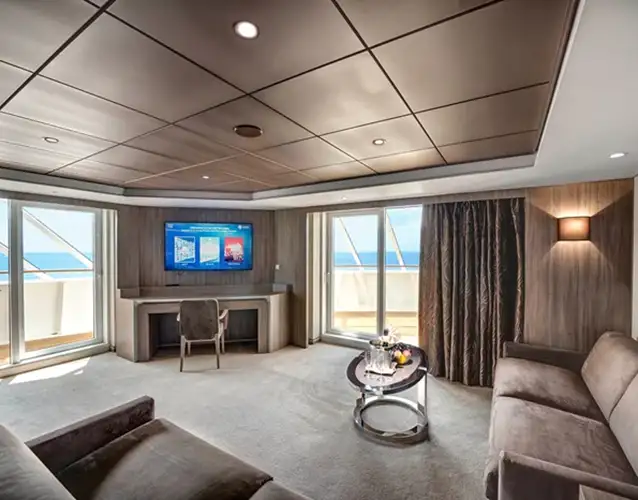
Info on the ship MSC Euribia