Princess Cruises Mediterranean: 10 nights from Athens with Caribbean Princess
Apr 10, 2028
Greece, Albania, Croatia, Montenegro, Italy


Cruise itinerary
Departure Port: Athens ➞
Landing: Civitavecchia
-
 Monday, April 10, 2028 - 7:00 PMAthens
-
Tuesday, April 11, 2028 7:00 AM - 9:00 PMMykonos
-
Wednesday, April 12, 2028 8:00 AM - 5:00 PMChania
-
Thursday, April 13, 2028 9:00 AM - 6:00 PMKatakolon
-
Friday, April 14, 2028 8:00 AM - 5:00 PMSaranda
-
Saturday, April 15, 2028 7:00 AM - 7:00 PMDubrovnik
-
Sunday, April 16, 2028 7:00 AM - 5:00 PMKotor
-
 Monday, April 17, 2028Navigation
 -
Tuesday, April 18, 2028 7:00 AM - 4:00 PMCatania
-
Wednesday, April 19, 2028 7:00 AM - 5:00 PMSalerno
-
Thursday, April 20, 2028 6:00 AMCivitavecchia
Athens
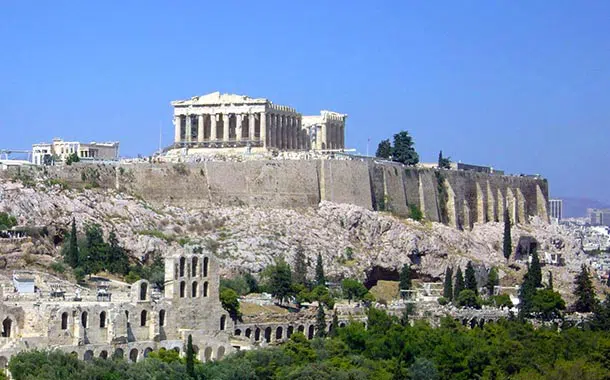
For many, Athens is a city lived two thousand five hundred years ago. Symbol is the mighty Acropolis which dominates almost every view and itinerary of every visitor, crowned by the iconic Parthenon, stands above the city, watching the sprawling modern metropolis in evolution.
Athens, the capital of Greece, is a city where antiquity and modernity, history and contemporary culture blend in a unique way. Everyone knows that the name of the city derives from the ancient Greek goddess of wisdom and justice. However, few people actually know the legend behind this event. According to myth, Athena and Poseidon, the God of the seas, vied for the right to name the city. Poseidon, to impress the inhabitants, gave them water, while Athena gave them an olive branch.
At first the choice fell on Poseidon, since the citizens considered water the most precious gift. When, once they tasted the water, they discovered that it was salty and not drinkable, they changed their minds and recognized Athena as their patron. One of the most famous historical sites in the city is the Acropolis, a majestic hill topped by ancient Doric temples, including the Parthenon, built in 477 BC. and the Erechtheion, built between 421 and 406 BC. Climbing the Acropolis, tourists can enjoy a breathtaking view of the city and the Aegean Sea. However, Athens is not only history, but also a lively cultural capital. In the Plaka district, located at the foot of the Acropolis, it is possible to stroll through the welcoming streets, visit the traditional Greek taverns and enjoy the authentic atmosphere.
Then there are the numerous cultural activities offered by the numerous museums, galleries and theaters present in the city. Athens is an important port for cruise ships that offer trips to the Mediterranean and beyond. Cruises from Athens allow guests to explore the rich cultural heritage of Greece, including the islands of Crete, Santorini and Mykonos, where you can admire the crystal clear waters of the Aegean Sea and a coast of white houses.
In addition to the Greek islands, cruises from Athens also offer the opportunity to visit other exciting Mediterranean destinations, including historic cities in Italy, Croatia and Turkey. Athens is therefore not only the historical and cultural center of Greece, but also an important starting point for cruises in the Mediterranean, which offers guests the opportunity to immerse themselves in the great history and splendid landscapes of this unique region.
Many still think of Athens as an ancient city that thrived two and a half thousand years ago. Its symbol is the mighty Acropolis, which dominates almost every view and the itinerary of every visitor, and it is crowned by the iconic Parthenon, which rises above the city, overlooking the sprawling and evolving modern metropolis.
Perhaps the most significant change is in the historical centre, which is almost unrecognisable since cars have been banned. This has liberated the area with the most significant archaeological sites, creating the longest, and undoubtedly one of the most splendid, pedestrianised zones in Europe. This huge archaeological park has brought past and present together, returning the cultural and social life of the city to the area around the ancient monuments and surrounding neighbourhoods.
Athens remains a city of contradictions; it is both frustrating and seductive. It is the oldest city in Europe, yet still in a state of transition. It is one of the safest and most vibrant European cities - an intoxicating mix of grunge and grace with an undeniably urban soul.
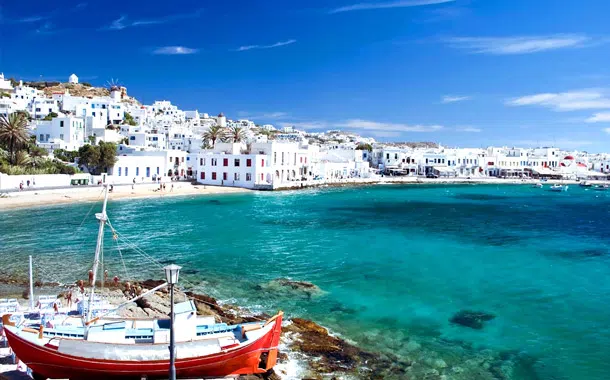
Mykonos
Mykonos is an extremely fun and fascinating place, where the frenetic mix of vacationers, fashionistas and celebrities is magically subdued to the cubist charm of the old town.
Mykonos is famous for being a cosmopolitan destination among the Greek islands and widely recognized as one of the meccas of great tourism. It is one of the most touristy islands in the Aegean Sea. Mykonos tends to be extremely crowded with visitors in July and August. The best time to visit Mykonos is mid-May through June (early in the season, accommodation is much cheaper and it's not that hot), or from September to mid-October.
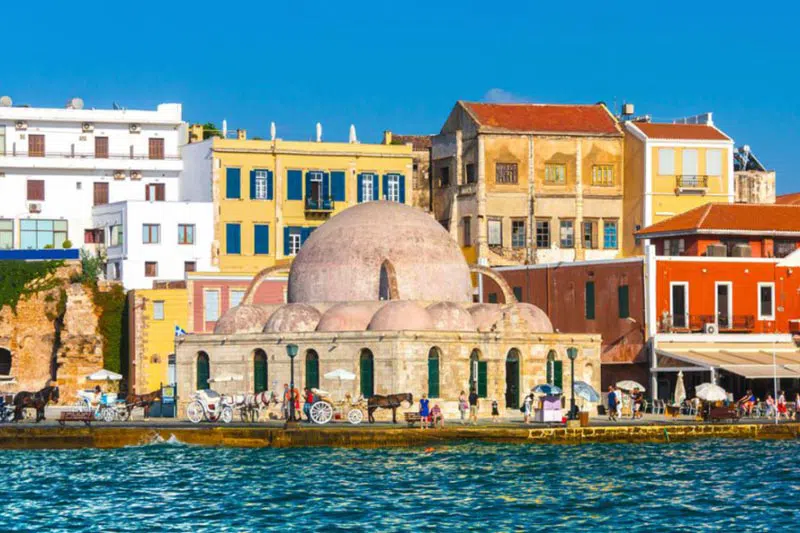
Chania
Chania, the second largest city in Crete, is a jewel overlooking the Aegean Sea, rich in history and natural beauty. Here's what to do during your stop in this city:
1. Walk in the Venetian Port: Start your visit with a walk along the picturesque Venetian port. Admire the Lighthouse, one of the symbols of the city, and visit the Janissaries Mosque.
2. Explore the Historic Quarter: Get lost in the narrow streets of the old quarter, where you can discover craft shops, traditional taverns and colorful houses. Don't miss the opportunity to visit the Archaeological Museum of Chania.
3. Municipal Market: Take a jump to the covered market of Chania, where you can buy local products such as olives, cheeses and spices.
4. Stop in a Local Tavern: Savor Cretan cuisine in one of the taverns on the waterfront or in the alleys of the historic center. Try typical dishes such as dakos, moussaka and oven-baked lamb.
Chania: Crete's Venetian Jewel for Your Cruise
Embark on an unforgettable Mediterranean journey from Chania, Crete's most picturesque city. With its charming Venetian harbor, lighthouse, and labyrinthine Old Town, Chania offers a captivating and romantic setting for your cruise departure. Before setting sail, wander through its narrow alleys, discover ancient ruins, and savor the authentic Cretan cuisine. Chania provides a vibrant blend of history, culture, and stunning coastal beauty, making it an ideal starting point for exploring the Aegean and beyond.
Explore the Aegean and Beyond from ChaniaCruises departing from Chania open up a world of possibilities across the sparkling Aegean and Mediterranean seas. Imagine discovering the ancient wonders of mainland Greece, the volcanic landscapes of Santorini, or the historical richness of Turkey. Whether you seek vibrant island life, serene beaches, or profound historical sites, Chania serves as an excellent launchpad for diverse itineraries. Enjoy the seamless transition from Crete's charming city to the luxurious comfort of your cruise ship, ready for days of relaxation, exploration, and unforgettable moments on the open water, promising a truly enriching voyage.
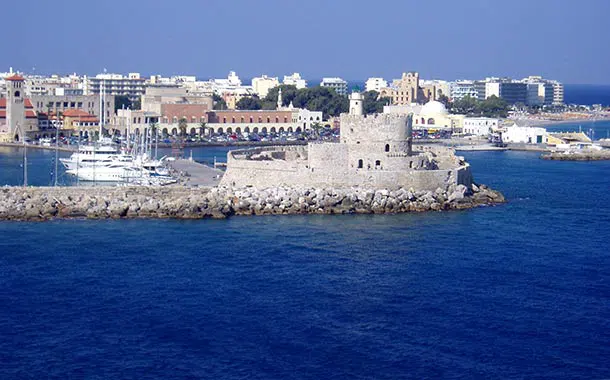
Katakolon
Katakolon is known as the 'gateway to Olympia' in fact it is located just east of the ancient city of Olympia, the birthplace of the Olympic Games.
Katakolon is a seaside town in the municipality of Pyrgos in western Greece. It is located on a picturesque promontory overlooking the Ionian Sea and separating the Gulf of Kyparissia from the rest of the Ionian Sea. It is 11 km west of the center of Pyrgos. The small village of Agios Andreas is located north-west of Katakolon. The port of Katakolon is a very popular stop for cruise ships, offering passengers the opportunity to visit the site of ancient Olympia. Low hills with forests surround Katakolo. In 1865 the Katakolon lighthouse was built. One of the most important sites in Katakolon is the Museum of Ancient Greek technology.
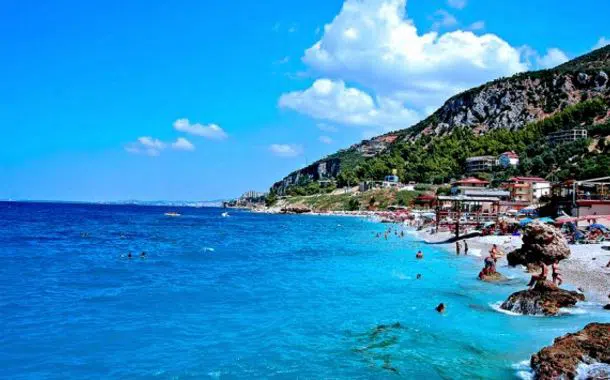
Saranda
Located in the extreme south-west of Albania along the Ionian Sea, opposite the Greek island of Corfu, Saranda is a popular Albanian city, one of the most important tourist cities on the Ionian coast.
The most welcoming and tourist city in Albania, draped along a curved bay with a thin strip of beach. The city developed in antiquity, from the 2nd and 3rd centuries AD, archaeological excavations have revealed the remains in the center of the metropolis.
Despite its lack of popularity, it has a fascinating heritage: a promenade decorated with palm and eucalyptus trees, surrounded by numerous clubs.
The beaches also offer the opportunity to practice numerous water activities.
One of the most beautiful beaches is Kakome Bay north of Seranda: The beach is huge, absolutely stunning.
Blue Eye is a lagoon, so called thanks to its turquoise shades similar to the color of the iris of an eye. At 45 meters deep, the water is incredibly transparent.
Ksamil is a small village near Saranda (15 km) and also has a beautiful beach surrounded by small islands accessible by swimming.
Castle Lekures dating back to the 16th century is located on the hills of Saranda and offers panoramic views of the Ionian Sea. The dominant position of the castle was a strategic point for protecting the city from invasions: on one side the sea and on the other a large tray suitable for cultivation and breeding. The castle has a splendid terrace and a restaurant. It is reachable by car or on foot.
The Butrint National Heritage Park World Heritage by UNESCO, is a natural park, rich in wildlife such as foxes, reptiles, martens, seals, turtles and various birds. The climate is mild and sunny for most of the year. The economy of the city of Saranda is mainly based on agricultural products from the Valtos valley, on the cultivation of mussels from the salt lake of Vouthrotos (Butrint).
In addition to the slow and constant growth of tourism, fishing is another source of wealth.
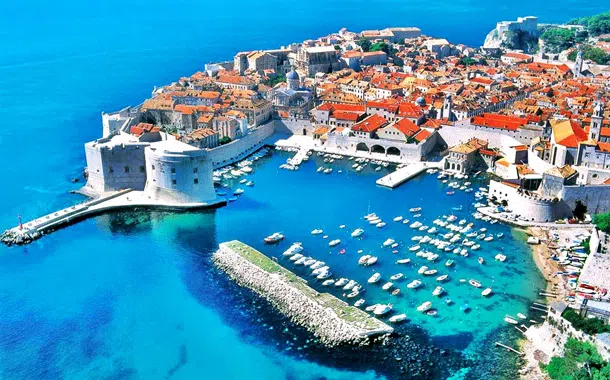
Dubrovnik
Dubrovnik is definitely special. A magnificent curtain wall surrounds marble streets and Baroque buildings exude a pearly light in the Adriatic sun.
Picturesque and artistic, Dubrovnik is a tourist hotspot and port in southern Dalmatia, at the foot of the Srđ mountain. From a historical and cultural point of view, it has been included in the list of UNESCO World Heritage Sites.
Thanks to its beauty and everything it has on offer for tourists, Dubrovnik is one of the most attractive destinations in the Mediterranean, so much so that the city can be visited all year round. In addition to its world-famous architectural heritage, this place has beautiful rocky beaches, pebble beaches and sandy beaches, enjoys a Mediterranean climate and also has lush vegetation. The main pedestrian street, Placa, is a melange of cafes and shops with monuments at each end.
Churches, monasteries and museums adorned with finely carved stone, recall an eventful history and a rich artistic tradition. Beyond the city there is a paradise of beaches, wooded peninsulas and a crystal-clear sea dotted with lush islands.
The city is also known for its delicious cuisine and its infrastructure of hotels for tourists. The city offers a wide selection of first-class restaurants, numerous sport and leisure activities, as well as cultural and entertainment events
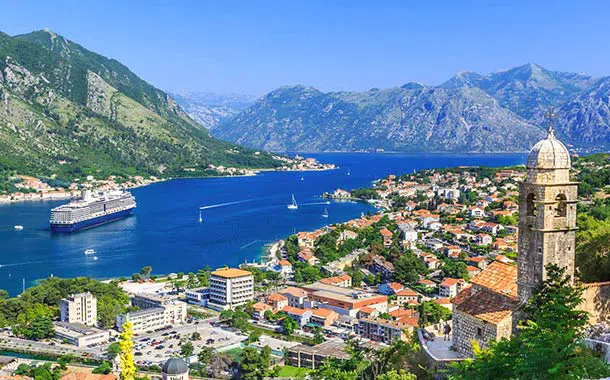
Kotor
The Adriatic Sea penetrates the jagged coast of Montenegro and winds between high mountains until it meets the exquisite and walled medieval city of Kotor.
Along the Adriatic coast of the former Yugoslavia, we find one of the most unique and fascinating European coastal areas, the city hidden in Montenegro, Kotor.
Located at the bottom of a bay, the beautiful medieval city of Kotor is considered a Mediterranean location surrounded by cliffs and an interesting historic wall. The tourist attractions of Kotor are easily reached with a pleasant walk. This small walled city, declared a UNESCO World Heritage Site, has compact dimensions that make it comfortable and easy to visit.
The central part of Kotor was built between the XII and XIV centuries. A historic center surrounded by a rather thick wall, four and a half kilometers long and fifteen meters high. This immense fortified wall reaches the bastion of Sveti Ivan (San Giovanni).
Inside the walls, it preserves an urban network cut into the stone. Its most emblematic work is the Cathedral of San Trifone, built in the 12th century. Inside the church it contains objects and frescoes sculpted during the 14th century. Furthermore, The Orthodox Church of San Nicolas, built between 1902 and 1909 in neo-Byzantine style and that of San Luca (13th century) built in Romanesque and Byzantine style.
Together with the churches, the city includes many palaces that tell its history: the Maritime Museum, located in the Grgurina Palace, a splendid baroque building located in the historic center of the country. The Drago house, with its beautiful Gothic windows, the Prima building, where Renaissance and Baroque lines are combined, the Ducal Palace and the Bizanti, both from the 17th century and the Napoleonic theater in the 19th century.
In Kotor, it is very common to see locals located along the rocky coast in the lower part of the city. In the old part of the area you will find many shops and restaurants that will delight your eyes. This location is the classic ideal city to spend quiet days or for a romantic getaway.
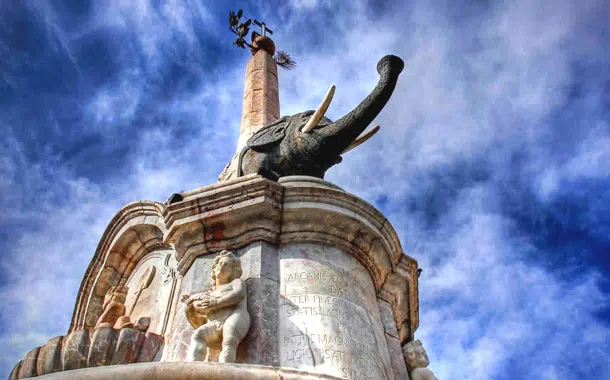
Catania
Set sail from Catania for your Mediterranean Cruise Holiday. Discover on our website all departures with embarkation from Catania and visit Barcelona, Marseille and Naples on board the best cruise ships. The city's Baroque historic centre has been a UNESCO World Heritage Site since 2002.
Catania is a beautiful city on the east coast of Sicily, the second largest after Palermo, located at the foot of Europe's largest volcanic site: Mount Etna. Besides being really beautiful and full of tourist attractions, Catania is also a very important and complete city.
The hub of the city is the port, the main economic center of the region, and one of the busiest in Italy, it is bustling both day and night. An ideal city to enjoy the pleasures of life and savour true Mediterranean
gastronomy Catania will offer you magical moments. Visit the city's various markets, the colourful and lively Pescheria, where you will find the best fresh fish in town, or stop at the market in Piazza Carlo Alberto, also known as Fera'o Luni, where a characteristic flea market is also held on Sundays.
If you want a snack, don't miss the typical Sicilian cannoli with ricotta cheese or have breakfast with a Sicilian brioche and almond granita, a real treat for your palate before arriving at the port and embarking on your Mediterranean cruise from Catania.
Set sail from Catania, the vibrant baroque city at the foot of Mount Etna, on Sicily's eastern coast. This bustling port offers a dramatic backdrop for your cruise departure, blending ancient history with a dynamic modern spirit. Before embarking, explore the city's UNESCO-listed architecture, taste its famous street food, and gaze upon the majestic volcano. Catania provides a unique and culturally rich starting point for an unforgettable journey across the Mediterranean.
Mediterranean Wonders from the Heart of SicilyCruises departing from Catania offer diverse itineraries that span the enchanting Mediterranean. Whether you dream of exploring the Greek Isles, the historical cities of mainland Italy, or the sun-kissed coasts of North Africa, Catania serves as an excellent launchpad. Enjoy the seamless transition from the lively streets of Sicily to the luxurious comfort of your cruise ship, ready for days of relaxation, exploration, and cultural immersion. Each voyage from Catania promises breathtaking scenery and unforgettable experiences on the open water.
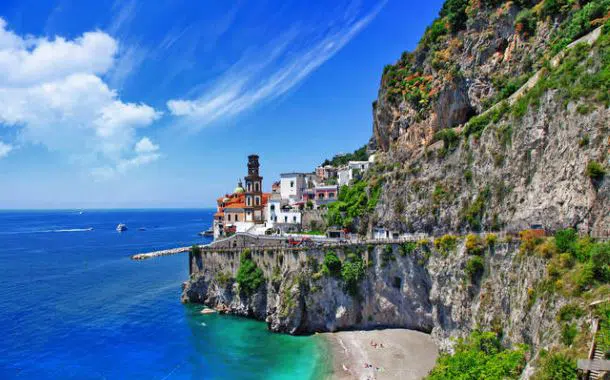
Salerno
Salerno is an Italian municipality with 133,693 inhabitants, capital of the province of the same name in Campania, the second municipality in the region by number of inhabitants and the thirtieth at national level. The city of Salerno occupies a spectacular position overlooking the Gulf, where the splendid Amalfi Coast is located, a famous tourist destination in Italian Campania. It has a rich history and a deep-rooted tradition.
During the Middle Ages the city was the capital of the homonymous Lombard principality and then of the Norman duchy of Puglia and Calabria which included a large part of the continental South and was the original nucleus of the future Kingdom of Naples and the Two Sicilies.
Salerno was home to the School of Medicine, which was the first and most important medical institution in Europe at the beginning of the Middle Ages and as such is considered by many a forerunner of modern universities. Ideal heir to the famous medical school is the University of Salerno, located since 1988, in the form of a campus, in the neighboring municipalities of Fisciano and Baronissi.
From February to August 1944 Salerno was the seat of the Italian government,[10] hosting the governments Badoglio I, Badoglio II and Bonomi II which led to the Turn of Salerno.
Starting from the second half of the nineties, the city began a series of policies aimed at improving livability, urban decor and projecting, especially as regards tourism, Salerno at national and international level. The city is therefore a candidate to become one of the poles of cruise tourism and contemporary architecture, hosting works by the greatest architects of the 21st century, such as Fuksas, Zaha Hadid, Bohigas, Chipperfield, Calatrava and Bofill.
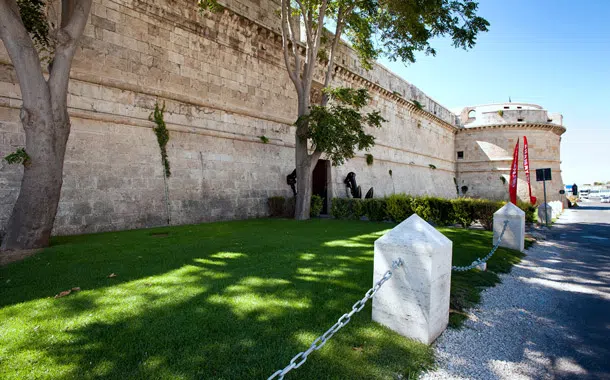
Civitavecchia
The port town of Civitavecchia is about an hour away from the Italian capital and is where ships will dock before bringing lucky holidaymakers into the city of Rome. It is an important port for cruise ships and ferries, connecting to Corsica, Sardinia and Barcelona. Civitavecchia is a town in the heart of Lazio. It is a small, sleepy town that overlooks the sea from behind the busy and chaotic commercial port.
Spreading out along the coast, the town is situated between the Mignon river to the north and the Marangone river to the south.
Civitavecchia is a port town in the heart of Italy, in the province of Rome, 80 kilometres northwest of the capital.
It is shrouded in art and history, and is rich in bays and coves with sandy and rocky beaches. Today the town is the departure point for many cruises and journeys around the Mediterranean. It is an excellent tourist destination where you can simply enjoy 'la dolce vita' or visit the amazing historical monuments. On a level with the majestic ancient capital, in terms of its monuments, gardens, villas and works of art, it also gives you easy access to the Tyrrhenian Sea, the Terme della Ficoncella, and the Etruscan ruins.
Civitavecchia will guarantee you an original and enchanting experience.
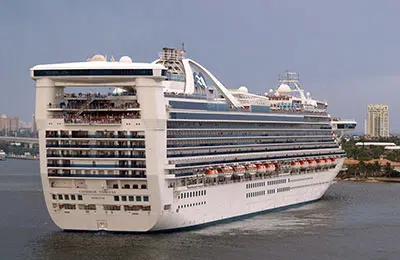
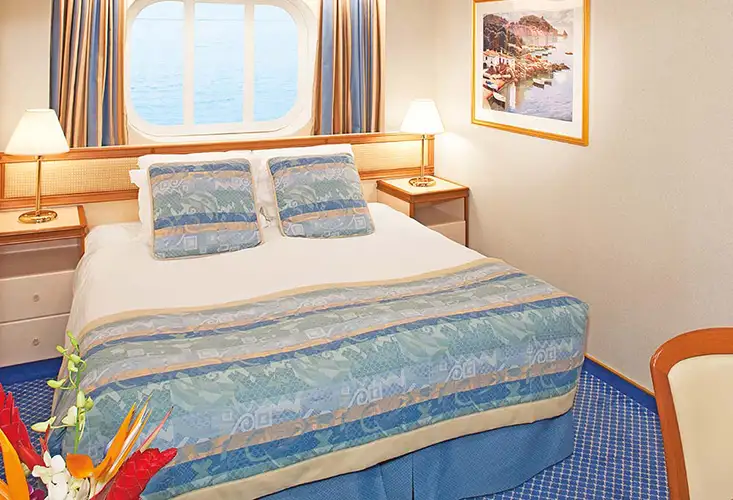
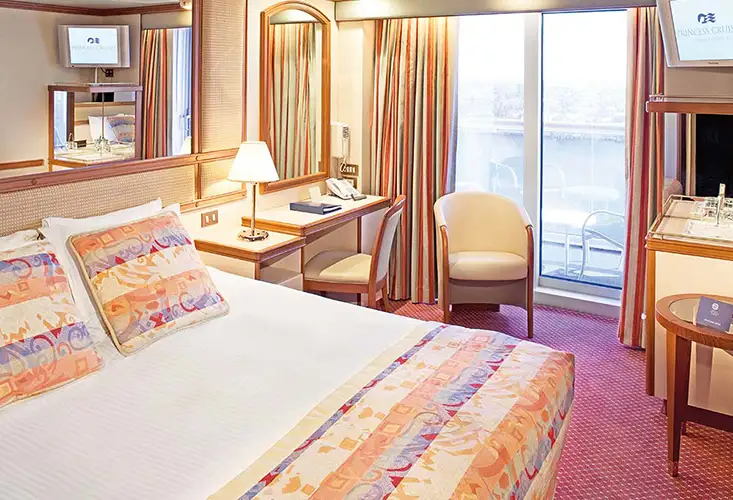
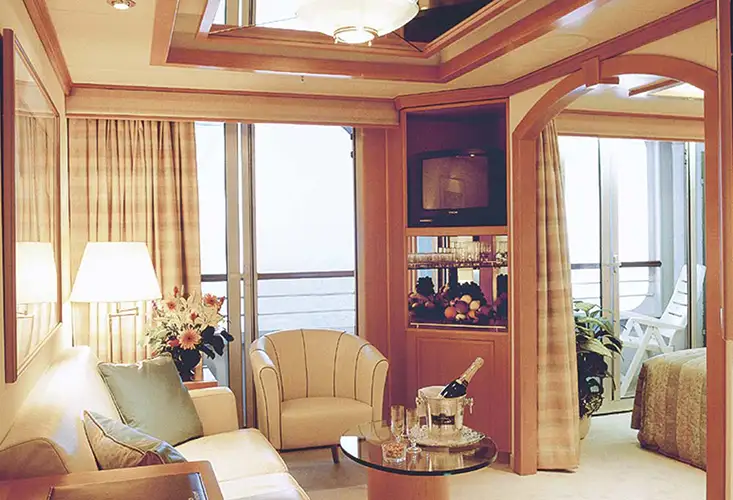
Info on the ship Caribbean Princess