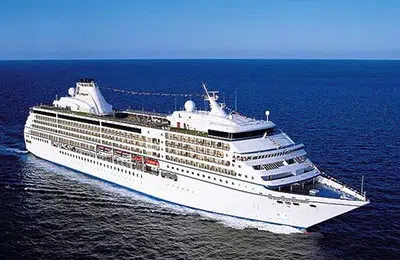
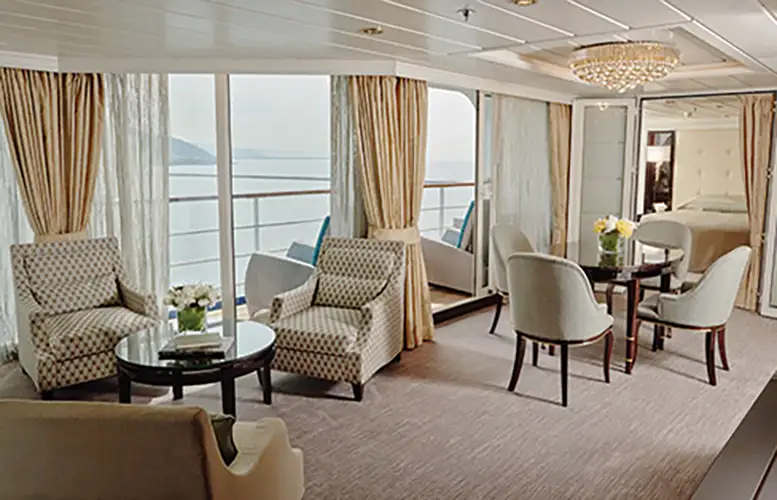
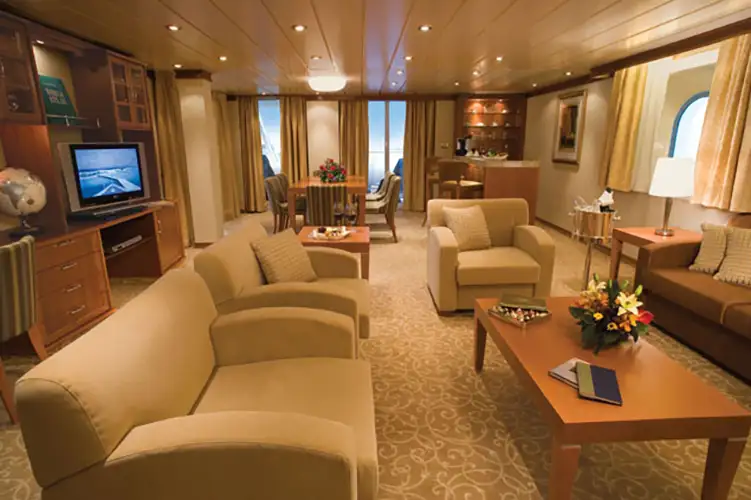
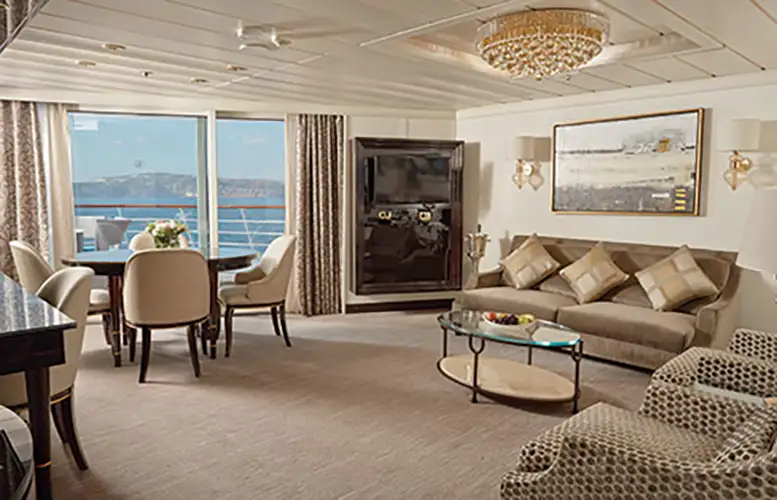
Regent Northern Europe: 11 nights from Helsinki with Seven Seas Mariner
Aug 18, 2028
Finland, Latvia, Poland, Denmark, Sweden


Cruise itinerary
Departure Port: Helsinki ➞
Landing: Copenaghen
-
 Friday, August 18, 2028 - 5:00 PMHelsinki
-
 Saturday, August 19, 2028Navigation
 -
Sunday, August 20, 2028 7:00 AM - 5:00 PMRiga
-
Monday, August 21, 2028 8:00 AM - 5:00 PMLiepāja
-
Tuesday, August 22, 2028 8:00 AM - 6:00 PMGdynia
-
Wednesday, August 23, 2028Navigation
-
Thursday, August 24, 2028 8:00 AM - 5:00 PMRonne
-
Friday, August 25, 2028 7:00 AM - 4:00 PMKarlskrona
-
Saturday, August 26, 2028Navigation
-
Sunday, August 27, 2028 9:00 AM - 7:00 PMAarhus
-
Monday, August 28, 2028 7:00 PM - not foundCopenaghen
-
Tuesday, August 29, 2028 not found 5:00 PMCopenaghen
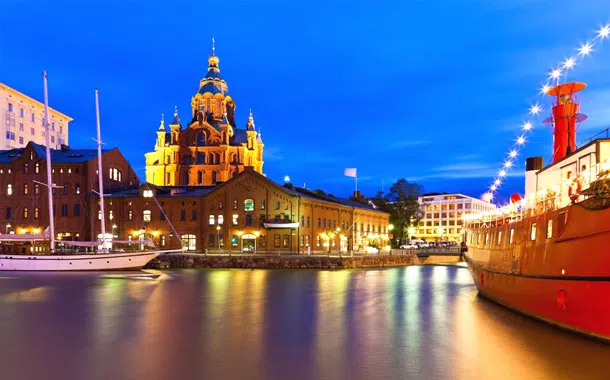
Helsinki
Helsinki, the capital of Finland, is a lively port city surrounded by beautiful small islands and beautiful green spaces. The atmosphere here is both relaxing and stimulating thanks to the city's large number of top quality restaurants, bars and discotheques.
Winter temperatures are relatively high due to the latitude, averaging around -5°C in January and February. The average temperature from June to August varies from 19 °C and 21°C.
The Finns have long been admired for their graceful design and typically immaginative architecture. Lots of past and present styles are represented in this metropolis, ranging from the medieval and the neoclassical ones to the beautiful ultra-modern creations. The beauty of the surrounding nature harmoniously blends with the high-tech and the contemorary ways of the city. In this lively city you will find kind people, a welcoming and relaxed lifestyle and beautiful gardens and parks.
Tourism in Helsinki is largely dominated by culture. The city has lots of museums including the National museum (Kansallis Museum), the Museum of Contemporary Art (Kiasma), the Museum of Classic Art
(Ateneum) and the Natural History Museum. Suomenlina is a beautiful island off the coast of Helsinki, its special feature being the presence of ancient fortifications. The landscape is beautiful, the island is quiet and it is perfect for walking (it takes only 2 hours to walk around the island).
Finally, try the Esplanade Park, which has been open since 1812 and has numerous statues honouring poets and writers. The walk is very pleasant and numerous concerts are organised during the summer.
Winter temperatures are relatively high given the latitude, with an average of around -5°C in January and February. The average maximum from June to August, in turn, fluctuates between 19 and 21°C.
The Finns have long been admired for their graceful design and typically imaginative architecture. Many past and present styles are represented in this metropolis, from medieval to neoclassical, to superb ultra-modern creations. The beauty of the surrounding nature blends harmoniously with high-tech and the contemporary modes of the city.
In this sparkling city you will find friendly people, the welcoming and relaxing lifestyle, embellished by beautiful gardens and parks.
Tourism in Helsinki is largely dominated by culture. The city has many museums, including the National Museum (Kansallis museum), the Museum of Contemporary Art (Kiasma), the museum of classical art (Ateneum) or the Museum of Natural History.
Suomenlina is a beautiful island off the coast of Helsinki, its particularity is the presence of ancient fortifications. The landscape is beautiful, the island is quiet and it's perfect for walking (it only takes 2 hours to go around the island).
Finally, try the Esplanade Park open since 1812, there are numerous statues in honor of poets and writers. The walk is very pleasant and during the summer many concerts are organized.
Riga
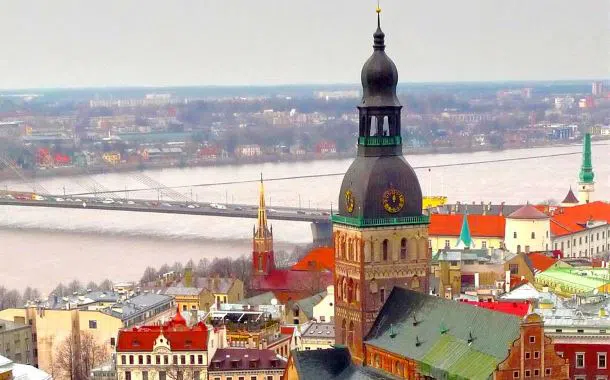
Riga, the capital of Latvia and the largest metropolis in the Baltic States, has the craziest nightlife of the three states.
The city is located near the Daugava Rigaian bay. Even today, Riga is very interesting when it comes to business opportunities and activities. The old port is famous for its Art Nouveau buildings, generous in constructions and a well-preserved center. After the particularly depressed economic period after independence in 1991 the country lost many of its industries in the great post-Soviet whale hunt, it is now highly developed in its education system and has a great cultural value and therefore cannot be considered as the backbone of the Latvian economy, as well as the largest center of education and science. Every year numerous exhibitions, conferences and cultural events take place in Riga and contribute to the city's international reputation. And it is charming to walk through the alleys of the historic center to admire splendid buildings such as the House of the Three Brothers, they are three houses next to each other in Maza Pils iela where a museum of architecture is currently housed, the House of the Blackheads, one of the best-known buildings in the Old Town. Don't miss the churches of St. Peter and St. John and the Cathedral.
Riga has many bars, clubs and discos, mainly located in the historic center.
Liepāja
Gdynia
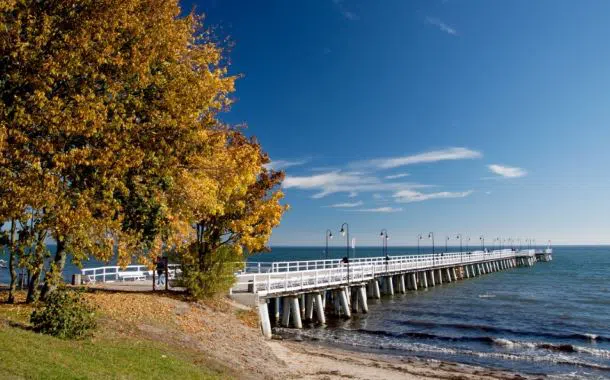
Gdynia is a town located in the north of Poland, in the Gulf of Gdansk and Warsaw, the capital, is about 380 km away. Part of a combination of three cities, (Gdynia, Gdansk and Sopot) represent the "lithe" a population of over a million inhabitants. Once known as a small fishing village, the city has developed considerably, especially after the end of the Second World War, becoming the largest Polish port. Its unique and modern environment delights tourists both for its maritime infrastructure and for its cultural life. The territory welcomes various cultural events such as the Polish Film Festival, nicknamed the "Polish Cannes." The outdoor music festival, which brings together various international artists, is proposed every year near the local beach. The city is particularly populated in summer: tourists are attracted thanks to its proximity to the sea and its large sandy beaches. Throughout the year, it plays the role of one of the main seaports in Poland and the site of an important shipyard. Near the port, you will find museums of various ships that can be visited. The country is relatively modern, however, vacationers who come to stay in this territory are often looking for its past and its historical buildings, such as the popular and ancient church of San Michele Arcangelo or the neo-Gothic house of the XVII century. The hills and coasts also intrigue nature lovers. The walk, with a length of 1.5 km, is very popular. In short, this place will be a perfect destination for those seeking rest but without giving up the pleasures of life, offering you a wide range of activities, including markets, clubs and excellent restaurants.
Ronne
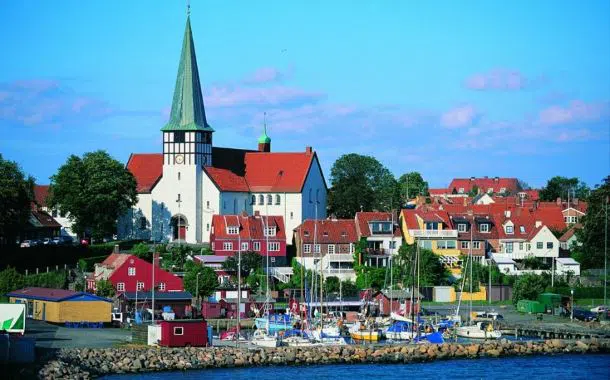
Rønne is the main city of the small rocky island of Bornholm, it is also a port metropolis that connects Bornholm in Denmark (Køge, south of Copenhagen), Sweden, Germany, and Poland. The city of Ronne and Nexø were bombed after the end of the Second World War. Despite this, there are still many old buildings rich in history. The Swedish State donated 175 particular red wooden houses to help rebuild the city, which are still visible today. Cultural capital of the island: it has the oldest theater in Denmark, the Bornholm Concert Hall. Considered as a starting point for excursions around the island, it has been given the name of Pearl of the Baltic. With its beautiful countryside, rocky coasts and sandy beaches, the place is a popular tourist destination. Discover the medieval fortress of Hammershus, the largest in Northern Europe, a round church from the Middle Ages, a traditional mill, herring smoke, and much more. The easternmost point of Denmark is the island of Christiansø, characterized by the absence of cars. The island mainly lives on fishing, handicrafts, agriculture, and summer tourism, but is also committed to the growth and development of renewable energy.
Karlskrona
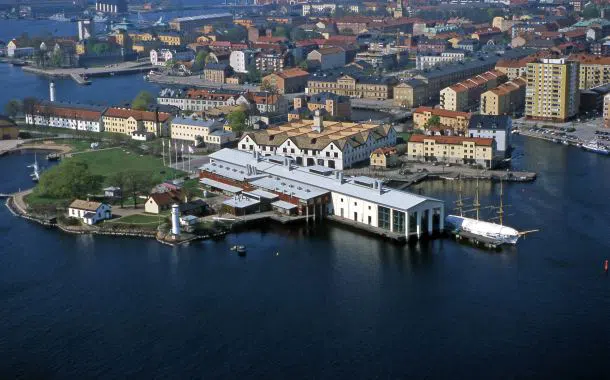
Located on the south coast of Sweden, opposite Poland, it is made up of several small islands (Trosso, Salto, Pantarholmen). After the Danes, this region was redeemed by Sweden in 1658. King Karl XI, in 1680, decided to build a large naval base in the south of the country, on the Trossö peninsula, to protect its territories and control the Baltic Sea as much as possible, thus founding the city of Karlskrona. The naval base, still present, is no longer accessible, but you have the opportunity to see a submarine and several military ships from a certain distance. Furthermore, there is also a museum on the history of the Strumholmen where you can observe naval uniforms and impressive ship models. Over the centuries, the situation has changed becoming less important on a political level, on the contrary, in the historical and architectural fields, it has evolved very little, becoming a UNESCO World Heritage Site since 1998. A good example is the central Baroque-style church (Fredrikskyrkan), dating back to 1690 and built on the highest point of the island. Not far from there is the "Admiralstorn", a large wooden tower from 1699, originally used to indicate the time to the workers of the shipyards. Finally, passing through the port, they make daily trips to Poland and Gdynia.
Aarhus
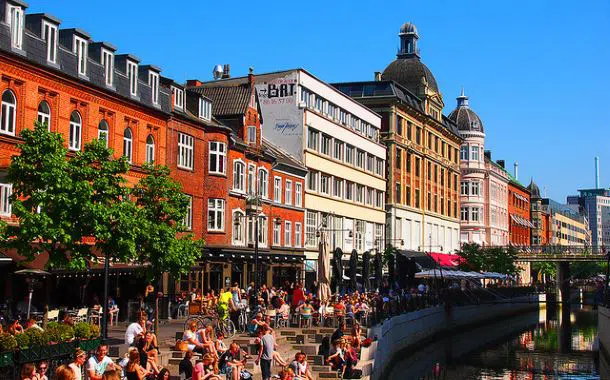
Aarhus is a dynamic city on the peninsula of Jutland in Denmark. From here, the beach, the harbor and the forest are all within a 15-minute bike ride. 315,000 people live in Aarhus and 1.2 million people live in the metropolitan area of Aarhus Area.
Aarhus is a dynamic city on the peninsula of Jutland in Denmark. The beach, the port and the forest can be reached in 15 minutes by bycicle. 315.000 inhabitants live in Aarhus and 1,2 million people live in the metropolitan area of Aarhus Area. Aarhus has been selected ar European Capital of Culture for the year 2017 and is a combination of innovation, media and communications with architecture and design and has a wide variety of cultural institutions. In Aarhus you can find gatherings of highly specialised companies, research and educational structures guided by a desire of collaboration and innovation. Aarhus stands out in renewable energy, food, health and productivity. As it is a university city, the atmosphere is a vibrating mixture of young energy. Welcome to Aarhus.
Copenaghen
Copenhagen, literally "port of the merchants", is the capital of Denmark and one of the country's most densely populated cities. Originally a city mainly inhabited by fishermen, it became a fundamentally important port for trade.
Copenhagen is a year-round tourist destination and in summer the flow of tourists increases considerably thanks to Northern Europe cruises.
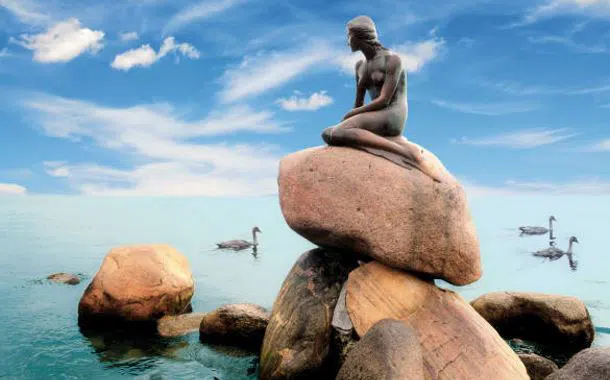
It is very common to add a stay in the city before a cruise, to take in its distinguishing relaxing atmosphere and see what it has to offer. Among its famous attractions you cannot miss the statue of the Mermaid which is located right at the entrance to the port and the Tivoli Gardens, one of the world's largest amusement parks, opened in 1843 and loved by everyone.
Copenhagen (København in Danish and 'Copenaga' in Italian [no source]) is the capital and the most populous city of Denmark with 518,574 inhabitants in the municipality (1,167,569 in the urban area). The city stretches across the islands of Sjælland and Amager and is separated from the city of Malmö in Sweden by the strait of Øresund.
Copenaghen
Copenhagen, literally "port of the merchants", is the capital of Denmark and one of the country's most densely populated cities. Originally a city mainly inhabited by fishermen, it became a fundamentally important port for trade.
Copenhagen is a year-round tourist destination and in summer the flow of tourists increases considerably thanks to Northern Europe cruises.
It is very common to add a stay in the city before a cruise, to take in its distinguishing relaxing atmosphere and see what it has to offer. Among its famous attractions you cannot miss the statue of the Mermaid which is located right at the entrance to the port and the Tivoli Gardens, one of the world's largest amusement parks, opened in 1843 and loved by everyone.
Copenhagen (København in Danish and 'Copenaga' in Italian [no source]) is the capital and the most populous city of Denmark with 518,574 inhabitants in the municipality (1,167,569 in the urban area). The city stretches across the islands of Sjælland and Amager and is separated from the city of Malmö in Sweden by the strait of Øresund.
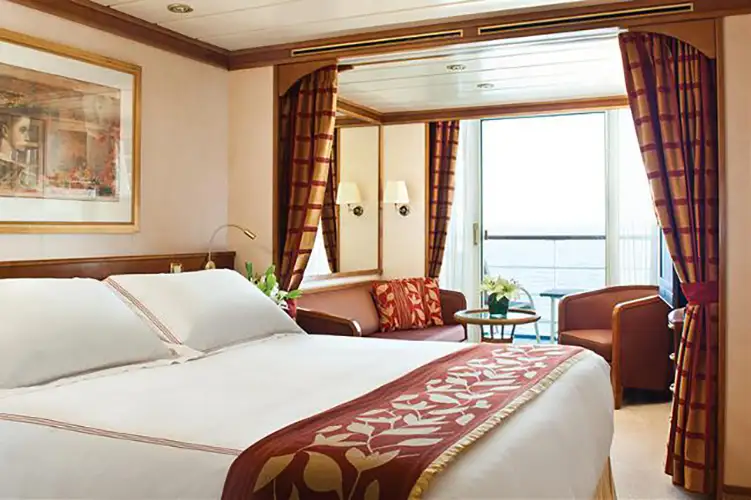
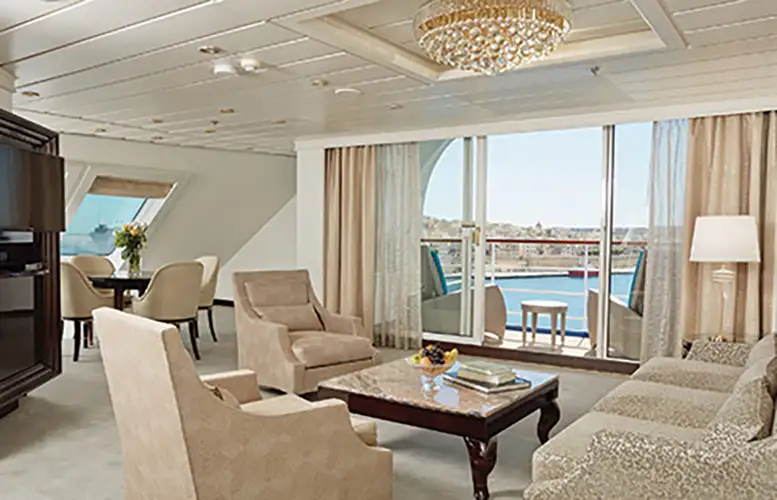
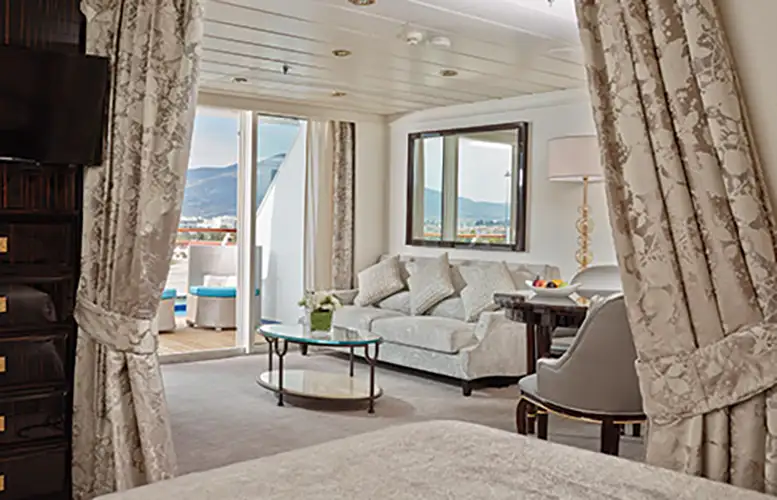
Info on the ship Seven Seas Mariner