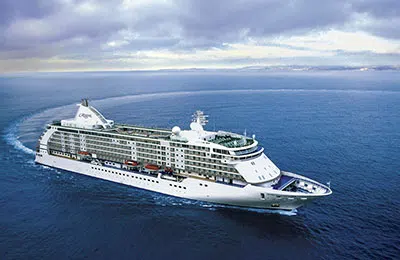
Regent Northern Europe: 11 nights from Southampton with Seven Seas Voyager
Sep 10, 2028
United Kingdom, Netherlands, Belgium, France, Portugal


Cruise itinerary
Departure Port: Southampton ➞
Landing: Lisbon
-
 Sunday, September 10, 2028 - 5:00 PMSouthampton
-
 Monday, September 11, 2028Navigation
 -
Tuesday, September 12, 2028 7:00 AM - 5:00 PMAmsterdam
-
Wednesday, September 13, 2028 7:00 AM - 4:00 PMZeebrugge
-
Thursday, September 14, 2028 8:00 AM - 9:00 PMLe Havre
-
Friday, September 15, 2028Navigation
-
Saturday, September 16, 2028 7:00 AM - 5:00 PMLa Rochelle
-
Sunday, September 17, 2028 7:00 AM - not foundBordeaux
-
Monday, September 18, 2028 not found - 7:00 PMBordeaux
-
Tuesday, September 19, 2028Navigation
-
Wednesday, September 20, 2028 8:00 AM - 5:00 PMOporto
-
Thursday, September 21, 2028 7:00 AM 5:00 PMLisbon
Southampton
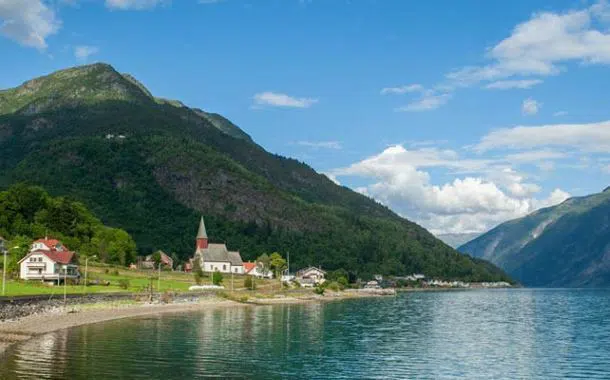
Southampton is a city positioned in the South of Great Britain and its port is one of the main ports in Europe. From the port of Southamptos it is possible to set sail for a Cunard transatlantic cruise and reach New York, or visit Amsterdam and Belgium with an MSC cruise. The city offers, further to the New Forest National Park, a wide natural park with its suggestive woods, also many museums and art galleries and remarkable architectural works. Noteworthy is King John’s Palace, of Norman origins as well as the old walls with 7 entrances to the city. An evidence of the Victorian Age is Tudor House, collecting objects dated back to that period. For the art lovers, Southampton City Art Gallery offers exhibitions of any kind of art, from drawing to photography with shows that attract many visitors.
Southampton: The UK's Grand Gateway to Global CruisesSet sail from Southampton, the historic and vibrant port city on England's south coast, renowned as the UK's premier cruise departure point. With its rich maritime heritage, including its association with the Titanic, and excellent transport links, Southampton offers a grand beginning to voyages across the Atlantic, to the Mediterranean, Northern Europe, and beyond. Before embarking, explore its ancient city walls, maritime museums, and lively shopping districts. Southampton provides a seamless and exciting start to your global cruise adventure.
World-Class Journeys Begin from SouthamptonCruises departing from Southampton open up a world of possibilities, from transatlantic crossings to the Americas, sun-drenched Mediterranean escapes, and captivating Northern European explorations. Whether you dream of iconic cityscapes, breathtaking natural wonders, or culturally immersive experiences, Southampton serves as an ideal launchpad. Enjoy the convenience of a world-class port and the anticipation of new discoveries as you leave the shores of England for unforgettable experiences on the open water, promising relaxation, entertainment, and endless exploration. Each voyage from Southampton promises a journey of a lifetime.
Amsterdam
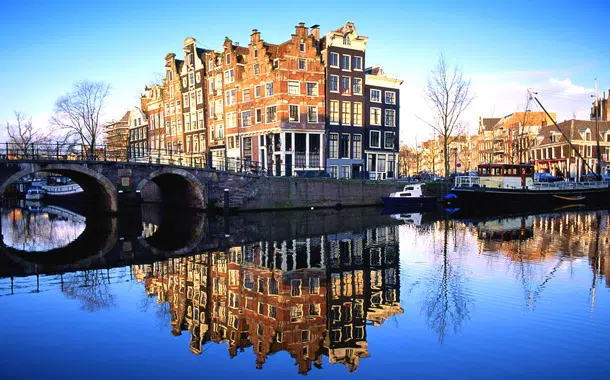
Amsterdam is a charming city with a particularly relaxing and serene atmosphere, despite its large size. The city has been a World Heritage Site since 2010 and has buildings dating back to the sixteenth and seventeenth centuries. It is no coincidence that it is one of the most visited cities in the world.
The structure of the city is determined by a network of charming waterways. The historic center, which dates back to the 13th century, is surrounded by five concentric canals - the Grachtengordel - built in the 17th century as part of a perfectly successful expansion project designed to create a unique and refined urban environment.
It is here that the city's mercantile class built its characteristic gabled houses, with bright, gracefully decorated colors, whose romantic features are reflected in the olive-green waters of the picturesque canals.
Zeebrugge
Connected to Bruges by 7.5-kilometer canal, Zeebrugge is a seaside resort that looks to the future.
On the sea front, hotels and cafes offer a warm welcome. Zeebrugge is the most important Belgian fishing port. The Zeebrugge wholesale fish market, located in a modern complex in the inner port, is one of the largest and sophisticated of its kind in Europe. Zeebrugge also has an attractive tourist port that can contain a maximun number of 100 ships. Furthermore, its geographical position is very convenient, near the beautiful city of Bruges, the trendy seaside resort of Knokke and the picturesque village of Lissewege.
On the seafront, hotels and cafes offer their warmest welcome. Zeebrugge is the most important Belgian fishing port. The Zeebrugge wholesale fish market, installed in a modern complex in the inner harbor, is one of the largest and most sophisticated of its kind in Europe. Zeebrugge also has an attractive marina that can accommodate around 100 ships. Furthermore, it enjoys a very convenient geographical position, a few km from the beautiful Bruges, the trendy seaside resort of Knokke and the picturesque village of Lissewege.
Le Havre
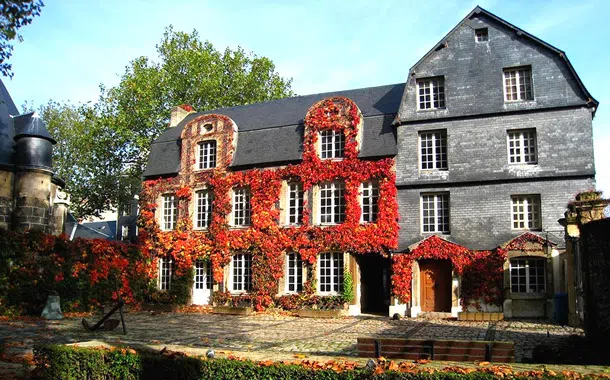
Le Havre is worth a visit, not only as a stopover on the way to Paris or other inland destinations, but also as one of the great examples of post-war planning. It is a strange and strangely fascinating city, listed by
Unesco as a World Heritage Site.
Wandering through the streets of the seaside town of Le Havre, one might think one had stumbled upon a forgotten outpost of the Eastern Bloc. Obliterated by World War II bombings, the city was completely rebuilt by the Belgian architect Auguste Perret and, what emerged from the ashes of old Le Havre, is a kind of love letter to concrete: endless rows of blocks of buildings, straight avenues stretching out from the central square, dominated by the 100 m high 'Stalinist Baroque' style cathedral, looks like something straight out of the pages of '1984'.
Walking through the streets of the seaside city of Le Havre, you might think you've stumbled into a forgotten outpost of the Eastern Bloc. Erased by the bombings of the Second World War, the city was completely rebuilt by the Belgian architect Auguste Perret and, what emerged from the ashes of old Le Havre, is a kind of love letter to concrete: endless rows of blocks of buildings, straight avenues that extend out of the central square, dominated by the 100 m high cathedral in 'Stalinist Baroque' style, looks like something directly from the pages of '1984'.
La Rochelle
Bordeaux
Bordeaux is city on the Atlantic Ocean and its port hosts big ships. The city had initially the name Burdigala and was established in III Century B.C. by the Gallic people.
It was a neuralgic centre for the International commerce of tin and lead. After the arrival of the Romans, Bordeaux becomes one of the richest cities of Gallia and is robbed many times by populations such as Visigoths and Vandals. With the passing of time, the City starts economic relationships with England trading in salt and wine and, in XVI Century, also the colonial sugar and slaves start having a leading role in the sustenance of the city.
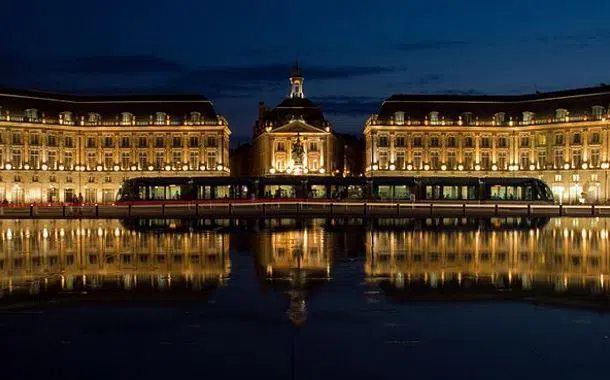
Bordeaux has a liveable city centre that can be visited by foot and that offers beautiful attractions and energy. At night, the city get crowded with young people filling up the main squares and the bars where you can taste excellent wines and plunge in the romantic atmosphere that the city assumes after the sunset. You can’t miss out Château de la Brède, a gothic style castle dated back to XIV Century, surrounded by a moat and an English garden. The philosopher Montesquieu lived here and tourists can visit his library and his bedroom that are just like they were in XIX Century.
We suggest to visit also the beautiful Saint Eloi Church. Established in XII Century, the construction and renovation works lasted until 1400’s. The current structure is dated back to this period. The church is one of the stop-overs of Santiago de Compostela walking tour and is part of UNESCO World Heritage. Bordeaux offers a wide variety of gastronomic and wine choices. There are many restaurants and bars where you can taste the best wines on the market and an amazing cuisine.
Bordeaux
Bordeaux is city on the Atlantic Ocean and its port hosts big ships. The city had initially the name Burdigala and was established in III Century B.C. by the Gallic people.
It was a neuralgic centre for the International commerce of tin and lead. After the arrival of the Romans, Bordeaux becomes one of the richest cities of Gallia and is robbed many times by populations such as Visigoths and Vandals. With the passing of time, the City starts economic relationships with England trading in salt and wine and, in XVI Century, also the colonial sugar and slaves start having a leading role in the sustenance of the city.
Bordeaux has a liveable city centre that can be visited by foot and that offers beautiful attractions and energy. At night, the city get crowded with young people filling up the main squares and the bars where you can taste excellent wines and plunge in the romantic atmosphere that the city assumes after the sunset. You can’t miss out Château de la Brède, a gothic style castle dated back to XIV Century, surrounded by a moat and an English garden. The philosopher Montesquieu lived here and tourists can visit his library and his bedroom that are just like they were in XIX Century.
We suggest to visit also the beautiful Saint Eloi Church. Established in XII Century, the construction and renovation works lasted until 1400’s. The current structure is dated back to this period. The church is one of the stop-overs of Santiago de Compostela walking tour and is part of UNESCO World Heritage. Bordeaux offers a wide variety of gastronomic and wine choices. There are many restaurants and bars where you can taste the best wines on the market and an amazing cuisine.
Oporto
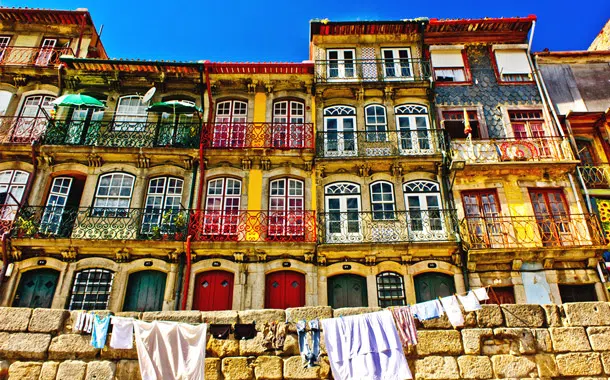
At the mouth of the Rio Douro, the hilly city of Porto presents a mix of styles, eras and attitudes: narrow medieval alleys, extravagant Baroque churches, small squares and wide avenues, flanked by stately buildings.
The heart of Oporto is the Ribeira district, an area declared a UNESCO World Heritage Site made up of winding alleys, zigzagging stairs and churches on every corner, village-style squares and old merchants' houses where Roman ruins are hidden under the foundations. In the last two decades Porto has undergone a remarkable rebirth – which is expressed in the buzz of its efficient metro system and the shimmering of some ambitious urban renewal projects. The crowning of the city's glories are the two latest masterpieces, Museu de Arte Contemporânea by Álvaro Siza Vieira and the 'Casa da Música, which have transformed the city into a place of pilgrimage for architecture enthusiasts.
The Dom Luís I bridge an audacious iron arch, which crosses the Douro river, is impressive and not to be missed. It was built by the Belgian engineer Théophile Seyrig, for road traffic. Since 2003 the upper level has been used exclusively by the city's metro trams.
Lisbon
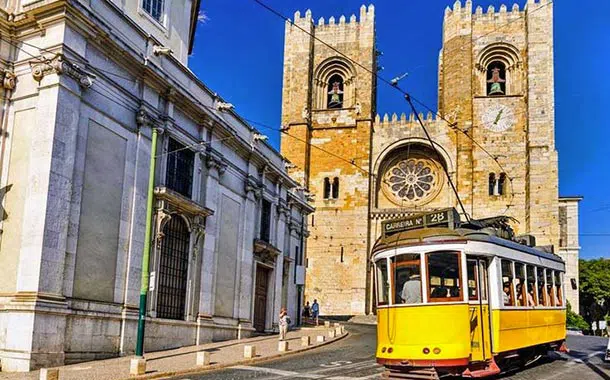
Perched on steep slopes overlooking the Tagus River, Lisbon offers all the pleasures you'd expect from Portugal's main attraction.
The capital of Portugal, Lisbon (in Portuguese Lisboa) has experienced a great rebirth in recent years, with a lively and flourishing contemporary culture. Perched on the coast of the Atlantic Ocean, Lisbon is one of the rare European cities that face the ocean and use water as an element that defines the city. Lisbon enchants travelers with its white limestone buildings, intimate alleys and an ancient charm that makes it a popular destination all year round.
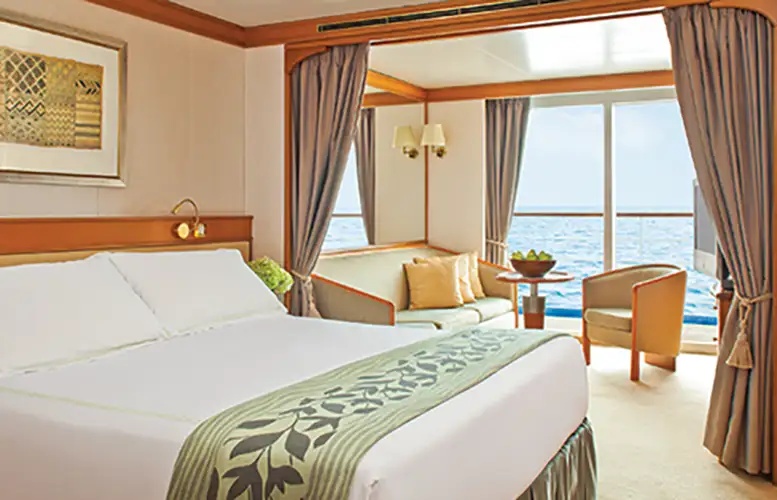
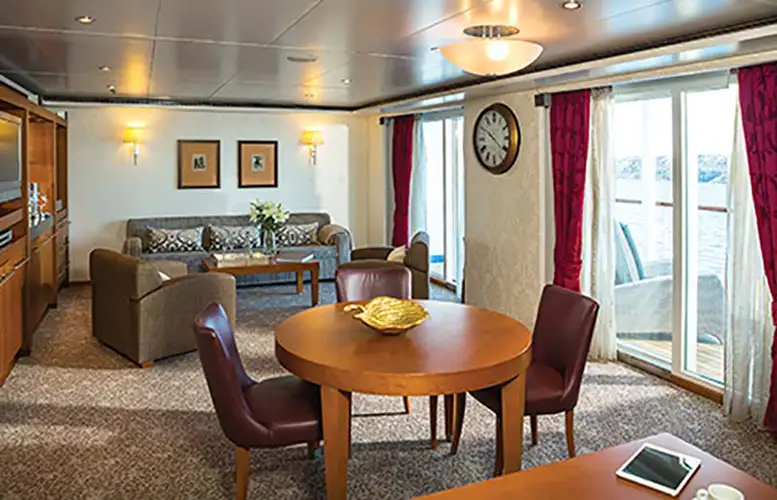
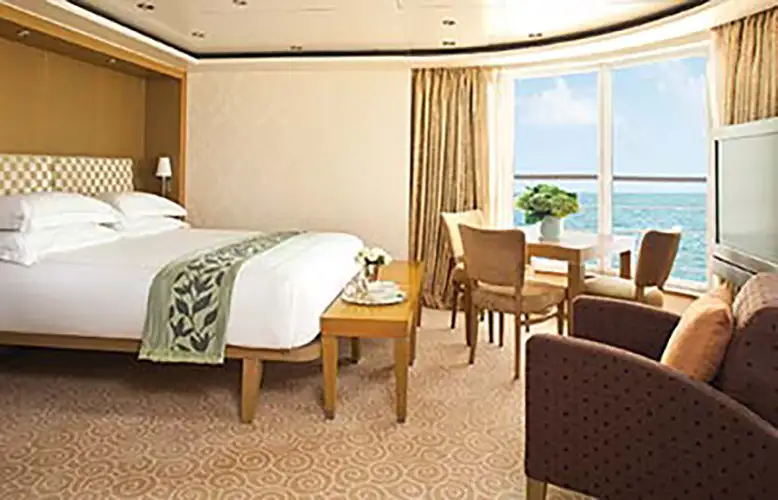
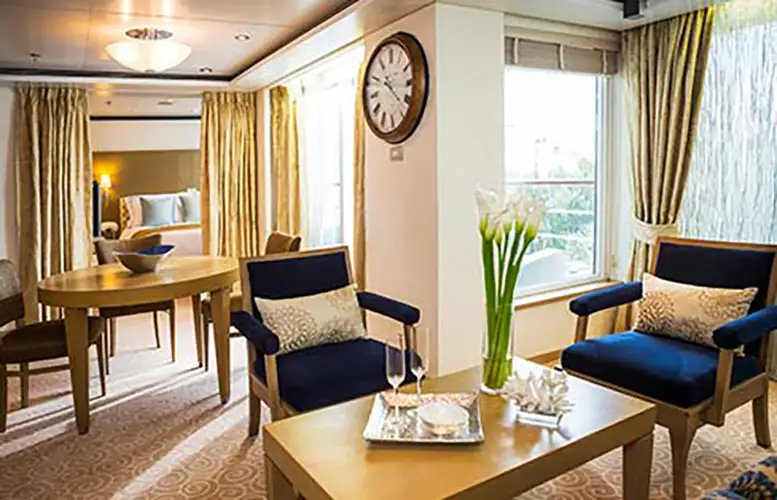
Info on the ship Seven Seas Voyager