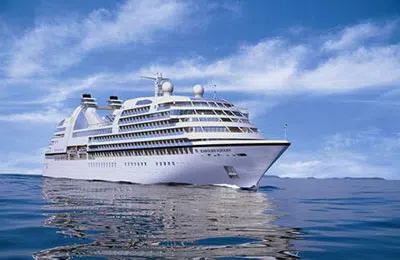
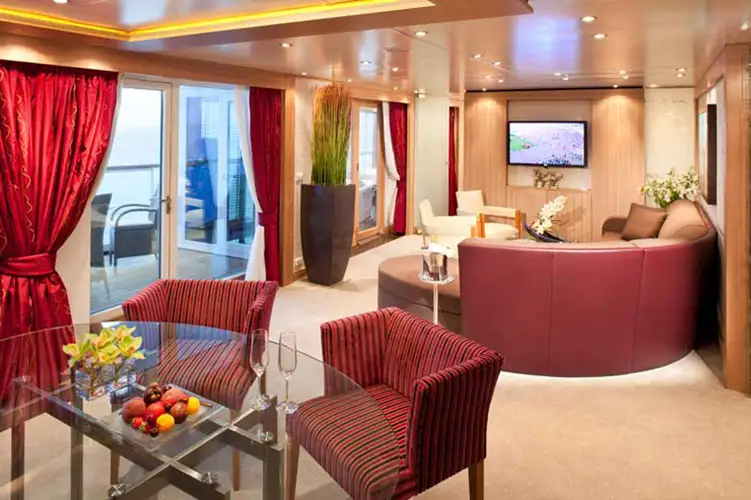
Seabourn World Cruises: 120 nights from Miami with Seabourn Quest
Jan 7, 2028
United States, Panama, Ecuador, Peru, Chile, Argentina, Falkland Islands, Uruguay, United Kingdom, South Africa, Mozambique, Namibia, Angola, Sao Tome and Principe, Benin, Ghana, Senegal, Cape Verde, Spain, Morocco, Portugal, France


Cruise itinerary
Departure Port: Miami ➞
Landing: Southampton
-
 Friday, January 7, 2028 - 4:00 PMMiami
-
 Saturday, January 8, 2028Navigation
 -
Sunday, January 9, 2028Navigation
-
Monday, January 10, 2028Navigation
-
Tuesday, January 11, 2028 9:00 PM - not foundBalboa
-
Tuesday, January 11, 2028Navigation
-
Wednesday, January 12, 2028 not found - 4:00 PMBalboa
-
Thursday, January 13, 2028Navigation
-
Friday, January 14, 2028Navigation
-
Saturday, January 15, 2028 5:00 AM - 6:00 PMGuayaquil
-
Sunday, January 16, 2028Navigation
-
Monday, January 17, 2028 5:00 AM - 5:00 PMSalaverry
-
Tuesday, January 18, 2028 1:00 PM - not foundLima
-
Wednesday, January 19, 2028 not found - not foundLima
-
Thursday, January 20, 2028 not found - 9:00 PMLima
-
Friday, January 21, 2028 8:00 AM - 6:00 PMPisco
-
Saturday, January 22, 2028Navigation
-
Sunday, January 23, 2028Navigation
-
Monday, January 24, 2028Navigation
-
Tuesday, January 25, 2028Navigation
-
Wednesday, January 26, 2028Navigation
-
Thursday, January 27, 2028 8:00 AM - not foundnavigation
-
Friday, January 28, 2028 not found - 6:00 PMnavigation
-
Saturday, January 29, 2028Navigation
-
Sunday, January 30, 2028Navigation
-
Monday, January 31, 2028Navigation
-
Tuesday, February 1, 2028Navigation
-
Wednesday, February 2, 2028 9:00 AM - 7:00 PMIsla Robinson Crusoe
-
Thursday, February 3, 2028Navigation
-
Friday, February 4, 2028Navigation
-
Saturday, February 5, 2028 7:00 AM - 3:00 PMValparaiso
-
Sunday, February 6, 2028Navigation
-
Monday, February 7, 2028 10:00 AM - 8:00 PMPuerto Montt
-
Tuesday, February 8, 2028Navigation
-
Tuesday, February 8, 2028 7:00 AM - 4:00 PMCastro
-
Wednesday, February 9, 2028 10:00 AM - 7:00 PMPuerto Chacabuco
-
Thursday, February 10, 2028Navigation
-
Friday, February 11, 2028Navigation
-
Friday, February 11, 2028 8:00 AM - 6:00 PMPio XI Glacier
-
Saturday, February 12, 2028Navigation
-
Sunday, February 13, 2028 not found - not foundStrait Of Magellan
-
Sunday, February 13, 2028 10:00 AM - 11:00 PMPunta Arenas
-
Monday, February 14, 2028Navigation
-
Tuesday, February 15, 2028Navigation
-
Wednesday, February 16, 2028 8:00 AM - 7:00 PMUshuaia
-
Thursday, February 17, 2028Navigation
-
Friday, February 18, 2028Navigation
-
Saturday, February 19, 2028Navigation
-
Sunday, February 20, 2028Navigation
-
Monday, February 21, 2028Navigation
-
Tuesday, February 22, 2028Navigation
-
Wednesday, February 23, 2028Navigation
-
Thursday, February 24, 2028Navigation
-
Friday, February 25, 2028Navigation
-
Saturday, February 26, 2028Navigation
-
Sunday, February 27, 2028Navigation
-
Monday, February 28, 2028 7:00 AM - 5:00 PMPort Stanley
-
Tuesday, February 29, 2028Navigation
-
Wednesday, March 1, 2028Navigation
-
Thursday, March 2, 2028Navigation
-
Friday, March 3, 2028 7:00 AM - 4:00 PMMontevideo
-
Saturday, March 4, 2028 7:00 AM - not foundBuenos Aires
-
Sunday, March 5, 2028 not found - 5:00 PMBuenos Aires
-
Monday, March 6, 2028Navigation
-
Tuesday, March 7, 2028Navigation
-
Wednesday, March 8, 2028Navigation
-
Thursday, March 9, 2028Navigation
-
Friday, March 10, 2028Navigation
-
Saturday, March 11, 2028Navigation
-
Sunday, March 12, 2028Navigation
-
Sunday, March 12, 2028 8:00 AM - 6:00 PMTristan da Cunha
-
Monday, March 13, 2028 7:00 AM - 5:00 PMTristan da Cunha
-
Tuesday, March 14, 2028Navigation
-
Wednesday, March 15, 2028Navigation
-
Thursday, March 16, 2028Navigation
-
Friday, March 17, 2028Navigation
-
Saturday, March 18, 2028Navigation
-
Sunday, March 19, 2028Navigation
-
Monday, March 20, 2028 7:00 AM - 5:00 PMRichards Bay
-
Tuesday, March 21, 2028 12:00 PM - 9:00 PMMaputo
-
Wednesday, March 22, 2028Navigation
-
Thursday, March 23, 2028 7:00 AM - 9:00 PMDurban
-
Friday, March 24, 2028Navigation
-
Saturday, March 25, 2028 6:00 AM - 5:00 PMPort Elizabeth
-
Sunday, March 26, 2028 9:00 AM - 8:00 PMMossel Bay
-
Monday, March 27, 2028Navigation
-
Tuesday, March 28, 2028 6:45 AM - not foundCape Town
-
Wednesday, March 29, 2028 not found - 10:00 PMCape Town
-
Thursday, March 30, 2028Navigation
-
Friday, March 31, 2028 8:00 AM - 5:00 PMLuderitz
-
Saturday, April 1, 2028 12:00 PM - not foundWalvis Bay
-
Sunday, April 2, 2028 not found - 5:00 PMWalvis Bay
-
Monday, April 3, 2028Navigation
-
Tuesday, April 4, 2028Navigation
-
Wednesday, April 5, 2028 8:00 AM - 6:00 PMLuanda
-
Thursday, April 6, 2028Navigation
-
Friday, April 7, 2028Navigation
-
Saturday, April 8, 2028 7:00 AM - 6:00 PMSao Tome
-
Sunday, April 9, 2028Navigation
-
Monday, April 10, 2028 7:00 AM - 6:00 PMCotonou
-
Tuesday, April 11, 2028 8:00 AM - 6:00 PMTema
-
Wednesday, April 12, 2028 8:00 AM - 5:00 PMTakoradi
-
Thursday, April 13, 2028Navigation
-
Friday, April 14, 2028Navigation
-
Saturday, April 15, 2028Navigation
-
Sunday, April 16, 2028 8:00 AM - 6:00 PMDakar
-
Monday, April 17, 2028Navigation
-
Tuesday, April 18, 2028 8:00 AM - 6:00 PMMindelo
-
Wednesday, April 19, 2028Navigation
-
Thursday, April 20, 2028Navigation
-
Friday, April 21, 2028 8:00 AM - 6:00 PMLas Palmas
-
Saturday, April 22, 2028 8:00 AM - 6:00 PMArrecife
-
Sunday, April 23, 2028Navigation
-
Monday, April 24, 2028 6:00 AM - 8:00 PMCasablanca
-
Tuesday, April 25, 2028 9:00 AM - 7:00 PMTanger
-
Wednesday, April 26, 2028 7:00 AM - 11:00 PMCadiz
-
Thursday, April 27, 2028Navigation
-
Friday, April 28, 2028 7:00 AM - 5:00 PMLisbon
-
Saturday, April 29, 2028 8:00 AM - 5:00 PMLeixoes
-
Sunday, April 30, 2028 10:00 AM - 7:00 PMLa Coruna
-
Monday, May 1, 2028Navigation
-
Tuesday, May 2, 2028 8:00 AM - 7:00 PMSt Malo
-
Wednesday, May 3, 2028 7:00 AM - 5:00 PMCherbourg
-
Thursday, May 4, 2028 10:30 AM - not foundRouen
-
Friday, May 5, 2028Navigation
-
Friday, May 5, 2028 not found - 1:30 PMRouen
-
Saturday, May 6, 2028 7:00 AMSouthampton
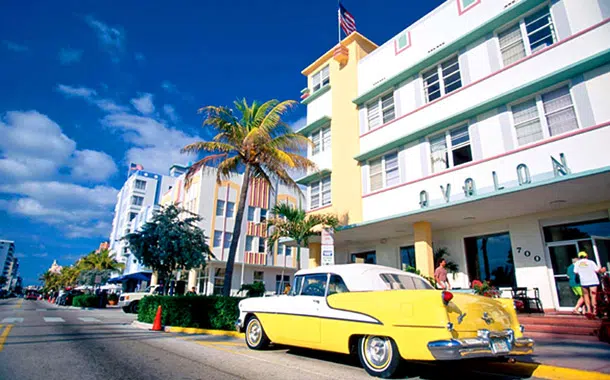
Miami
Cruises departing from Miami: itineraries and offers!Miami is the most important city in Florida and is the ideal departure port for a Caribbean cruise. This city, founded at the end of the 1800s, is cosmopolitan and ready to welcome tourists with maximum comfort. Every day ships from the best companies set sail from Miami with itineraries ranging from 3 to 21 nights: discover all the cruises from Miami on our website and book your next vacation at unbeatable prices!
A Glimpse into Miami's Rich HistoryMiami, a vibrant city known for its dynamic culture and scenic beauty, holds a rich tapestry of history that dates back centuries. Initially inhabited by the Tequesta Native Americans and later claimed by Spain, Miami has transformed from a mangrove swamp into a bustling metropolis. The city's strategic location made it a crucial hub for trade and migration, contributing to its diverse cultural heritage. This fascinating blend of influences is evident in its architecture, traditions, and vibrant communities, making Miami a unique American city with a story to tell at every corner.
The Alluring Climate of MiamiMiami's climate is a major draw for visitors from around the globe. With warm, sunny weather year-round, it offers an eternal summer that appeals to sun-seekers and adventurers alike. The city enjoys a tropical monsoon climate, featuring hot, humid summers and warm, dry winters. This delightful weather allows for a plethora of outdoor activities, from sunbathing on its world-renowned beaches to exploring its lush, tropical landscapes. Miami's inviting climate makes it an ideal destination wishing to escape colder regions, promising a warm welcome in any season.
Must-Visit Attractions and SitesMiami is a treasure trove of attractions, catering to every interest. South Beach, known for its stunning Art Deco architecture and vibrant nightlife, is a must-visit. Art enthusiasts will revel in the colorful street art of Wynwood Walls, while history buffs can explore the ancient Spanish Monastery. For a taste of nature, the Everglades National Park offers thrilling airboat tours. Additionally, Miami serves as a gateway to the Bahamas and the Caribbean, making it a perfect starting point for cruises.
Savoring Miami's Local CuisineThe culinary scene in Miami is as diverse as its population, offering a fusion of flavors from around the world. Cuban influence is paramount, with local staples such as Cubano sandwiches and cafecito. Seafood lovers will delight in the fresh catches available, highlighted in dishes like ceviche and stone crab claws. The city's vibrant food scene is a reflection of its multicultural makeup, offering an adventure for the palate and an essential aspect of the Miami experience.
Embark on a Journey from MiamiFor those enchanted by the allure of the sea, Miami is not just a destination but a beginning. This city, with its state-of-the-art cruise terminals, is a premier starting point for voyages across the Caribbean, Mexico, and beyond. Embracing Miami's eclectic spirit, vibrant culture, and scenic beauty can only be matched by the adventures that await on a cruise originating from this dynamic city. With exclusive deals and packages available, there's no better time to embark on a journey that begins in Miami, promising an unforgettable experience on the high seas.
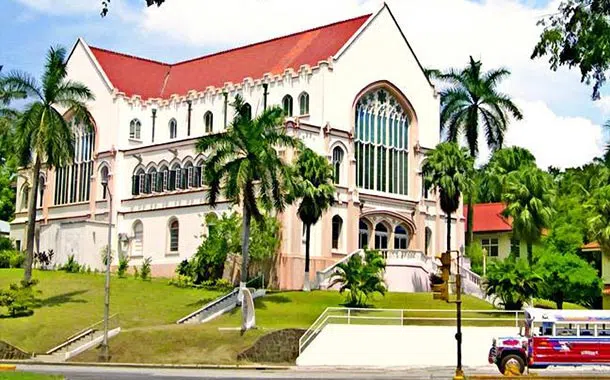
Balboa
Balboa, located at the end of the Panama Canal, is known for being the port of Panama City. Geographically it is close to the canal docks and the Ancón hill behind it which separates it from Panama City.
Balboa owes its name to the Spanish explorer Vasco Núñez de Balboa who reached this land in 1914. Before being annexed to Panama City as a district, Balboa was for a long time controlled by the Americans who took care of the construction of many of the buildings and structures still present today within the city.
The canal on one side and the hills on the other create an enchanting landscape where the blue of the sea and the green of the hills merge in a unique way creating a perfect combination. Among the various activities that can be carried out in Balboa, hiking is certainly one of the main ones. The paths immersed in the green will allow you to fully experience the beauty of the nature of this place and to enjoy the suggestive view of all its beauties and uniqueness from above.
The best way to reach the city is on board a cruise ship. Choose a cruise that departs from Balboa or has the city as a stop to admire up close the unique beauty of this territory and to set off to discover Central America, the Caribbean, and the Mediterranean.
Balboa
Balboa, located at the end of the Panama Canal, is known for being the port of Panama City. Geographically it is close to the canal docks and the Ancón hill behind it which separates it from Panama City.
Balboa owes its name to the Spanish explorer Vasco Núñez de Balboa who reached this land in 1914. Before being annexed to Panama City as a district, Balboa was for a long time controlled by the Americans who took care of the construction of many of the buildings and structures still present today within the city.
The canal on one side and the hills on the other create an enchanting landscape where the blue of the sea and the green of the hills merge in a unique way creating a perfect combination. Among the various activities that can be carried out in Balboa, hiking is certainly one of the main ones. The paths immersed in the green will allow you to fully experience the beauty of the nature of this place and to enjoy the suggestive view of all its beauties and uniqueness from above.
The best way to reach the city is on board a cruise ship. Choose a cruise that departs from Balboa or has the city as a stop to admire up close the unique beauty of this territory and to set off to discover Central America, the Caribbean, and the Mediterranean.
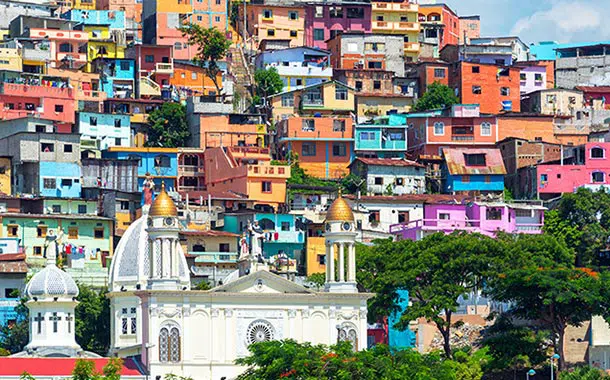
Guayaquil
Explore Ecuador from Guayaquil!Embark on an exciting cruise from Guayaquil, Ecuador's largest city and principal port, situated on the Guayas River. This vibrant city offers a dynamic blend of modern development and historical charm, providing an excellent starting point for exploring the Galapagos Islands or the Pacific coast of South America. Discover its bustling Malecon 2000 and colorful neighborhoods before setting sail on a journey filled with natural wonders and cultural discoveries.
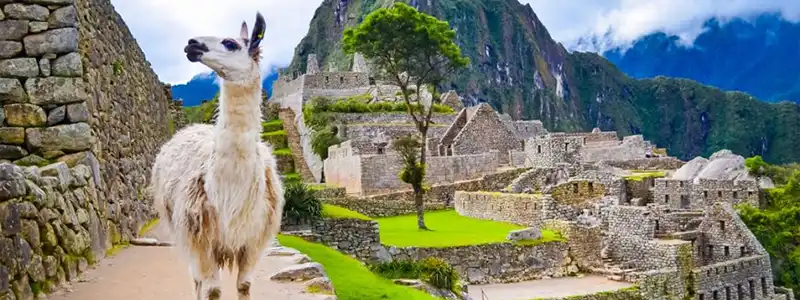
Salaverry
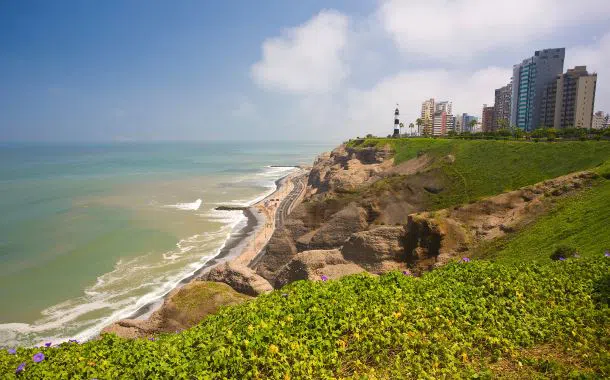
Lima
Located on the Pacific coast of Peru, South America, in a region sheltered from oasis and trade winds, Lima is 12 km from the port of Callao. At the base of the San Cristobal hill, the city is crossed by the Rio Rimac. Called the ‘City of Kings’ by the Spanish conqueror Francisco Pizarro in 1535, Lima was chosen as the capital of the country in 1821, year of its Indipendence. A coastal city that has defended various invasions and welcomed many cultures. On the one hand, the traces of its past are still visible, for example among various monuments and buildings. On the other hand, the city fully assumes its position as a modern Peruvian capital. Developed strongly on industry and tourism, continuing to attract masses, Miraflores and San Isidro are the hub of Lima's social and commercial life. Known for its legendary fog, it has a special charm of colour and animation. Discover its historic center, a great spectacle of colonial architecture, including ‘Paseo de la Republica’, San Martin Square, Plaza de Armas and surrounding monuments: the Government Palace, the Cathedral, the Archbishop's Palace, the Forsaken train station, and the Moorish-Spanish colonial houses. Decorated with beautiful carved wooden balconies along the old streets, you will be captivated by the combination of its past and 21st century modernity. Strolling through the historic center, you will taste traditional dishes and be greeted by a truly warm population! Between May and mid-September, the city of Lima is prone to humidity and clouds. November to April are the best months to visit the capital, from January to March the heat is very high.Located on the coast of the Pacific in Peru, South America, in a region sheltered from oases and trade winds, Lima is 12 km from the port of Callao. At the foot of the San Cristobal hill, the city is crossed by the Rimac River. Called the "City of Kings" by the Spanish conqueror Francisco Pizarro in 1535, Lima was chosen as the capital since the country's independence in 1821. Coastal city that has defended the various invasions and welcomed many cultures, it bears the traces of the past (including various monuments and buildings) and fully assumes its position as the Peruvian capital. Strongly developed in the industry and tourism sector, continuing to attract the masses, Miraflores and San Isidro are the focus of Lima's social and commercial life. Known for its legendary fog, it has a special charm, made up of colors and animations. You will discover its historic center, a great show of colonial architecture, including "Paseo de la Republica", Plaza San Martin, Plaza de Armas, and surrounding monuments: the Government Palace, the Cathedral, the Archbishop's Palace, the Forsaken railway station, and the colonial houses in Moorish-Spanish style. Decorated with splendid carved wooden balconies, along the old streets, they will fascinate you thanks to its elusive mix of Spanish history and the modernity of the 21st century. Strolling through the historic center, you will taste traditional dishes and be welcomed by a truly warm population! Between May and mid-September, the city of Lima is subject to humidity and clouds. From November to April are the best months to visit the capital, from January to March the heat is very high.
Lima
Located on the Pacific coast of Peru, South America, in a region sheltered from oasis and trade winds, Lima is 12 km from the port of Callao. At the base of the San Cristobal hill, the city is crossed by the Rio Rimac. Called the ‘City of Kings’ by the Spanish conqueror Francisco Pizarro in 1535, Lima was chosen as the capital of the country in 1821, year of its Indipendence. A coastal city that has defended various invasions and welcomed many cultures. On the one hand, the traces of its past are still visible, for example among various monuments and buildings. On the other hand, the city fully assumes its position as a modern Peruvian capital. Developed strongly on industry and tourism, continuing to attract masses, Miraflores and San Isidro are the hub of Lima's social and commercial life. Known for its legendary fog, it has a special charm of colour and animation. Discover its historic center, a great spectacle of colonial architecture, including ‘Paseo de la Republica’, San Martin Square, Plaza de Armas and surrounding monuments: the Government Palace, the Cathedral, the Archbishop's Palace, the Forsaken train station, and the Moorish-Spanish colonial houses. Decorated with beautiful carved wooden balconies along the old streets, you will be captivated by the combination of its past and 21st century modernity. Strolling through the historic center, you will taste traditional dishes and be greeted by a truly warm population! Between May and mid-September, the city of Lima is prone to humidity and clouds. November to April are the best months to visit the capital, from January to March the heat is very high.Located on the coast of the Pacific in Peru, South America, in a region sheltered from oases and trade winds, Lima is 12 km from the port of Callao. At the foot of the San Cristobal hill, the city is crossed by the Rimac River. Called the "City of Kings" by the Spanish conqueror Francisco Pizarro in 1535, Lima was chosen as the capital since the country's independence in 1821. Coastal city that has defended the various invasions and welcomed many cultures, it bears the traces of the past (including various monuments and buildings) and fully assumes its position as the Peruvian capital. Strongly developed in the industry and tourism sector, continuing to attract the masses, Miraflores and San Isidro are the focus of Lima's social and commercial life. Known for its legendary fog, it has a special charm, made up of colors and animations. You will discover its historic center, a great show of colonial architecture, including "Paseo de la Republica", Plaza San Martin, Plaza de Armas, and surrounding monuments: the Government Palace, the Cathedral, the Archbishop's Palace, the Forsaken railway station, and the colonial houses in Moorish-Spanish style. Decorated with splendid carved wooden balconies, along the old streets, they will fascinate you thanks to its elusive mix of Spanish history and the modernity of the 21st century. Strolling through the historic center, you will taste traditional dishes and be welcomed by a truly warm population! Between May and mid-September, the city of Lima is subject to humidity and clouds. From November to April are the best months to visit the capital, from January to March the heat is very high.
Lima
Located on the Pacific coast of Peru, South America, in a region sheltered from oasis and trade winds, Lima is 12 km from the port of Callao. At the base of the San Cristobal hill, the city is crossed by the Rio Rimac. Called the ‘City of Kings’ by the Spanish conqueror Francisco Pizarro in 1535, Lima was chosen as the capital of the country in 1821, year of its Indipendence. A coastal city that has defended various invasions and welcomed many cultures. On the one hand, the traces of its past are still visible, for example among various monuments and buildings. On the other hand, the city fully assumes its position as a modern Peruvian capital. Developed strongly on industry and tourism, continuing to attract masses, Miraflores and San Isidro are the hub of Lima's social and commercial life. Known for its legendary fog, it has a special charm of colour and animation. Discover its historic center, a great spectacle of colonial architecture, including ‘Paseo de la Republica’, San Martin Square, Plaza de Armas and surrounding monuments: the Government Palace, the Cathedral, the Archbishop's Palace, the Forsaken train station, and the Moorish-Spanish colonial houses. Decorated with beautiful carved wooden balconies along the old streets, you will be captivated by the combination of its past and 21st century modernity. Strolling through the historic center, you will taste traditional dishes and be greeted by a truly warm population! Between May and mid-September, the city of Lima is prone to humidity and clouds. November to April are the best months to visit the capital, from January to March the heat is very high.Located on the coast of the Pacific in Peru, South America, in a region sheltered from oases and trade winds, Lima is 12 km from the port of Callao. At the foot of the San Cristobal hill, the city is crossed by the Rimac River. Called the "City of Kings" by the Spanish conqueror Francisco Pizarro in 1535, Lima was chosen as the capital since the country's independence in 1821. Coastal city that has defended the various invasions and welcomed many cultures, it bears the traces of the past (including various monuments and buildings) and fully assumes its position as the Peruvian capital. Strongly developed in the industry and tourism sector, continuing to attract the masses, Miraflores and San Isidro are the focus of Lima's social and commercial life. Known for its legendary fog, it has a special charm, made up of colors and animations. You will discover its historic center, a great show of colonial architecture, including "Paseo de la Republica", Plaza San Martin, Plaza de Armas, and surrounding monuments: the Government Palace, the Cathedral, the Archbishop's Palace, the Forsaken railway station, and the colonial houses in Moorish-Spanish style. Decorated with splendid carved wooden balconies, along the old streets, they will fascinate you thanks to its elusive mix of Spanish history and the modernity of the 21st century. Strolling through the historic center, you will taste traditional dishes and be welcomed by a truly warm population! Between May and mid-September, the city of Lima is subject to humidity and clouds. From November to April are the best months to visit the capital, from January to March the heat is very high.
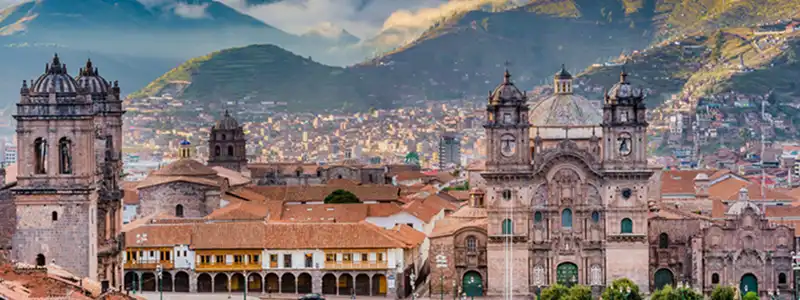
Pisco
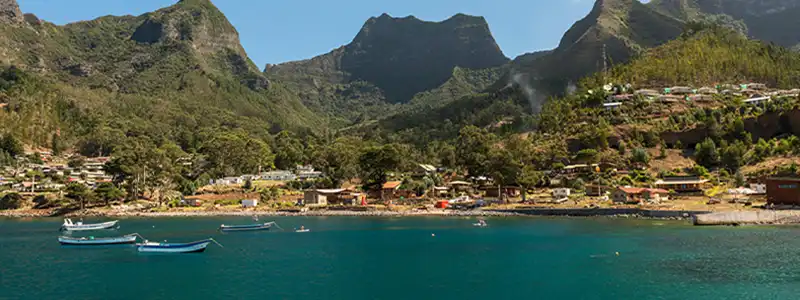
Isla Robinson Crusoe
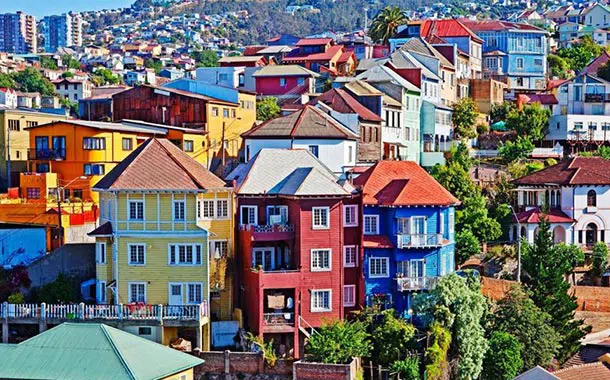
Valparaiso
The fascinating history of Valparaiso
Valparaiso, in Chile, is a city with deep historic roots dated back to Spanish colonial period. Founded in the 16th century, the city played a crucial role as an important trading port on the Pacif Ocean routes. Its colorful architecture and picturesque alleys tell stories of sailors, pirates and traders that contributed to shape its unique identity over centuries.
Climate
Valparaiso has a temperate Mediterranean climate that provides sunny and pleasant days during throughout much of the year. Summers are hot and dry, while winters are mild and humid. This climatic variety creates an ideal environment for exploring the city and enjoying its attractions in all seasons.
Attractions not to be missed in Valparaiso
Valparaiso is famous for its cerros, the hills dominate the city offering breathtaking views of the Pacif Ocean. Visitors can explore the colorful neighbourhoods of Cerro Alegre and Cerro Concepcion, full of urban art, trendy cafès and art galleries. Muelle Prat, Mercado El Cardonal and the Museo a Cielo Abierto are just some of the city's not to be missed attractions.
Local Gastronomy: authentic Chilean flavours
Valparaiso's cuisine is a feast for your palate, offering Chilenian traditional dishes such as empanada, ceviche, pastel de choclo and the chileno hot dog. Local markets are full of fresh produce such as seafood, avocados, chillies and fine wines from Chile's neighbouring wine regions.
Enjoy a unique experience with a cruise from Valparaiso
To enrich your visit in Valparaiso with a special touch, consider booking a cruise that directly depart from the city. Cruising along the Chilean coast offers breathtaking views of the region's cliffs, beaches and hidden bays. By booking a cruise from Valparaiso, you will enjoy an unforgettable experience that will allow you to appreciate the beauty of the Chilean coastline from a unique perspective.
Charming History of ValparaisoValparaiso, in Chile, is a city with deep historical roots that date back to the Spanish colonial period. Founded in the 16th century, the city played a crucial role as an important commercial port on the routes of the Pacific Ocean. Its colorful architecture and picturesque alleys tell stories of sailors, pirates and merchants who have helped shape its unique identity over the centuries.
ClimateValparaiso boasts a temperate Mediterranean climate that offers sunny and pleasant days for most of the year. Summers are hot and dry, while winters are mild and humid. This climatic variety creates an ideal environment for exploring the city and enjoying its attractions in every season.
Attractions not to be missed in ValparaisoValparaiso is famous for its cerros, the hills that dominate the city and offer breathtaking views of the Pacific Ocean. Visitors can explore the colorful neighborhoods of Cerro Alegre and Cerro Concepcion, rich in urban art, trendy cafes and art galleries. The Muelle Prat, the Mercado El Cardonal and the Museo a Cielo Abierto are just some of the unmissable attractions of the city.
Local Gastronomy: Authentic Flavors of ChileThe cuisine of Valparaiso is a feast for the palate, offering traditional Chilean dishes such as empanada, ceviche, pastel de choclo and completo (Chilean hot dog). The local markets are full of fresh products such as seafood, avocado, chilies and fine wines from the nearby wine regions of Chile.
Experience a Unique Experience with a Cruise from ValparaisoTo enrich your visit to Valparaiso with a special touch, consider the opportunity to book a cruise that departs directly from the city. Sailing along the Chilean coast offers breathtaking views of the cliffs, beaches and hidden bays of the region. By booking a cruise from Valparaiso, you can experience an unforgettable experience that will allow you to appreciate the beauty of the Chilean coast from a unique perspective.
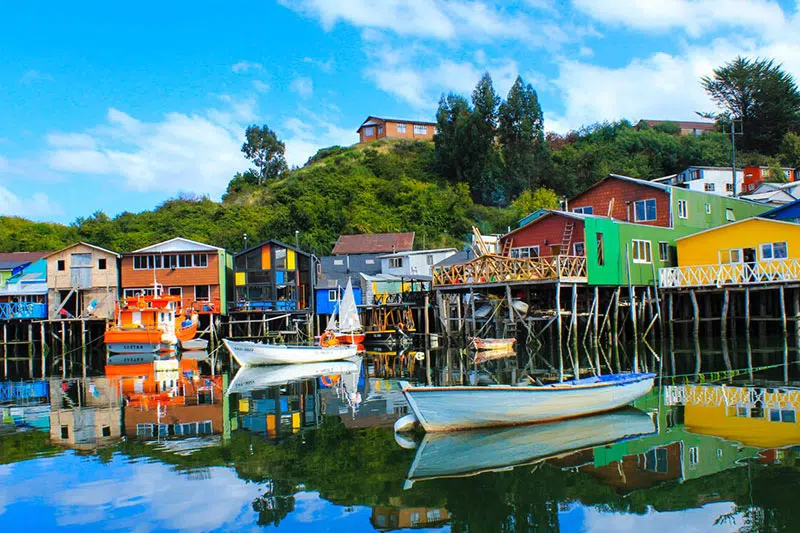
Puerto Montt
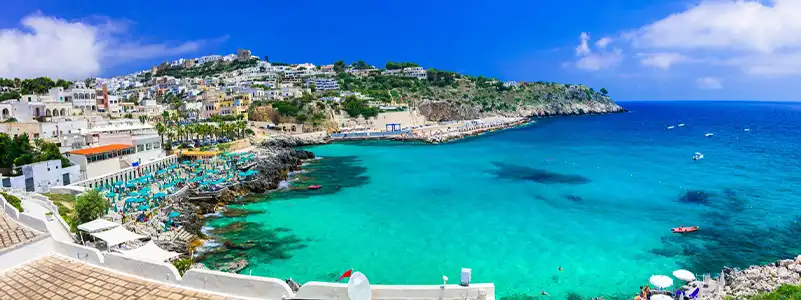
Castro
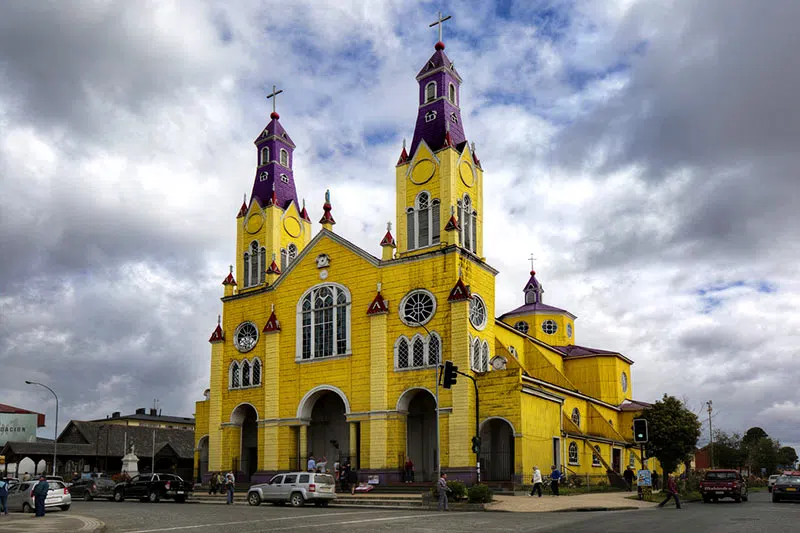
Puerto Chacabuco

Pio XI Glacier
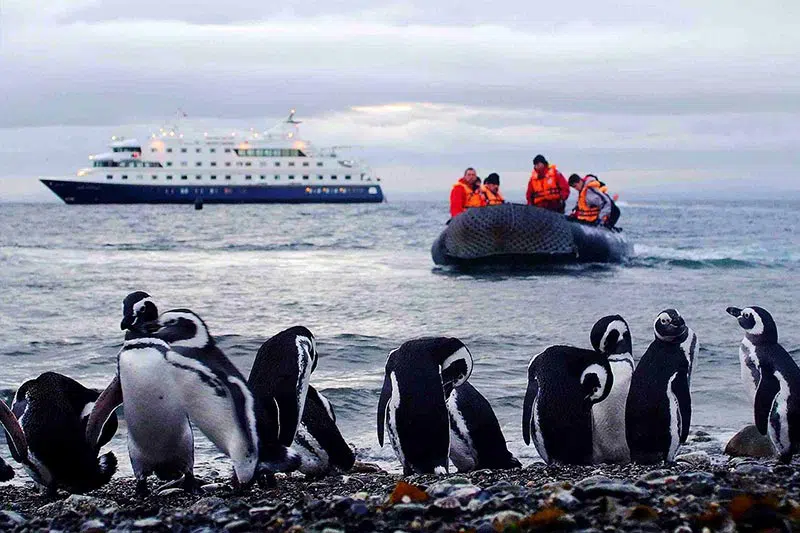
Strait Of Magellan
The Strait of Magellan is a navigable route in Chile immediately south of the South American mainland. The strait can be argued to be the most important natural passage between the Pacific Ocean and the Atlantic Ocean, but it is considered a difficult route to navigate due to the inhospitable climate and the narrowness of the passage.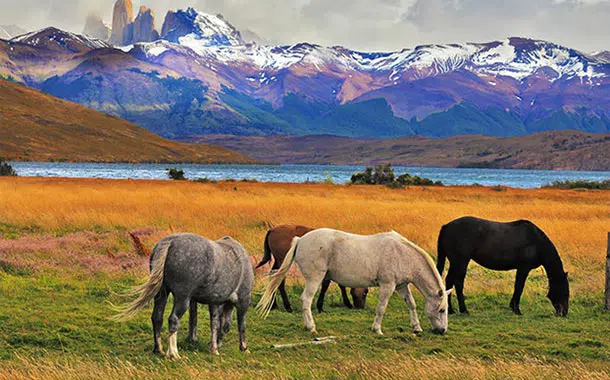
Punta Arenas
Punta Arenas is a small Chilean town located in one of the southernmost areas in the world. Its geographical position, located within the basin of the Río Las Minas river, has meant that the city has been a crossroads of peoples given its long-standing position as a hub for trade between the Atlantic and Pacific Oceans. The importance acquired by the port over the centuries has made trade one of the main sources of sustenance for the city, however, one of the developing sectors is tourism, mainly international. This is mainly due to the beauty of the natural landscape that attracts a large number of tourists every year and to its history rich in different cultures and traditions that blend perfectly creating a perfect combination.
Punta Arenas is also the ideal starting point for discovering the surrounding areas such as: Cape Horn, Tierra del Fuego, the Strait of Magellan and Antarctica. If you are a nature lover and you like to immerse yourself in the surrounding environment, a walk along the Costanera del Estrecho is what is right for you!
This road that runs along the coast, allows you to observe the marine landscape on one side and the unique beauties of the city such as the Monument to the Ancud schooner on the other. If you are a history lover, a visit to the two city museums is an unmissable experience that will allow you to take a dip back in the history of Punta Arenas. The Museo Regional de Magallanes and the Museo Nao Victoria will offer you a unique view of local history since its origins.
Inside the Nao Victoria Museum, you can also observe close copies of some of the ships that crossed the Strait of Magellan, with the possibility of also entering them with the feeling of setting sail together with the old sailors.
Considering the importance of the port, the best way to reach Punta Arenas is on board a cruise ship. Choose a cruise that departs from Punta Arenas or has the city as a stop to enjoy the uniqueness of its panorama and tourist attractions or as a starting point to explore the surrounding areas! What are you waiting for? Visit our profile and choose the cruise that best suits your needs!
Ushuaia
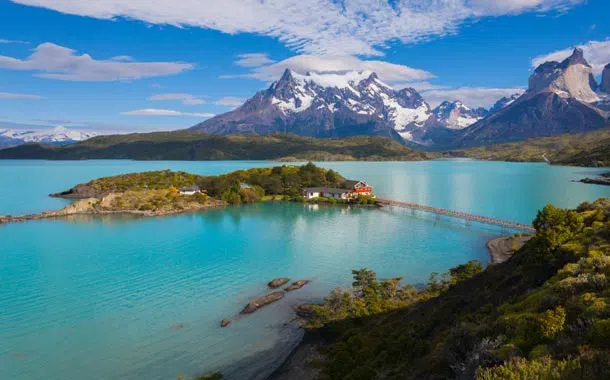
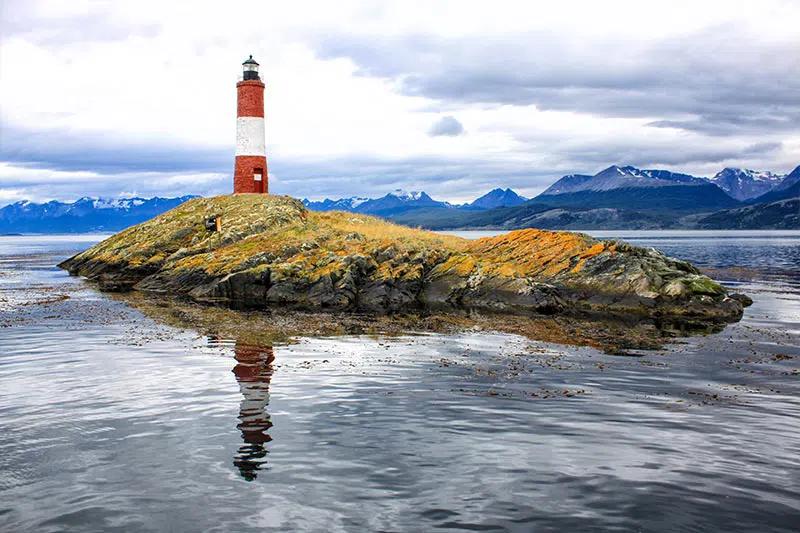
Known for being the southernmost city in the world, Ushuaia, located on the southern coast of the Isla Grande of Tierra del Fuego, is nestled between the Beagle Channel and the mountains behind it. This mix of mountains and sea creates a unique landscape that will undoubtedly leave you speechless and will allow you to carry out different types of activities from the most relaxing to those that require more effort, but don't worry you will be rewarded by the uniqueness of this landscape!
The name of the city derives from an ancient language, now extinct, traditionally spoken by the local populations, the Yaghan language, and means Bay at the end of the world given its geographical position. Considering that Ushuaia is located in the southern hemisphere, it must be taken into consideration that the seasons are reversed.
If you want to enjoy the beauty of the beaches of Ushuaia, the ideal time to visit the city is from November to March, which correspond to our spring and summer months. I recommend you always keep a plan B in mind because the weather at this time of year changes very quickly and the risk that a sunny day turns into a rainy one is very high! If, on the other hand, you want to reach the city during the winter months, you can devote yourself to winter sports and visit the various museums scattered throughout the city.
Historical Charms of UshuaiaUshuaia, located in Argentina, holds a fascinating history as the southernmost city in the world. Originally established as a penal colony in the late 19th century, Ushuaia has transformed into a thriving hub for adventure tourism and scientific research. The city's past as a remote outpost adds to its allure, with remnants of its penal colony history visible in landmarks like the Presidio.
Diverse Climate of UshuaiaUshuaia experiences a cool-temperate climate influenced by its southern location near the Antarctic Circle. Summers are mild with long daylight hours, perfect for exploring the surrounding mountains and Beagle Channel. Winters bring snowfall and colder temperatures, creating a winter wonderland for skiing and snow activities. The ever-changing weather adds to the charm of this unique destination.
Top Attractions and Places to Explore in UshuaiaUshuaia offers a plethora of attractions that showcase the beauty of Patagonia and Tierra del Fuego. Visit Tierra del Fuego National Park for stunning landscapes, hiking trails, and the End of the World Train. Explore the Maritime Museum to learn about Ushuaia's maritime history and Antarctic expeditions. Don't miss a boat tour to see penguins, sea lions, and glaciers up close in the Beagle Channel.
Local Cuisine: Authentic Flavors of UshuaiaUshuaia's culinary scene highlights fresh seafood from the surrounding waters and traditional dishes influenced by indigenous cultures. Taste king crab, known locally as centolla, grilled Patagonian lamb, and hearty stews like locro. Sample regional specialties such as calafate berry desserts and enjoy a traditional mate tea ceremony. The fusion of flavors reflects the unique heritage of this southern city.
Embark on an Unforgettable Cruise from UshuaiaTo enhance your Ushuaia experience, consider booking a cruise departing from this gateway to Antarctica. Cruises from Ushuaia offer unparalleled opportunities to explore the White Continent, witness majestic icebergs and wildlife like penguins and whales in their natural habitat. Booking a cruise from Ushuaia guarantees an unforgettable journey to one of the most remote and pristine regions on Earth.
Port Stanley
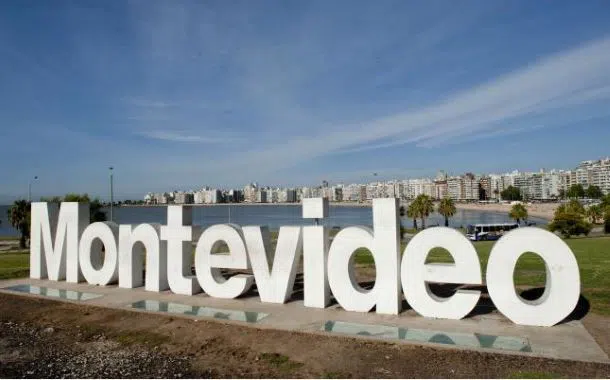
Montevideo
Montevideo is the capital of Uruguay and is an extremely fascinating city. The ciudad vieja is beautiful to visit on foot to discover its countless pedestrian streets and buildings. Famous is the square, with its 33 commemorative palm trees to the national heroes which is located between the ciudad vieja and the historic center. Near the square are some of the most important buildings, including the Solis Theatre, with neoclassical architecture and the most important theater. Montevideo also offers noteworthy leisure opportunities, including the port market where you can find any typical local product, from vegetables to the famous asado. The city also has a very strong football tradition: the stadium is a World historical monument of football and was the scene of the 1930 World Cup. If you are a lover of good wine, you can taste the varieties that are produced in this area of South America. Wine production is very profitable thanks to the favorable climate, you can visit the cellars or take tours dedicated to the wine varieties. Montevideo is a tourist destination especially in the winter months, where the best temperatures are found to visit the area.
Capital of Uruguay, Montevideo is the most Europeanized country in Latin America, also considered one of the 30 safest cities in the world. Its historic center reveals a fascinating neighborhood, dotted with museums, colonial, neoclassical and art deco buildings. The various neighborhoods make up a particular atmosphere, do not hesitate to get lost in the oldest area (Ciudad Vieja). With its main port, the city overlooks the imposing estuary of the Rio de la Plata, the Argentine river that flows into the Atlantic Ocean. Little known to travelers, compared to Buenos Aires, Montevideo has valuable tourist assets. A former Portuguese colony, Montevideo is actually a relatively new city. With its long coastline, it is the ideal place for a vacation in total relaxation. Come and discover its richness of local culture, with its street theaters and welcoming people. Shopping is one of the favorite activities of Uruguayans. One of the largest markets in South America, where you will find many really special items and souvenirs. The other market not to be missed is the one near the port, where you will appreciate the unique and sparkling atmosphere. Montevideo is therefore a rather unusual destination, but it is really worth it. To make the most of your stay, it is recommended to leave between December and March. The city also offers a lively nightlife and an open and eclectic cultural tradition. And, finally, don't forget its beautiful beaches along the coast, you will be amazed...
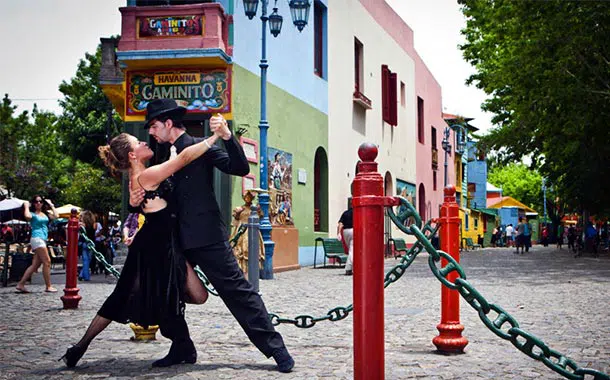
Buenos Aires
A well-known city in Latin America, Buenos Aires, located along the banks of the Rio de la Plata, is the capital of Argentina. In this city history, tradition, culture and modernity blend perfectly creating a unique and unmissable landscape and atmosphere suitable for all tastes of all, even the most extravagant. The history of the city has been mainly characterized by foreign invasions, immigration, various coups and the sad phenomenon of the desaparecidos who have left indelible marks and, still today, recognizable. Walking through the different barrios, administrative subdivisions of the city, it is possible to see with your own eyes the signs of these phenomena and immerse yourself in its rich history.
The Boca neighborhood, for example, is a clear example as it is mainly inhabited by the descendants of the Genoese sailors who immigrated to the city in search of fortune. If you want to immerse yourself in the local culture, tango is certainly the master. If you didn't know, Buenos Aires is the world capital of tango and this traditional dance has become the symbol of Argentine culture all over the world. Don't miss the opportunity to attend a unique show of its kind and, why not, take a lesson to learn a few steps to show off during an evening with friends!
If, on the other hand, you are an art and architecture lover, a visit to the city's famous museums, such as the National Museum of Fine Arts and the Museum of Modern Art (MAMBA), and the residential district of Recoleta are unmissable, which, located in the heart of the city, presents luxurious buildings and houses that are examples of typical local architecture. The city is also known for its lively nightlife and its very tasty cuisine.
Rich History of Buenos AiresBuenos Aires, the vibrant capital of Argentina, boasts a rich history that blends European elegance with Latin American passion. Founded in the early 16th century by Spanish conquistadors, the city has evolved into a cultural melting pot influenced by waves of immigration. From colonial architecture to tango music and art, Buenos Aires preserves its heritage while embracing modernity.
Pleasant Climate and SeasonsBuenos Aires enjoys a temperate climate with distinct seasons offering diverse experiences for visitors. Summers are warm and humid, perfect for exploring parks and outdoor cafes. Winters are mild, ideal for strolling through museums and historic neighborhoods. Spring and autumn bring pleasant temperatures, making it a great time to enjoy outdoor activities.
Top Attractions and Places to Visit in Buenos AiresBuenos Aires is a city brimming with cultural landmarks and attractions. The iconic Plaza de Mayo is the heart of the city, surrounded by historic buildings like Casa Rosada and the Metropolitan Cathedral. Recoleta Cemetery is a must-visit for its elaborate mausoleums, while the colorful neighborhood of La Boca offers tango shows and street art. Don't miss the grand Teatro Colon for world-class opera and ballet performances.
Local Cuisine: Authentic Flavors of Buenos AiresBuenos Aires is a paradise for food lovers, offering a mix of traditional Argentine dishes and international cuisine. Indulge in juicy steaks grilled to perfection, savory empanadas filled with meat or cheese, and decadent dulce de leche desserts. Sip on mate, Argentina's national drink, or enjoy a glass of Malbec wine from nearby vineyards. Visit local markets like San Telmo for fresh produce and artisanal products.
Embark on an Unforgettable Cruise from Buenos AiresTo elevate your Buenos Aires experience, consider booking a cruise departing from this bustling city. Cruises from Buenos Aires offer the opportunity to explore the stunning coastline of Argentina, visit exotic destinations like Patagonia or Antarctica, and witness breathtaking natural wonders. Booking a cruise from Buenos Aires guarantees unforgettable moments and a unique perspective on South America's beauty from the sea.
Buenos Aires
A well-known city in Latin America, Buenos Aires, located along the banks of the Rio de la Plata, is the capital of Argentina. In this city history, tradition, culture and modernity blend perfectly creating a unique and unmissable landscape and atmosphere suitable for all tastes of all, even the most extravagant. The history of the city has been mainly characterized by foreign invasions, immigration, various coups and the sad phenomenon of the desaparecidos who have left indelible marks and, still today, recognizable. Walking through the different barrios, administrative subdivisions of the city, it is possible to see with your own eyes the signs of these phenomena and immerse yourself in its rich history.
The Boca neighborhood, for example, is a clear example as it is mainly inhabited by the descendants of the Genoese sailors who immigrated to the city in search of fortune. If you want to immerse yourself in the local culture, tango is certainly the master. If you didn't know, Buenos Aires is the world capital of tango and this traditional dance has become the symbol of Argentine culture all over the world. Don't miss the opportunity to attend a unique show of its kind and, why not, take a lesson to learn a few steps to show off during an evening with friends!
If, on the other hand, you are an art and architecture lover, a visit to the city's famous museums, such as the National Museum of Fine Arts and the Museum of Modern Art (MAMBA), and the residential district of Recoleta are unmissable, which, located in the heart of the city, presents luxurious buildings and houses that are examples of typical local architecture. The city is also known for its lively nightlife and its very tasty cuisine.
Rich History of Buenos AiresBuenos Aires, the vibrant capital of Argentina, boasts a rich history that blends European elegance with Latin American passion. Founded in the early 16th century by Spanish conquistadors, the city has evolved into a cultural melting pot influenced by waves of immigration. From colonial architecture to tango music and art, Buenos Aires preserves its heritage while embracing modernity.
Pleasant Climate and SeasonsBuenos Aires enjoys a temperate climate with distinct seasons offering diverse experiences for visitors. Summers are warm and humid, perfect for exploring parks and outdoor cafes. Winters are mild, ideal for strolling through museums and historic neighborhoods. Spring and autumn bring pleasant temperatures, making it a great time to enjoy outdoor activities.
Top Attractions and Places to Visit in Buenos AiresBuenos Aires is a city brimming with cultural landmarks and attractions. The iconic Plaza de Mayo is the heart of the city, surrounded by historic buildings like Casa Rosada and the Metropolitan Cathedral. Recoleta Cemetery is a must-visit for its elaborate mausoleums, while the colorful neighborhood of La Boca offers tango shows and street art. Don't miss the grand Teatro Colon for world-class opera and ballet performances.
Local Cuisine: Authentic Flavors of Buenos AiresBuenos Aires is a paradise for food lovers, offering a mix of traditional Argentine dishes and international cuisine. Indulge in juicy steaks grilled to perfection, savory empanadas filled with meat or cheese, and decadent dulce de leche desserts. Sip on mate, Argentina's national drink, or enjoy a glass of Malbec wine from nearby vineyards. Visit local markets like San Telmo for fresh produce and artisanal products.
Embark on an Unforgettable Cruise from Buenos AiresTo elevate your Buenos Aires experience, consider booking a cruise departing from this bustling city. Cruises from Buenos Aires offer the opportunity to explore the stunning coastline of Argentina, visit exotic destinations like Patagonia or Antarctica, and witness breathtaking natural wonders. Booking a cruise from Buenos Aires guarantees unforgettable moments and a unique perspective on South America's beauty from the sea.
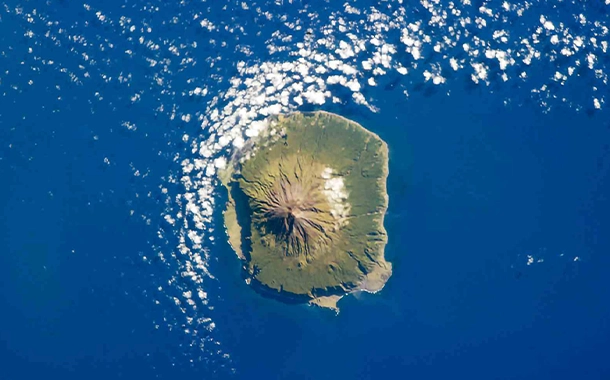
Tristan da Cunha
Tristan da Cunha
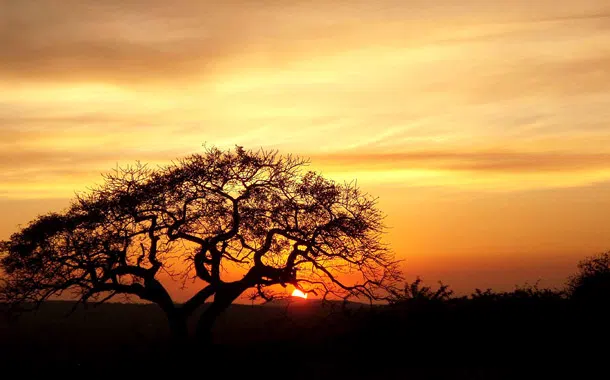
Richards Bay
The city of Richards Bay arose as a makeshift port by Commodore Sir Frederick Richards during the Anglo-Boer War of 1879.
The city is lively and has quickly become the holiday destination on the North Coast of South Africa, offering spectacular scenery and pristine beaches. It is one of the closest seaside destinations to Gauteng and enjoys a year-round summer climate. The city also offers the visitor entry to Zululand. This once forgotten corner of the African continent is a land of exquisite beauty characterized by incredible diversity. Its eastern border with its golden shores are gently caressed by the warm waters of the Indian Ocean. The coast stretches about three hundred and fifty kilometers from the mouth of the Tugela River in the south to the Mozambican border in the north. The coastal plains are endless pristine beaches and coastal conservation areas and incorporate the largest estuary system in South Africa.
Maputo
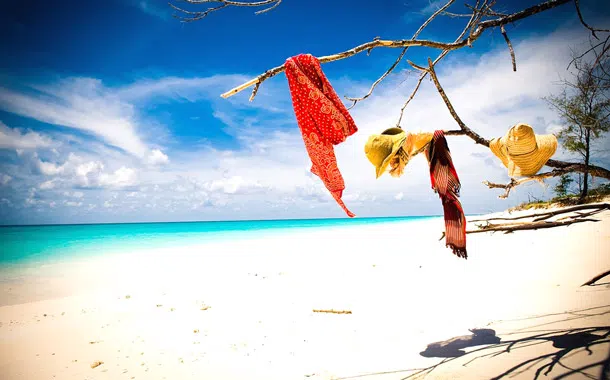
Mediterranean-style architecture, tree-lined avenues, cafes and a promenade, Maputo is probably one of the most fascinating capitals in Africa.
Maputo, also known as Lourenço Marques before independence, is the capital and largest city of Mozambique, here men dressed in traditional Jellaba gather to chat, while women dressed in a thousand colors buy seafood and spices at the picturesque and always lively municipal market with carts that whiz loaded with everything. Also museums, shops and markets galore.
Durban
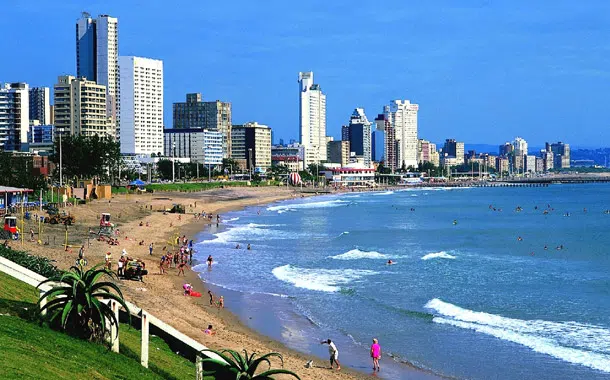
A lively city that stretches along a strip of yellow-brown sand, the third largest tourist resort in South Africa.
The waterfront, with its expanse of skyscraper hotels and snack bars, remains a symbol of the city, and the city center, studded with some grandiose colonial buildings and fascinating Art Deco architecture, pulsates at a distinctly African rhythm. Place with the largest concentration of people of Indian origin in the country, Durban also boasts places, sounds and smells typical of the subcontinent. While the beach is always the favorite place, many visitors visit the suburbs, crammed with accommodation, shopping centers, funky bars and elegant restaurants.
Port Elizabeth
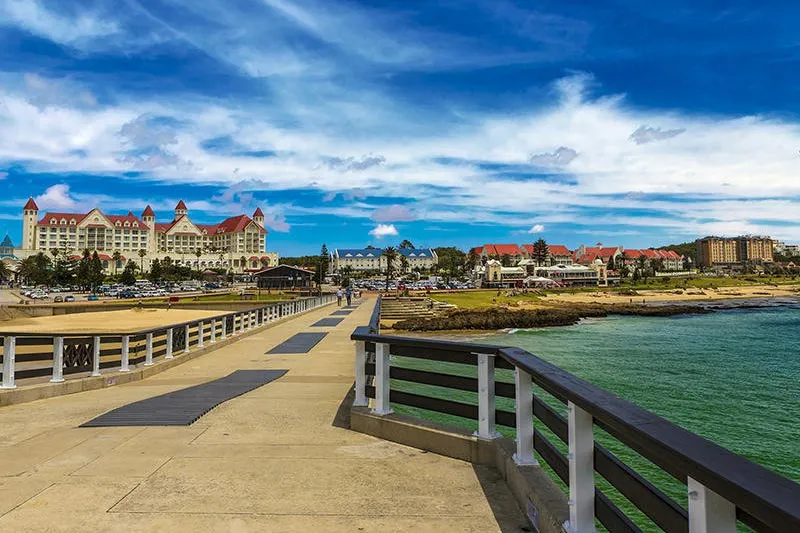
South African Adventures from Port Elizabeth!Embark on an exciting cruise from Port Elizabeth (Gqeberha), South Africa, a vibrant coastal city known for its beautiful beaches, rich history, and friendly atmosphere. This charming "Friendly City" offers a fantastic departure point for exploring the stunning Garden Route, diverse wildlife, and the dramatic coastline of South Africa. Experience its unique blend of urban charm and natural beauty before setting sail on a journey filled with relaxation, adventure, and unforgettable discoveries at sea.
Mossel Bay
Cape Town
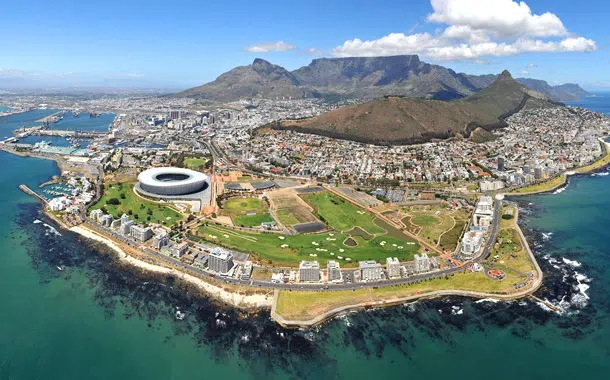
In the heart of South Africa's breathtaking landscapes, there is a city shrouded in mystical aura and historical mysteries, and it’s Cape Town. This is a place where the grandeur of mountain peaks, endless beaches, and the turbulent ocean waters converge, create beauty and magic. Cape Town is graced by its iconic symbol – Table Mountain, which towers over the city like a guardian of ancient secrets and legends. Visitors can ascend this natural wonder to enjoy stunning views of the city and the Atlantic Ocean coastline.
Cape Town is also renowned for its cultural diversity. It attracts artists, musicians, and writers from all parts of the world, inspiring them with its unique atmosphere. The streets of Cape Town are vibrant with local markets, street art, and cafes offering dishes from various parts of Africa and the world. An interesting fact about Cape Town is its unique geography. The city is located at the southernmost tip of the continent, where the Table Bay is one of the largest and deepest natural harbors in the world. This makes it an ideal departure point for cruises along the Atlantic Ocean.
Cruises from Cape Town offer exciting journeys along the shores of South Africa, including stops at historic sites like Robben Island, where political prisoners of the apartheid era, including Nelson Mandela, were imprisoned. If you're interested in the underwater world, you can visit the largest aquarium in the Southern Hemisphere. For photography enthusiasts, we recommend the Bo-Kaap district, where houses are painted in vibrant colors.
Cruises from Cape Town also provide the opportunity to explore the natural beauty of South Africa's Western Cape, encountering wildlife and national parks, majestic waterfalls and endless beaches along the way. Cape Town not only impresses with its beauty and cultural heritage but also serves as the perfect starting point for thrilling cruise adventures, allowing guests to discover all the grandeur and diversity of this remarkable part of Africa.
The mother city of South Africa occupies one of the most beautiful positions in the world, with an iconic mountain located right in its center. As beautiful as the beaches and surrounding vineyards, the harsh desert of Table Mountain is covered with a unique flora, which captures everyone's attention.
With 6.5 million international tourists, South Africa appears to be the first destination in Africa. The inhabitants of Cape Town are truly open to tourism, which began at the threshold of the 90s, at the end of apartheid. Thanks to a significant regional and European tourism development, in recent years, the nation has grown considerably. African visitors are distinguished from those from overseas, differentiated by the activities carried out and seasonal movements.
But everyone participates fully in the development of the tourism sector. For lovers of architecture, the city is also famous for its colonial style, called Cape Dutch, particularly evident in the Constantia districts. During your stay in this fabulous place, you can stroll through the main streets: starting from Piazza Heerengracht where the first camp of the East India Company was founded. A short distance away, shopping lovers can also enjoy and discover Adderley Street, the main shopping street.
Without forgetting Government Avenue, where passers-by will find themselves in a beautiful glazed walkway of ancient oaks. Here museums abound, such as the Museum of History and Culture, the oldest South African institute after the Castle of Good Hope, residence of the city's first governors in the second half of the 17th century.
Cape Town
In the heart of South Africa's breathtaking landscapes, there is a city shrouded in mystical aura and historical mysteries, and it’s Cape Town. This is a place where the grandeur of mountain peaks, endless beaches, and the turbulent ocean waters converge, create beauty and magic. Cape Town is graced by its iconic symbol – Table Mountain, which towers over the city like a guardian of ancient secrets and legends. Visitors can ascend this natural wonder to enjoy stunning views of the city and the Atlantic Ocean coastline.
Cape Town is also renowned for its cultural diversity. It attracts artists, musicians, and writers from all parts of the world, inspiring them with its unique atmosphere. The streets of Cape Town are vibrant with local markets, street art, and cafes offering dishes from various parts of Africa and the world. An interesting fact about Cape Town is its unique geography. The city is located at the southernmost tip of the continent, where the Table Bay is one of the largest and deepest natural harbors in the world. This makes it an ideal departure point for cruises along the Atlantic Ocean.
Cruises from Cape Town offer exciting journeys along the shores of South Africa, including stops at historic sites like Robben Island, where political prisoners of the apartheid era, including Nelson Mandela, were imprisoned. If you're interested in the underwater world, you can visit the largest aquarium in the Southern Hemisphere. For photography enthusiasts, we recommend the Bo-Kaap district, where houses are painted in vibrant colors.
Cruises from Cape Town also provide the opportunity to explore the natural beauty of South Africa's Western Cape, encountering wildlife and national parks, majestic waterfalls and endless beaches along the way. Cape Town not only impresses with its beauty and cultural heritage but also serves as the perfect starting point for thrilling cruise adventures, allowing guests to discover all the grandeur and diversity of this remarkable part of Africa.
The mother city of South Africa occupies one of the most beautiful positions in the world, with an iconic mountain located right in its center. As beautiful as the beaches and surrounding vineyards, the harsh desert of Table Mountain is covered with a unique flora, which captures everyone's attention.
With 6.5 million international tourists, South Africa appears to be the first destination in Africa. The inhabitants of Cape Town are truly open to tourism, which began at the threshold of the 90s, at the end of apartheid. Thanks to a significant regional and European tourism development, in recent years, the nation has grown considerably. African visitors are distinguished from those from overseas, differentiated by the activities carried out and seasonal movements.
But everyone participates fully in the development of the tourism sector. For lovers of architecture, the city is also famous for its colonial style, called Cape Dutch, particularly evident in the Constantia districts. During your stay in this fabulous place, you can stroll through the main streets: starting from Piazza Heerengracht where the first camp of the East India Company was founded. A short distance away, shopping lovers can also enjoy and discover Adderley Street, the main shopping street.
Without forgetting Government Avenue, where passers-by will find themselves in a beautiful glazed walkway of ancient oaks. Here museums abound, such as the Museum of History and Culture, the oldest South African institute after the Castle of Good Hope, residence of the city's first governors in the second half of the 17th century.
Luderitz
Walvis Bay
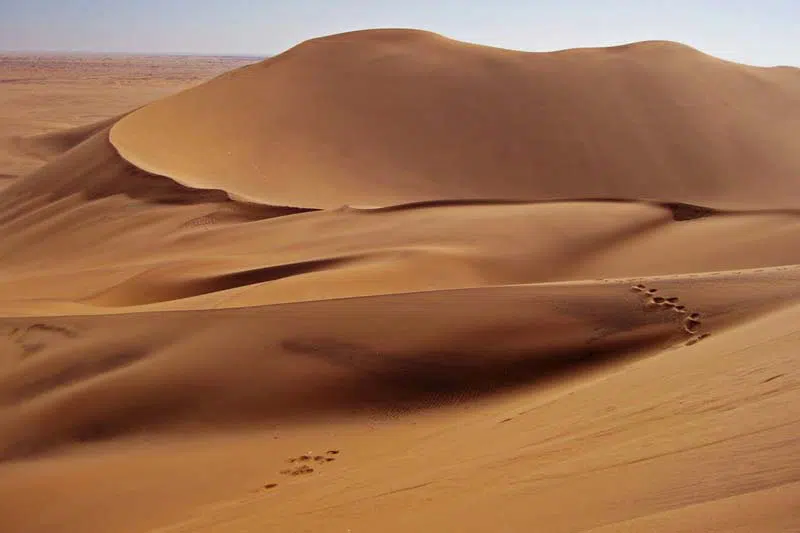
Namibian Coastal Expeditions from Walvis Bay!Set sail on an extraordinary cruise from Walvis Bay, Namibia, a unique coastal city nestled between the vast Namib Desert and the Atlantic Ocean. Known for its abundant birdlife, seal colonies, and stunning desert landscapes, Walvis Bay offers an unparalleled departure point for exploring the dramatic coast of Namibia and beyond. Prepare for a journey filled with incredible wildlife, breathtaking natural beauty, and unforgettable discoveries in one of Africa's most captivating regions.
Walvis Bay
Namibian Coastal Expeditions from Walvis Bay!Set sail on an extraordinary cruise from Walvis Bay, Namibia, a unique coastal city nestled between the vast Namib Desert and the Atlantic Ocean. Known for its abundant birdlife, seal colonies, and stunning desert landscapes, Walvis Bay offers an unparalleled departure point for exploring the dramatic coast of Namibia and beyond. Prepare for a journey filled with incredible wildlife, breathtaking natural beauty, and unforgettable discoveries in one of Africa's most captivating regions.
Luanda
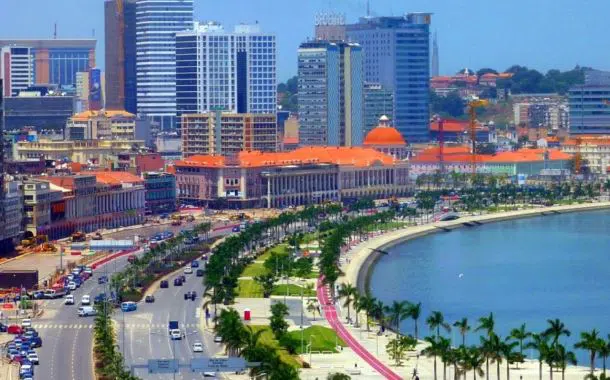
Capital of Angola, in southern Africa. Luanda is divided into two main areas which include first the lower city, around its bay (including the ancient colonial city, the fortress and the port) and secondly the upper city, the modern district.
Forty years of civil war left Angola cut off from the rest of the world until 2002. Now increasingly courted by Western countries for its oil exports, it is becoming more and more a regional power willing to compete directly on many diplomatic issues.
The main and memorable places of this city are:
The fortress of São Miguel, ideally located, was built in 1576 by the Portuguese to defend Luanda from its assailants from Europe. The walls of the fortress house statues and old war equipment and a small chapel, where you have an incredible and complete view of the city.
Luanda has three museums, the Museo de Historia Natural, the Museo das Forcas Central, here is located in the oldest palace in the city, and the Museu de Antropologia, here shows African masks, native instruments, and hunting artifacts. Architecture enthusiasts should not miss the colonial churches of Igreja de Nossa Senhora de Nazaré and Igreja de Nossa Senhora dos Remedios, from the 17th century.
The Marginal, more formally known as Avenida 4 de Fevreiro, is the avenue along the bay of Luanda. Starting from the port to the entrance of the Ilha peninsula, meeting the city center with the new and old buildings and many towers under construction, various of the most beautiful restaurants in the city and the local yacht club. The Marginal is also flanked by old colonial buildings, used for public offices. (National Bank, Post Office, Industry Museums, Ministry of Communication, etc.).
Luanda has a tropical climate. The average annual temperature is 24°C: the average winter from January reached 27°C, with a maximum of 30°C and a minimum of 24°C; summer average in July drops to 21°C, with a maximum of 24°C and a minimum of 18°C.
The inhabitants of Luanda are mainly of African ethnic groups, but also present a small community of Portuguese origin. Many Brazilians have arrived recently, following the economic recovery that followed the end of the civil war. It has an official language, which is also the most widely spoken, Portuguese.
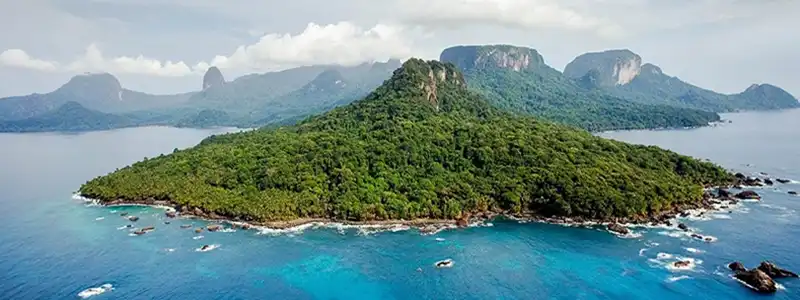
Sao Tome
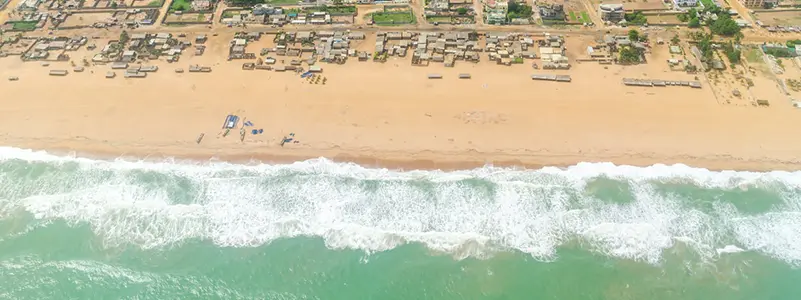
Cotonou
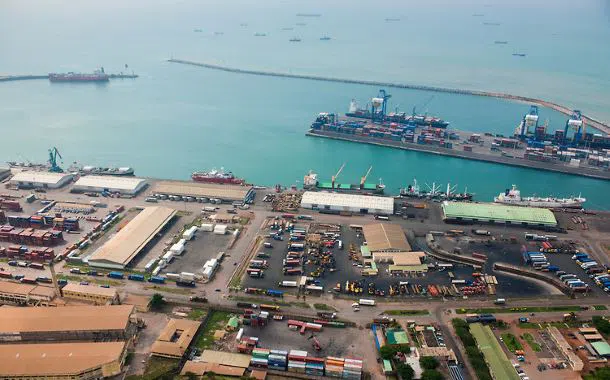
Tema
West African Journeys from Tema!Set sail on an enriching journey from Tema, Ghana, a major port city on the West African coast, located near the vibrant capital of Accra. This bustling port offers a dynamic departure point for exploring the diverse landscapes, rich history, and vibrant cultures of West Africa. Prepare for a cruise filled with unique cultural immersion, historical insights, and breathtaking coastal scenery, promising an unforgettable adventure.
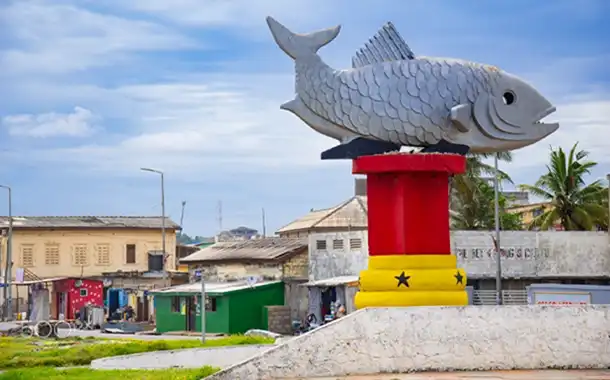
Takoradi
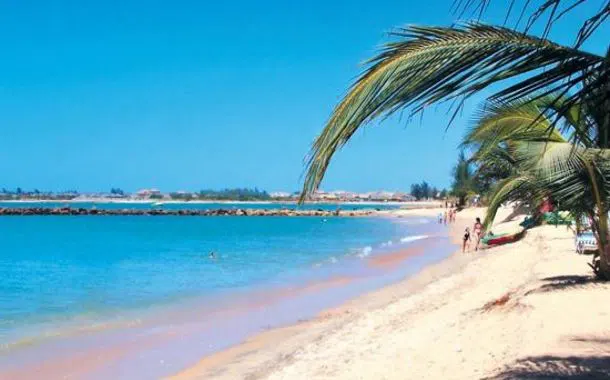
Dakar
Explore West Africa from Dakar!Set sail on an enriching journey from Dakar, Senegal, a vibrant and bustling port city on the West African coast. Known for its colorful markets, historical sites, and lively culture, Dakar offers a truly unique starting point for exploring the diverse landscapes and rich heritage of Africa. Prepare for an adventure that combines cultural immersion with serene sea travel, promising profound discoveries and unforgettable experiences.
The city of Dakar is located along the Atlantic coast of Senegal, on an ancient volcano whose eruption gave rise to the Cap-Vert Peninsula. Other islands are located nearby, including that of Gorée, to the south, those of the Madeleine, to the west and Ngor to the north. An ancient fishing village, Dakar or Dahar means "tamarind" in Wolof (one of the six national languages of Senegal). Today the administrative, political, military, economic, social and cultural metropolis is a cosmopolitan, African and European city, with more than two million inhabitants. Several dates that mark the history of the city and the region, are between the 16th and 19th centuries, the highlight of the slave trade. The city was officially founded on May 25, 1857 by Pinet LAPRADE. The first cadastral map of Dakar was developed in June 1858. 4 years later, in June 1862, they formed a new alignment plan of the area. The city of Goree was founded in 1872 and on April 4, 1960, Dakar became the capital of Senegal. This metropolis has many places to offer. Tourists will be mainly attracted by the African Art Museum and the Antenna Gallery. Other important sites, in colonial style, are the Town Hall outside the Presidential Palace, jealously guarded by its guards in traditional clothes. Finally, don't miss the Dakar Mosque and the Hann natural park, with its numerous animals. Many typical products of the Dakar region are available to holidaymakers in various shops. Wide choice of souvenirs including fabrics, wooden sculptures, jewelry, sandals, bags, paintings, bronze objects, ceramics and musical instruments. Music, dance and traditional wrestling are part of the Dakar landscape. You will also notice the presence of a large shopping center (Plaza Mar), inaugurated in 2010, inside you will find a wellness center, a games room and a bowling alley. French is the official language and the only one taught in the public school system.
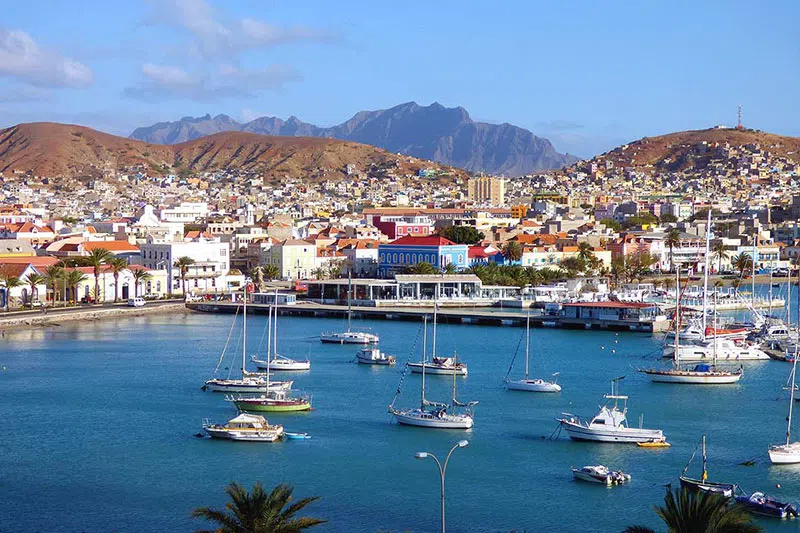
Mindelo
Mindelo is a lively port city located on the island of São Vicente in Cape Verde, an archipelago off the northwest coast of Africa. Cultural vibrancy, historical importance and natural beauty blend perfectly making Mindelo a unique and fascinating destination for tourists. The city is known as the cultural capital of Cape Verde.
It has a rich musical tradition, in particular morna and coladeira are the traditional musical genres of Cape Verde. The city is associated with the famous singer Cesária Évora. Cesária Évora was a Cape Verdean singer and probably the most famous morna singer in the world. Her nickname was “barefoot diva” because of her habit of performing barefoot. Mindelo hosts one of the most lively carnivals in the region, often compared to those in Brazil.
The event is a great attraction for tourists and locals, with parades, music, dances and elaborate costumes. Mindelo has a thriving art scene, with numerous galleries and markets where local artists and artisans exhibit their works. The Mindelo Art Center is a notable venue for unique exhibitions and shows. The city's nightlife is lively, with numerous bars, restaurants and clubs that offer live music and entertainment, especially in the historic center around Praça Estrela and Rua Lisboa.
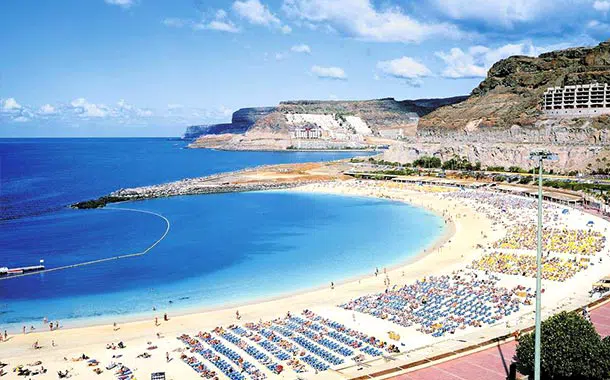
Las Palmas
Located in the Atlantic Ocean 200 km from the African Coast, Gran Canaria has one of the most beautiful tropical landscapes. The island has wide and beautiful golden sand beaches, endless dunes, large indentations with vegetation and charming villages. In this majestic area, you can visit towns that has all kinds of services and amenities, such as in Las Palmas, with large shopping areas and a lively nightlife. You will have the opportunity to practice any water sport: diving, surfing and windsurfing.
Conversely, those who prefer other sports will have the opportunity to go hiking, climbing, or cycling. The island is also an ideal destination for golf lovers, as it has a wide range of excellent courses. Gran Canaria has excellent cuisine and the variety of fun traditional festivals, and theme parks. In short, it is an ideal place for a great island vacation.
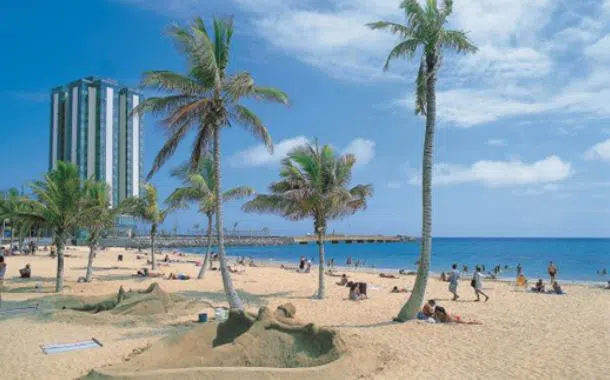
Arrecife
The capital of Lanzarote Island, in Canary Island, Arrecife was originally a small fishing village that now primarily relies on tourism. Lanzarote is one of the most wild and natural islands of the Canary and is of volcanic origin. Arrecife, the capital of Lanzarote, since the second half of the 19th century, is now the administrative and commercial center of the island.
Arrecife is a lively and cosmopolitan city full of culture and history, located on the eastern-central coast of the island. Initially known as a small fishing village in the 15th century, the area continued to grow until it became the capital of the island in 1852. Today, it is known as a wonderful holiday and shopping paradise. The city presents itself to travelers as a peaceful, cheerful and clean town. In its harbor, which is an area of intense commercial activity, two large fortresses, San Gabriel and San Jose, stand as reminders of the constant pirate attacks.
Other interesting monuments include the Castle of San Gabriel, built offshore and connected to the city by drawbridge, the San Juan Castle, and the Castillo del Hambre. Inside the Castello del Hambre, there is the international Museum of Contemporary Art, which exhibits works by the great artist Cesar Manrique.
The center of Arrecife is surrounded by some of the city’s best tourist attractions, such as the Parish of San Ginés Obispo and the shopping district of Calle Real. Heading north along the Coast, you will find the city’s ports: Puerto Naos, a fishing port, and the main port called Puerto de los Marmoles, the third most important port in the Canary Islands.
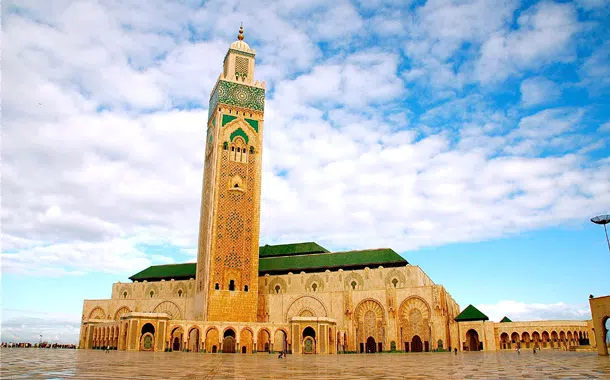
Casablanca
Casablanca is the cosmopolitan, industrial and economic heart of Morocco and represents a developing Nation.
Casablanca is where money was made, where industry is, where art galleries show the best contemporary art and where stylists have a window on the world. The old pirate lair is projected into the future, showing its riches and successes. Casablanca is full of contradictions. It is home to suffocating traffic jams, social problems and slums, as well as wide avenues, well-kept public parks, fountains and a surprising colonial architecture. Rich Hispano-Moresque, Art Deco and modernist gems to be discovered in the city center are the modernist symbol of Casablanca, like the huge and incredibly ornate Hassan II Mosque.
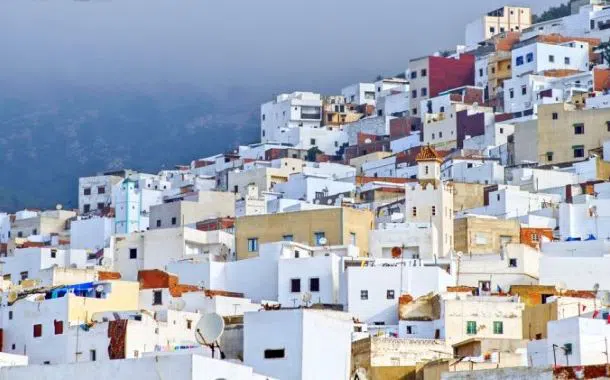
Tanger
The city of Tangier (in Arabic طنجة, Tanja; in Latin Tingis) is a port in northern Morocco. Located at the entrance to the Strait of Gibraltar, at the meeting point between the Mediterranean and the Atlantic Ocean, the beautiful Tangier presents an unforgettable landscape that for centuries has attracted generations of artists, including Eugène Delacroix, Camille Saint-Saëns, Pierre Loti and Paul Morand. With its temperate climate, important vegetation, its luminosity and the strip of beach that extends for 3 km in a distinct way, Tangier seduces thousands of tourists every year. Its history makes it a mythical city, a land of relentless occupations and colonizations. The Old Medina preserves memories of Muslim influence: as soon as you cross the threshold, you will be assailed by the smells and perfumes of the Grand Socco literally known as the great soukh. Merchants in traditional costume will convince you to buy traditional clothes of the country and genuine leather products. A few meters away, you can also admire the Sidi Bou Abid Mosque, a favorite attraction for visitors. But be careful: entry to this place of worship is forbidden to non-Muslims. On the contrary, the modern city of Tangier, has preserved the French architectural experience, distinguishing itself The Grand Café de Paris, one of its fundamental pillars. Tangier is certainly one of those cities that must be deeply known to discover its wonders.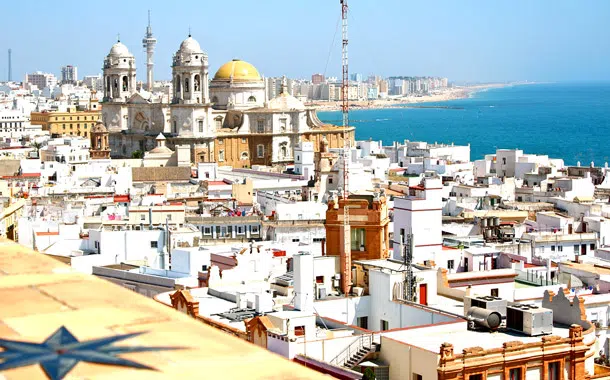
Cadiz
Cadiz is a port city with wide boulevards, squares and gardens with an atmosphere rich in history
Cadiz is an elegant city offering buildings dated back to XVIII and XIX Centuries. The City has a long and charming history: discover its monuments, the museums and all the amazing places where you can taste good food and have a drink. What makes Cadiz special it’s the people that are open, have a great culture and are independent. The majority of them enjoy life and the company of their friends in the many bars and squares of the city.
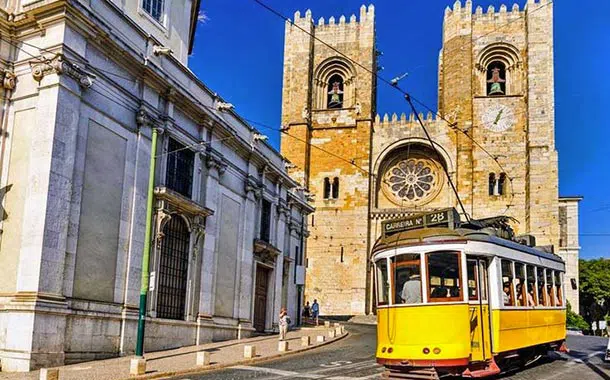
Lisbon
Perched on steep slopes overlooking the Tagus River, Lisbon offers all the pleasures you'd expect from Portugal's main attraction.
The capital of Portugal, Lisbon (in Portuguese Lisboa) has experienced a great rebirth in recent years, with a lively and flourishing contemporary culture. Perched on the coast of the Atlantic Ocean, Lisbon is one of the rare European cities that face the ocean and use water as an element that defines the city. Lisbon enchants travelers with its white limestone buildings, intimate alleys and an ancient charm that makes it a popular destination all year round.
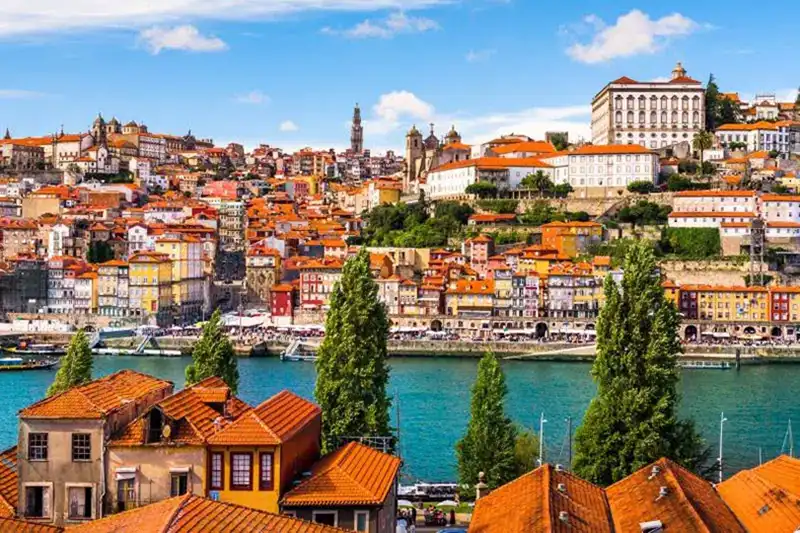
Leixoes
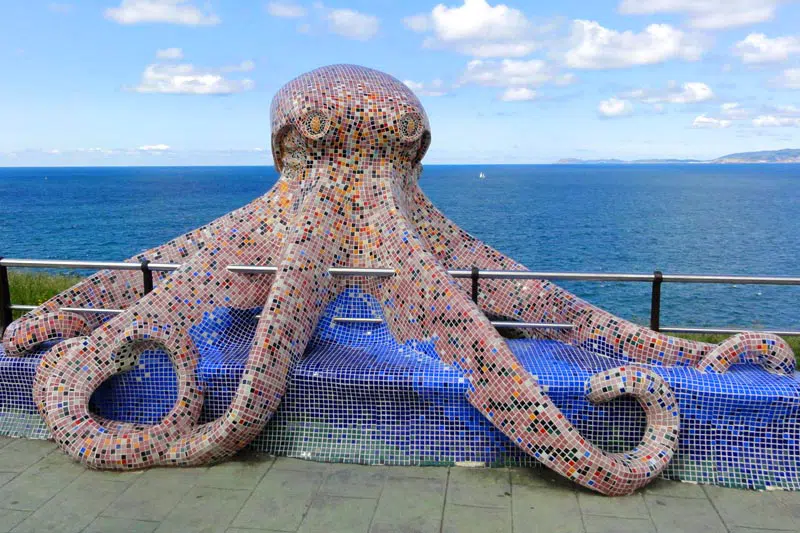
La Coruna
La Coruña is a city and municipality in Spain. It belongs to the autonomous region of Galicia and is the capital of the province. Important historic port is located on the north-western coast of the Iberian Peninsula, in the Rias Altas.
Located on the coast of the Atlantic Ocean, La Coruña is a city whose history has maintained close ties with its old fishing and commercial port. The peninsula on which the houses of the historic center are located, beyond the Tower of Hercules, one of the symbols of the city and declared a World Heritage Site by UNESCO, you will find a set of interesting and historic streets, squares and medieval churches.
Although the origin of the town may appear as an old Celtic settlement, the history of the city began to be important in Roman times, when the port became a fundamental structure for the country.
Historically, the port has been the scene of some of the most important historical events in the city, such as the defeat of the English corsair Francis Drake in 1589, thanks to the resistance of the entire population and led by the protagonist María Pita.
The Finisterrae Aquarium, the Domus and the Science Museum are some of the areas that show the most modern and playful side of the provincial capital, also offers one of the most beautiful and extensive beaches of Riazor and Orzán. All this is completed with a traditional cuisine, marked by the excellence of its fish and meats from the interior of the province. Gastronomic city par excellence, it has many good places to enjoy the exquisite Galician cuisine. Furthermore, you will find several establishments that offer excellent wine, normally concentrated in the old part of the city.
In its splendid, always lively streets, there are good examples of Romanesque architecture. One of the most beautiful churches in the city is undoubtedly that of Santiago, the oldest in the area, built in the 12th century. Its large nave of arches houses a polychrome sculpture of Saint James dating back to the 13th century. For its architectural interest, it has been declared a Historical-Artistic Monument.
Sit on a terrace in Plaza de María Pita and discover its fascinating history, stroll through the Cantons admiring its famous modern-style crystal galleries, and if you want to go shopping, this is certainly the best place.
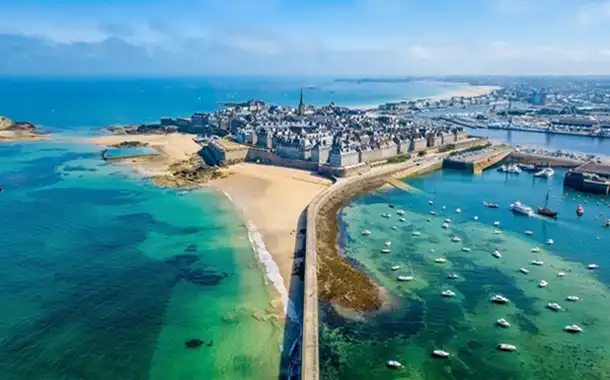
St Malo
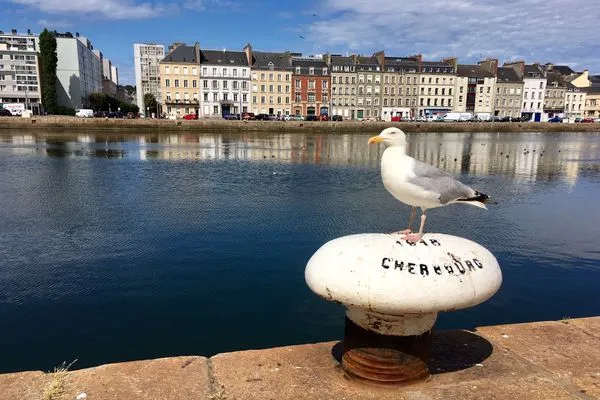
Cherbourg
Cross the Atlantic from Cherbourg!Set sail on an epic ocean adventure from Cherbourg, France, a historic port city with a deep connection to maritime exploration. Known for its strategic location and impressive harbor, Cherbourg offers a grand departure point for transatlantic voyages and European cruises. Experience the allure of French coastal charm before embarking on a journey promising elegance, discovery, and breathtaking views of the open sea.
Rouen
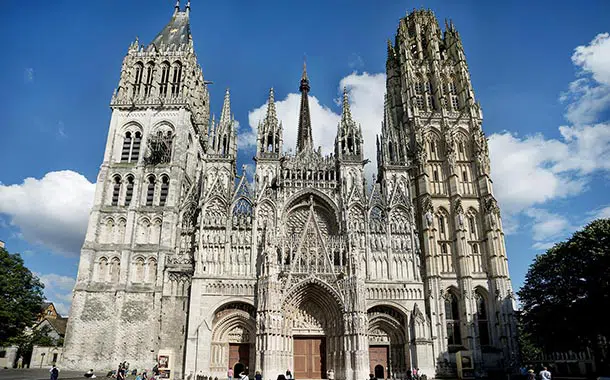
Discover Rouen with an unforgettable cruiseRouen, the historic capital of Normandy, is one of the most fascinating stops for those who choose to go on a cruise from France. Rich in art, history and culture, this city offers numerous attractions to visit, unique flavors to discover and a strategic position for exploring the region.
What to see in Rouen?Rouen Cathedral is undoubtedly one of the most recognizable symbols of the city. This Gothic masterpiece, painted by Claude Monet, is an icon of Normandy and one of the tallest cathedrals in France. Walking through the streets of Rouen, you cannot miss the Gros Horloge, a medieval astronomical clock that is located in the heart of the city. Another unmissable attraction is the Joan of Arc Church, built on the site where the saint was executed in 1431.
Where is Rouen located?Rouen is located in the north of France, about 135 km from Paris, along the Seine River. Thanks to its strategic position, it is one of the most important port cities in Normandy, making it an ideal starting point for river cruises along the Seine or maritime cruises to the United Kingdom and Scandinavia.
What to do in Rouen in a day?If you only have one day available in Rouen before your cruise, you can organize an itinerary that allows you to see the best of the city. Start with a visit to the Rouen Cathedral and continue with a walk in the historic quarter, famous for its half-timbered houses. Stop at the Old Market, where you can sample local products and see the church dedicated to Joan of Arc. End the day with a walk along the Seine, admiring the sunset over the river.
What to eat in Rouen?Normandy cuisine is famous for its fresh and flavorful ingredients. Among the typical dishes to try is the Canard à la Rouennaise, a duck recipe cooked with a wine sauce. Don't forget to taste the local cheeses, such as Camembert and Neufchâtel, accompanied by a good bottle of cider, the traditional drink of the region.
Discover everything that Rouen has to offer and start your cruise adventure from one of the most fascinating cities in France! Rouen
Discover Rouen with an unforgettable cruiseRouen, the historic capital of Normandy, is one of the most fascinating stops for those who choose to go on a cruise from France. Rich in art, history and culture, this city offers numerous attractions to visit, unique flavors to discover and a strategic position for exploring the region.
What to see in Rouen?Rouen Cathedral is undoubtedly one of the most recognizable symbols of the city. This Gothic masterpiece, painted by Claude Monet, is an icon of Normandy and one of the tallest cathedrals in France. Walking through the streets of Rouen, you cannot miss the Gros Horloge, a medieval astronomical clock that is located in the heart of the city. Another unmissable attraction is the Joan of Arc Church, built on the site where the saint was executed in 1431.
Where is Rouen located?Rouen is located in the north of France, about 135 km from Paris, along the Seine River. Thanks to its strategic position, it is one of the most important port cities in Normandy, making it an ideal starting point for river cruises along the Seine or maritime cruises to the United Kingdom and Scandinavia.
What to do in Rouen in a day?If you only have one day available in Rouen before your cruise, you can organize an itinerary that allows you to see the best of the city. Start with a visit to the Rouen Cathedral and continue with a walk in the historic quarter, famous for its half-timbered houses. Stop at the Old Market, where you can sample local products and see the church dedicated to Joan of Arc. End the day with a walk along the Seine, admiring the sunset over the river.
What to eat in Rouen?Normandy cuisine is famous for its fresh and flavorful ingredients. Among the typical dishes to try is the Canard à la Rouennaise, a duck recipe cooked with a wine sauce. Don't forget to taste the local cheeses, such as Camembert and Neufchâtel, accompanied by a good bottle of cider, the traditional drink of the region.
Discover everything that Rouen has to offer and start your cruise adventure from one of the most fascinating cities in France!
Southampton
Southampton is a city positioned in the South of Great Britain and its port is one of the main ports in Europe. From the port of Southamptos it is possible to set sail for a Cunard transatlantic cruise and reach New York, or visit Amsterdam and Belgium with an MSC cruise. The city offers, further to the New Forest National Park, a wide natural park with its suggestive woods, also many museums and art galleries and remarkable architectural works. Noteworthy is King John’s Palace, of Norman origins as well as the old walls with 7 entrances to the city. An evidence of the Victorian Age is Tudor House, collecting objects dated back to that period. For the art lovers, Southampton City Art Gallery offers exhibitions of any kind of art, from drawing to photography with shows that attract many visitors.
Southampton: The UK's Grand Gateway to Global CruisesSet sail from Southampton, the historic and vibrant port city on England's south coast, renowned as the UK's premier cruise departure point. With its rich maritime heritage, including its association with the Titanic, and excellent transport links, Southampton offers a grand beginning to voyages across the Atlantic, to the Mediterranean, Northern Europe, and beyond. Before embarking, explore its ancient city walls, maritime museums, and lively shopping districts. Southampton provides a seamless and exciting start to your global cruise adventure.
World-Class Journeys Begin from SouthamptonCruises departing from Southampton open up a world of possibilities, from transatlantic crossings to the Americas, sun-drenched Mediterranean escapes, and captivating Northern European explorations. Whether you dream of iconic cityscapes, breathtaking natural wonders, or culturally immersive experiences, Southampton serves as an ideal launchpad. Enjoy the convenience of a world-class port and the anticipation of new discoveries as you leave the shores of England for unforgettable experiences on the open water, promising relaxation, entertainment, and endless exploration. Each voyage from Southampton promises a journey of a lifetime.
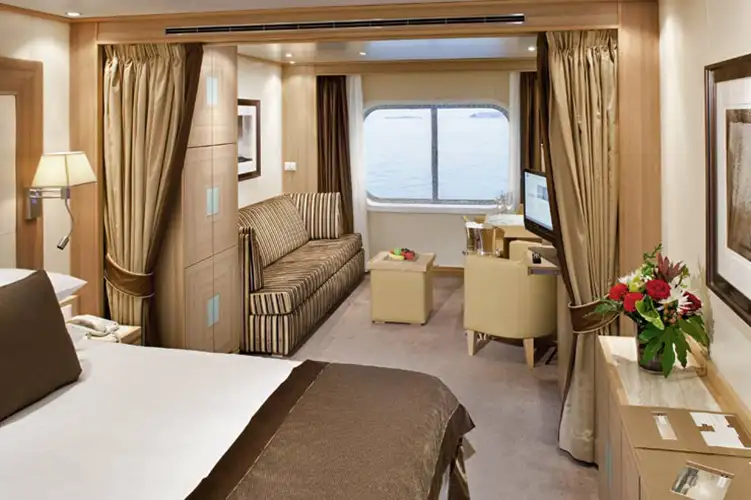
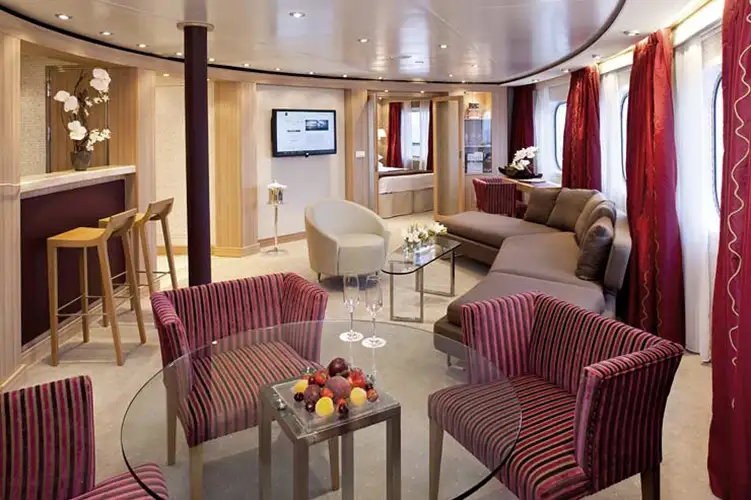
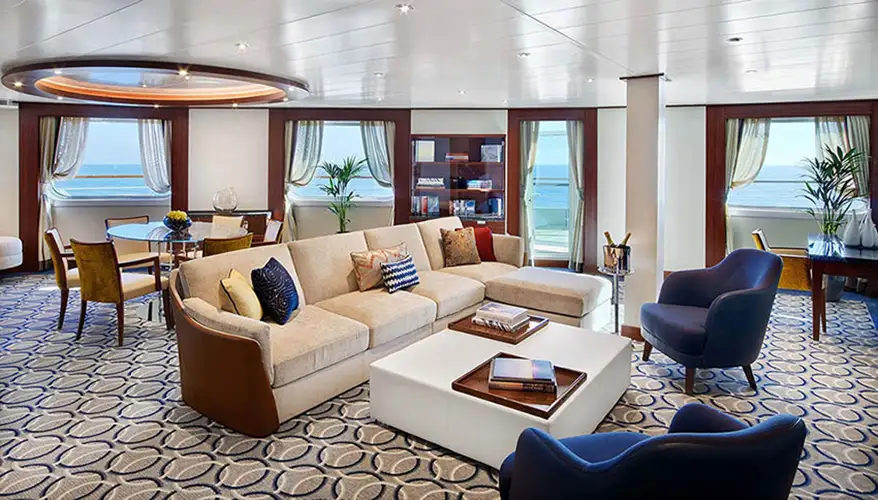
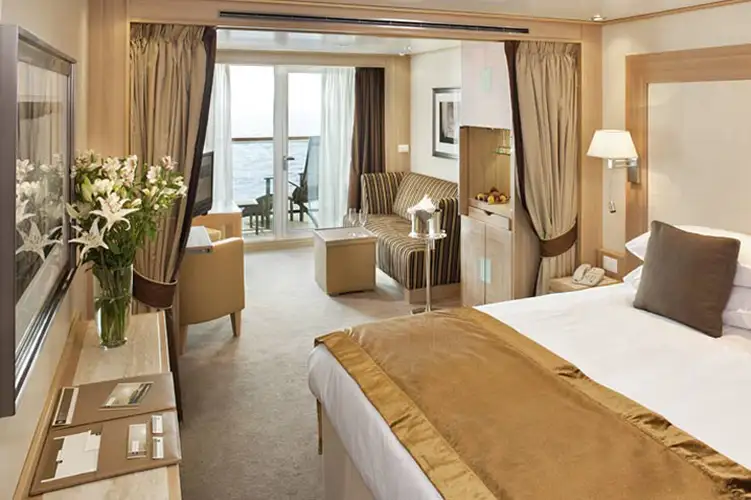
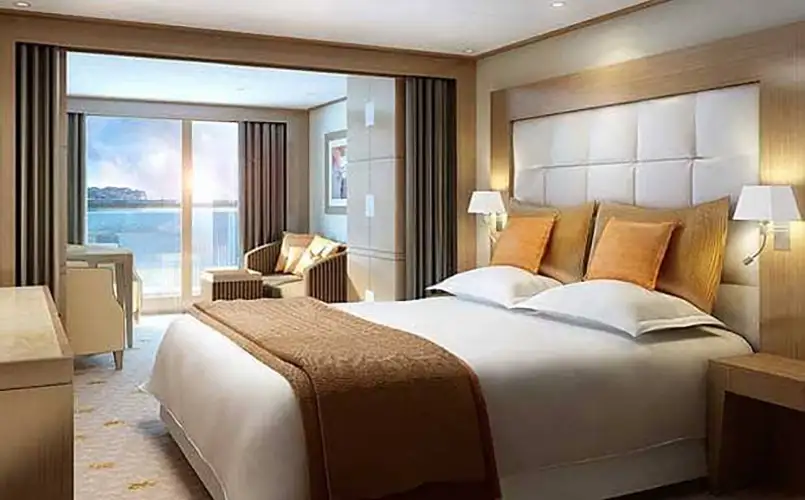
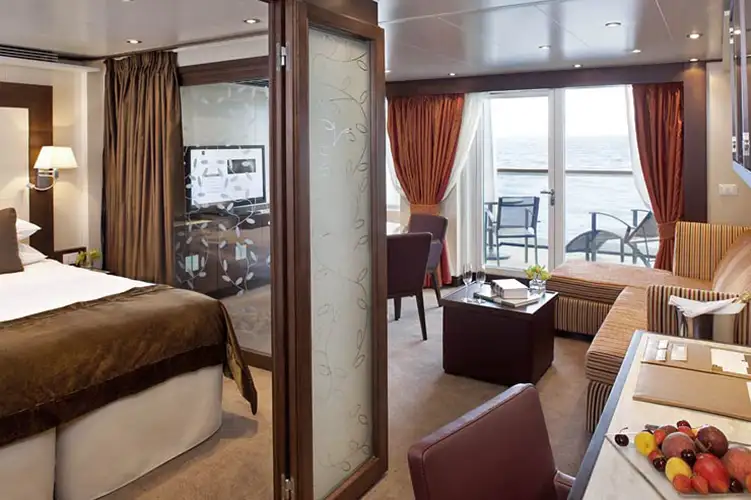
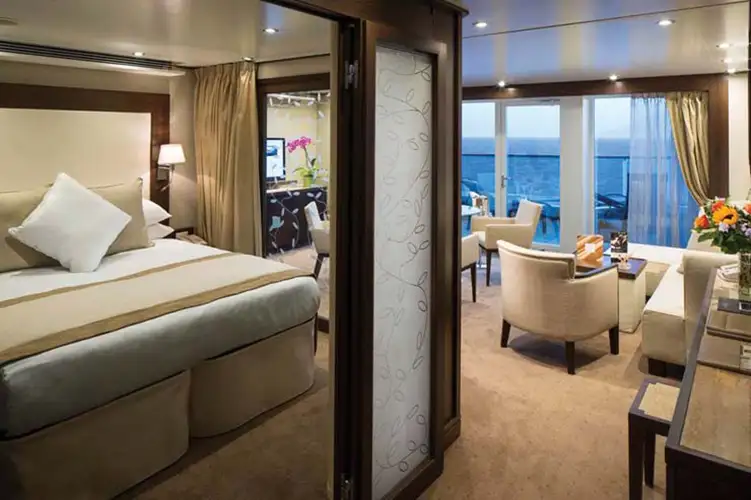
Info on the ship Seabourn Quest